Wir über uns
Standort
Ausstellungen
Archiv
Bibliothek
Service
Veranstaltungen
Publikationen
Mitarbeit/
Forschung
Mitgliedschaft/
Spenden
Geschichte
Links
Gästebuch
Exhibition from July 14 to November 18, 2001
 |
The only Berlin Homosexual group
of the 1950ies fighted to abolish § 175, supported by public figures
and offered help to homosexuals seeking legal advice.
The 1950ies were for many homosexuals
an era of new hopes for legalization and abolition of § 175 which
was severed by the Nazis. They did not come true with the policies of restoration
by Konrad Adenauer; in fact there were as many judical inquiries concerning
§ 175 during the 1950ies as there had been during the Nazi-era.
|
The GfRdS tried to go on from the
emancipation movement of the Weimar Republic and refered to the works of
Magnus Hirschfeld, whom many of the members had known personally. Central
object of the GfRdS was the abolition of § 175. In contrast to other
groups of this era they also engaged for legalization of consensual sex
between men older than 16 year.
 This
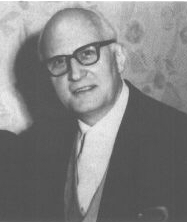
lied in the responsibility of the lawyer Werner Hesse. His
office in Berlin-Schöneberg was known far beyond the borders of the
city as a place where help was offered homosexuals seeking legal advice
(contemporary quotation: „Gibt’s Prozesse, geh‘ zu Hesse!“ – „If there
are procedures go to Hesse!“). The GfRdS got support by personalities of
sciences, policies and cultural life as the sexual scientist Rudolf Klimmer
(Dresden), the cultural philosopher Richard Heinrich Grützmacher and
the director Ludwig Berger.
This
lied in the responsibility of the lawyer Werner Hesse. His
office in Berlin-Schöneberg was known far beyond the borders of the
city as a place where help was offered homosexuals seeking legal advice
(contemporary quotation: „Gibt’s Prozesse, geh‘ zu Hesse!“ – „If there
are procedures go to Hesse!“). The GfRdS got support by personalities of
sciences, policies and cultural life as the sexual scientist Rudolf Klimmer
(Dresden), the cultural philosopher Richard Heinrich Grützmacher and
the director Ludwig Berger.
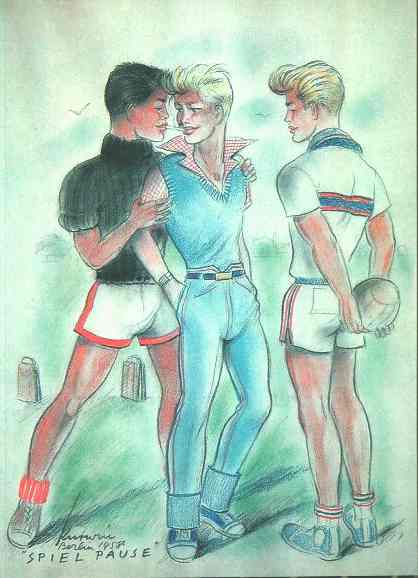
The exhibition depicts the Berlin homosexual scene of the postwar era. Shown are documents like the files of the GfRdS found in the state archive of Berlin, letters and photogaphs, paintings and drawings by Werner Heldt, Renée Sintenis, Herbert Tobias and others.
On the exhibition was published Heft 3 (No. 3) in the series Hefte des Schwulen Museums by Andreas Pretzel by rosa Wunkel press (70 pages and many illustrations).
More about the GfRdS and the 1950s Berlin:
The Struggle for Law and Against Persecution
Gay People - promotion, surveys, self-identity
*
On the 10th anniversary of the death of Ronald Schernikau
Exhibition from October 3 to November 18, 2001
Ronald Schernikau, who died in October 1991 at the age of 31 years from AIDS, was communist and writer. He was known by his „Kleinstadtnovelle“ (small town novella), which he published at the age of 17 and became a cult-book. He finished his main work „Legende“ (legend) two weeks before his death, the book was published posthumous in 1999. The exhibition presents life and work of Ronald M. Schernikau and gives him a deserved laudatory.