Russian Tortoise
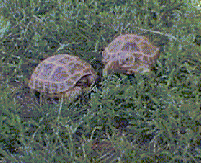
This small tortoise, that normally is 6 to 9 inches is also know as the Horsefield's Tortoise. It has a golden brown shell that is just slightly rounded,rather than high domed. Sometimes the plastron has some darker markings.
As the name implies, the Russian Tortoise is from southeastern Russia, from the Caspian Sea south through Iran, Afghanistan, and Pakistan. It is found in dry, arid to semi-arid grasslands, deserts and rocky hillsides.
The Russian tortoise will feed on various cultivated vegetables and ornamental plants and common backyard "weeds" such as dandelion, and the leaves and flowers of non-poisonous trees and shrubs. You should offer a wide variety of suitable foods, meaning high in fiber and low in protein, this is important for the tortoise's health. Remember 75% of your tortoises diet should be green vegetables and grass. Fruit should be offered sparingly, as excess sugar can lead to digestive problems. Iceberg lettuce and celery have no real nutritional value. Spinach, chard and rhubarb if fed to much or on a regular bases can cause a calcium deficient. It is recommend by many to give Rep-Cal or sometype of supplement weekly. Foods from the Cabbage family should not be given on a daily basis either. They can cause problems down the road as well. This does not mean, to take them totally out of the diet, but do not use them on a daily basis. Citrus is the only fruit that most people say to avoid totally. Do make sure you check your household plants to make sure they are not poisinous prior to feeding to your turtle.
Because they are native to such arid regions, it is important to keep them in a dry area most of the time. It is very important that after soaking that they are able to dry out completely. They do not tollerate high humidity, and moisture well. This will help prevent Shell Rot.
Breeding behavior starts in late spring or early summer. Males kept together will battle, which could become quite expensive. The breeding itself is quite aggressive. Three to five eggs are laid at a time and up to four clutches per year can be laid. Eggs should be incubated at 82 degrees and 70 to 80 percent humidity. Hatching should occur between 80 and 100 days.