The Writings on the Wall�
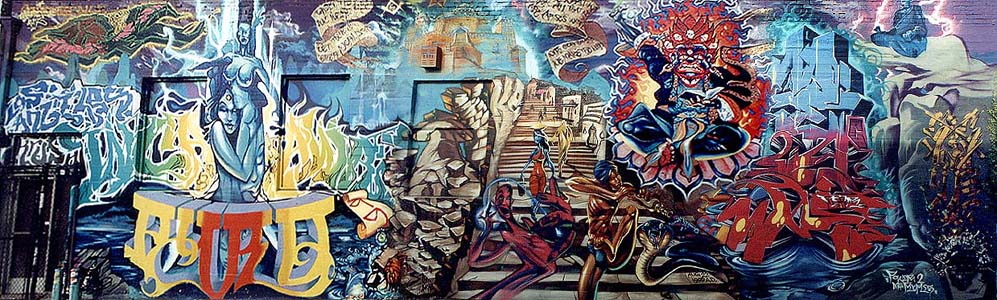
The History of Graffiti in a Nutshell�
The history of graffiti goes a lot deeper than most people think. In the interests of regarding modern urban graffiti as a form of artistic and cultural expression, we must trace graffiti back to the pre-historic cave paintings by our proto-human ancestors. From there, the art of using pigment on available surfaces flourished without pause. Frescos decorated entire walls of ancient Roman homes; Muslim races adorned their walls with non-representational designs that expressed elements of organic beauty. They also featured passages from the Koran, written out in calligraphic styles. Later, Italian monks (see Interview with Rammellzee, The Urb, 1994) posted messages to other monks on public walls, but disguised them with elaborated flourishes that were illegible to the rest of the literate population. They created a new style of writing that was complicated to understand, yet aesthetically beautiful.
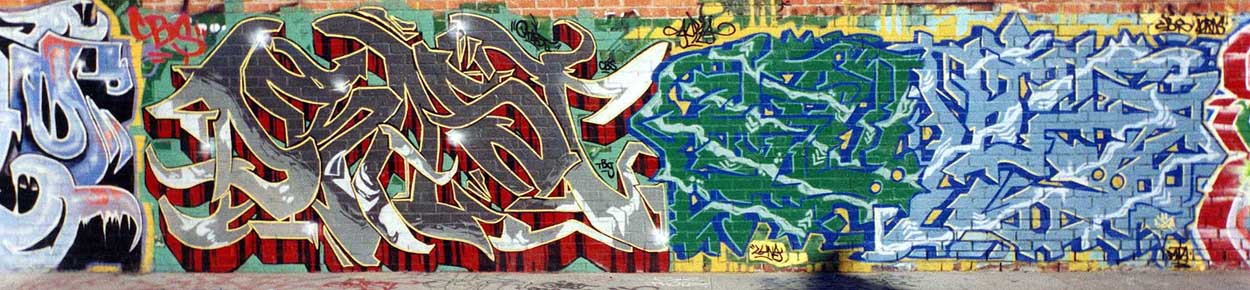
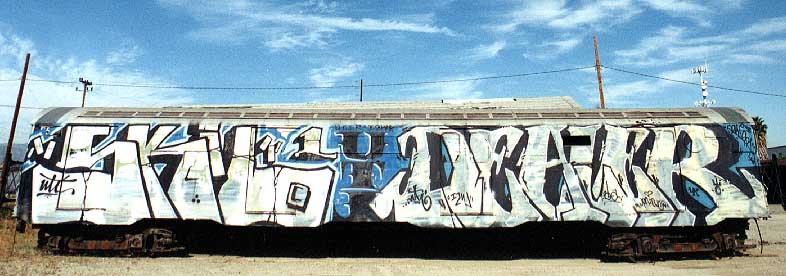
Graffiti can be a political message, a lymric on a bathroom wall, a doodle on a desktop, and now even a digital image on the worldwide web. The modern graffiti movement that has its roots in hip-hop culture (or vice versa) began in the 1960s. Kids, like TAKI 183 (sometimes credited with being the first writer), scrawling an alias (Taki is a Greek nickname for Dmitrius) and their street (183rd St). Territorial tagging caught on, TRACY 168 (not a woman) and many other names appeared on New York�s walls and alleyways. (see Spraycan Art, Chalfant & Subway Art, Chalfant) According to PREONE of Philly, graffiti "tagging/bombing" was begun by a writer named TOPCAT in Philadelphia, PA who brought it to new York "giving them what the old new York writers referred to as 'Broadway Style' tags." "We had the first bombed transit system, and it was David Gunn the man who ended New York train graf who got his start as president of the Philadelphia transit system, who eradicated graffiti from our subways, trolleys and buses."
From then on new ways of marking territory and making anonymous claims to fame rose up. "Spraycan Art" stood out from tags and names, as the lettering became an artistic expression. Graffiti writers turned themselves into graffiti artists. They used more colors, bigger letters, incorporated images from pop culture, like cartoon characters, and even made up their own.

In the seventies, and again in the eighties, Graffiti was tempted to join mainstream art. The art world took an interest in its rawness and popular potential. They saw a whole new culture emerging that they mistook for a genre. The culture has since found and lost its own identity in many ways. Working outward from the ghettos of the eastern US it has reached the youth of every major city in the world.
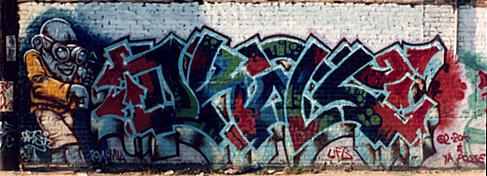
The 1990s have seen two graffiti resurgences that have brought it even further into the mainstream. We can see graffiti on TV in the background of commercials, music videos, and movies. It spreads across our clothing and even our bodies as tattoos. Graffiti-styled lettering can be seen in numerous print ads and product labels.
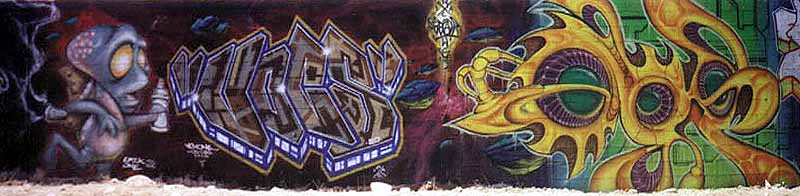
We must take a look around us and ask, "Where are we taking graffiti?" and "Where is it taking us?"
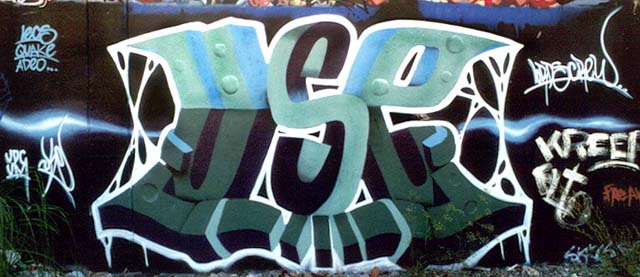
How should we USE graffiti? How does graffiti USE us?
