The Art of Turntablism�
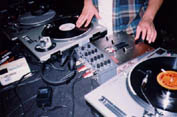
In the early 70's the 'mixer' was developed and changed the whole dicoteque style. People could now dance for longer time periods as the club DJ smoothly mixed one song over to another. This made almost all the live bands that had used to be the norm in clubs, loose their jobs. Club DJ's even took the next step and asked the record companies for longer tracks and remixes. Making the industry switch to a longer lasting and bigger record. Thus the 12 inch record was born.
Around this time in the early 70�s, the radio jockeys still played one and one tracks (one track at a time). A funny story is still told that the radio jocks cut and pasted the breaks back and forth so that it sounded like they did it live. The Club DJ's heard this and thought that the radio jocks were of course doing this live. This made the Club DJ�s start doing it in the clubs. Thus they in fact invented the 'Backspin' technique without knowing that they really invented it! The �Backspin� technique is often used today on most urban radio shows.
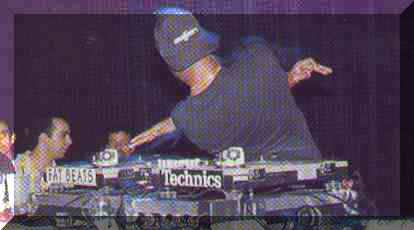
And by the year 1974, the clubs around the world were changing their names to Discoteque (French), and eventually it shortened to Disco.
The Dicoteque was invented in France as one restaurant in the early 70's exchanged the live bands with a record player. With the record player they had the opportunity to choose music from the charts. The restaurant later built a dance floor and it was now possible to eat and dance at the same place. Slowly the food disappeared. And the bars came. More lights were added to the floor and it took of from there and became the Disco�s we all know about.
The Discos then developed fast all over the place and soon there would be Discos for rich people, gay people, special music, black discos, and Latino discos.
By 1975 there were 2000 different discos in America (Rolling Stone Magazine)
The Disco era was from 1973 to 1979, and artists like Bee Gees ruled the charts.
At the same time outside the New York's Caribbean community had introduced the 'Sound Systems' at their own back yard parties. In Jamaica, the Jamaican DJ's had been doing this since the 60's having their parties with their own mixers and mixing style. This caught on in the states as well.
One of the first Radio DJ's in the USA, Dr. Hep Cat used to throw some rhymes on the air like, ''If you want to hip the tip and bop the top - You get some mad threads that just won't stop'' This influenced other Radio DJ's and ordinary DJ's to say some rhymes on the air and in the club, these DJ�s are well known as the first Rappers.
Kool Herc was one of the DJ's that started rapping over the records. He could talk over the records, saying stuff like: Ya rock and ya don't stop, this is the sounds of DJ Kool Herc and the Sound System, and you're listening to the sounds of what we call the Herculoids.
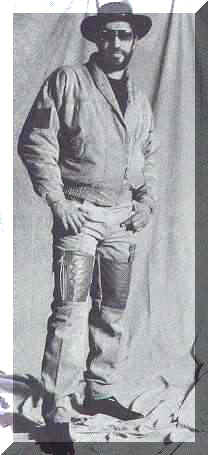
Kool Herc came from Jamaica in 1967. His Jamaican Dub records would not work, so he started playing Latino funk. Herc's favorite artist was James Brown. That's who inspired him the most. He was living in a hood were there was a lot of youth gangs that had a lot of private parties (House parties/Jams), were they was dancing in the street (B Boying) and painting their names all over the city (Tagging/Graffiti). The block parties started out as a battle between the sound systems. Kool Herc's invention was to repeatedly play instrumental breaks he would talk street wise with an echo machine. Another Herculoid, Grand Wizard Theodore changed it up a bit by putting some scratching in the echo machine instead. Grandmaster Flash took it from there to the next level.
As Kool Herc's reign was ending, there was a new time for Grandmaster Flash and Afrika Bambaataa. There was only three well-known DJ's in the end of the 70's and the beginning of the 80's. They were, DJ Kool Herc, Afrika Bambaataa and Grandmaster Flash.
In the early 80's, the DJ's and producers took over from were the pop era stopped with 12'' remixed records. And they made a lot of remixes on them, like: The Accapella mix, Dub mix, Street Mix, Hip Hop mix etc. As In Deep said it, ''There's not a problem that I can't fix - Cause I can do it in the mix''.
In the 80's and 90's there was more influence to the Turntablism Element of Hip Hop.. To veiw more on the 80's and 90's Turntablism.. Hit up the MCing part of the Four Elements Page..
OR.. Click here...
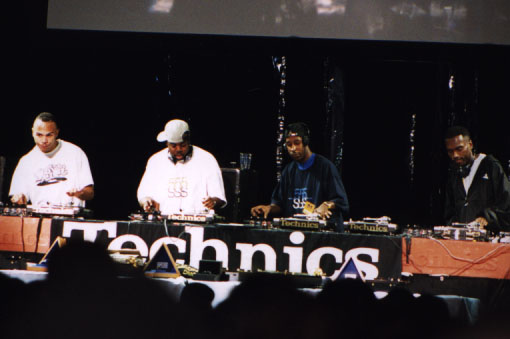


In the early 70's the 'mixer' was developed and changed the whole dicoteque style. People could now dance for longer time periods as the club DJ smoothly mixed one song over to another. This made almost all the live bands that had used to be the norm in clubs, loose their jobs. Club DJ's even took the next step and asked the record companies for longer tracks and remixes. Making the industry switch to a longer lasting and bigger record. Thus the 12 inch record was born.
Around this time in the early 70�s, the radio jockeys still played one and one tracks (one track at a time). A funny story is still told that the radio jocks cut and pasted the breaks back and forth so that it sounded like they did it live. The Club DJ's heard this and thought that the radio jocks were of course doing this live. This made the Club DJ�s start doing it in the clubs. Thus they in fact invented the 'Backspin' technique without knowing that they really invented it! The �Backspin� technique is often used today on most urban radio shows.
And by the year 1974, the clubs around the world were changing their names to Discoteque (French), and eventually it shortened to Disco.
The Dicoteque was invented in France as one restaurant in the early 70's exchanged the live bands with a record player. With the record player they had the opportunity to choose music from the charts. The restaurant later built a dance floor and it was now possible to eat and dance at the same place. Slowly the food disappeared. And the bars came. More lights were added to the floor and it took of from there and became the Disco�s we all know about.
The Discos then developed fast all over the place and soon there would be Discos for rich people, gay people, special music, black discos, and Latino discos.
By 1975 there were 2000 different discos in America (Rolling Stone Magazine)
The Disco era was from 1973 to 1979, and artists like Bee Gees ruled the charts.
At the same time outside the New York's Caribbean community had introduced the 'Sound Systems' at their own back yard parties. In Jamaica, the Jamaican DJ's had been doing this since the 60's having their parties with their own mixers and mixing style. This caught on in the states as well.
One of the first Radio DJ's in the USA, Dr. Hep Cat used to throw some rhymes on the air like, ''If you want to hip the tip and bop the top - You get some mad threads that just won't stop'' This influenced other Radio DJ's and ordinary DJ's to say some rhymes on the air and in the club, these DJ�s are well known as the first Rappers.
Kool Herc was one of the DJ's that started rapping over the records. He could talk over the records, saying stuff like: Ya rock and ya don't stop, this is the sounds of DJ Kool Herc and the Sound System, and you're listening to the sounds of what we call the Herculoids.
Kool Herc came from Jamaica in 1967. His Jamaican Dub records would not work, so he started playing Latino funk. Herc's favorite artist was James Brown. That's who inspired him the most. He was living in a hood were there was a lot of youth gangs that had a lot of private parties (House parties/Jams), were they was dancing in the street (B Boying) and painting their names all over the city (Tagging/Graffiti). The block parties started out as a battle between the sound systems. Kool Herc's invention was to repeatedly play instrumental breaks he would talk street wise with an echo machine. Another Herculoid, Grand Wizard Theodore changed it up a bit by putting some scratching in the echo machine instead. Grandmaster Flash took it from there to the next level.
As Kool Herc's reign was ending, there was a new time for Grandmaster Flash and Afrika Bambaataa. There was only three well-known DJ's in the end of the 70's and the beginning of the 80's. They were, DJ Kool Herc, Afrika Bambaataa and Grandmaster Flash.
In the early 80's, the DJ's and producers took over from were the pop era stopped with 12'' remixed records. And they made a lot of remixes on them, like: The Accapella mix, Dub mix, Street Mix, Hip Hop mix etc. As In Deep said it, ''There's not a problem that I can't fix - Cause I can do it in the mix''.
In the 80's and 90's there was more influence to the Turntablism Element of Hip Hop.. To veiw more on the 80's and 90's Turntablism.. Hit up the MCing part of the Four Elements Page..
OR.. Click here...