~ INSTALLATION / COMMISSIONING ~

In keeping with most major oil companies' policies of continually re-equipping their sites with the latest state-of-the-art equipment, I was regularly involved with installing and commissioning new pumps. The following is a brief summary of the procedure. This job took place during April 2002 at Shell Dreghorn on the Edinburgh City By-pass, and was the last major job I carried out for the company.

OUT WITH THE OLD

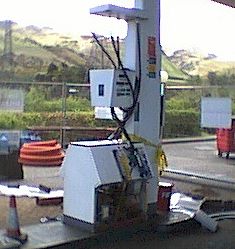
One of the old dispensers which is due for renewal. They are 10-12 years old which is the average lifespan for a pump on a high-volume service station. The electrics and comms cables have been disconnected, the suction pipes uncoupled, and the pump is ready for lifting off.

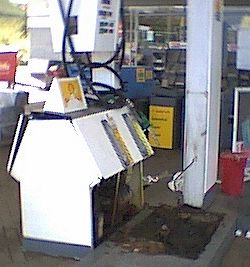
The old dispenser is lifted off the island leaving a hole which needs to be enlarged and deepened to take the cradle for the new dispenser. The suction pipes will need repositioning and a new line installed for the extra grade as the new dispensers are 3 grades replacing the old 2 grades (6-hose pumps replacing 4-hose ones). In this particular case the service station's main electrical supply board had to be renewed as the new dispensers have 3-phase electric motors, the old ones being single phase.

IN WITH THE NEW

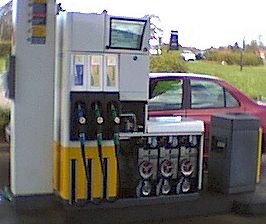
The first of the new dispensers (Tokheim Quantium 500 6-hose) installed and ready for commissioning. The three pump units (one for each grade) are clearly visible as the door panel has been removed for verification of correct operation and leak inspection during commissioning.

COMMISSIONING

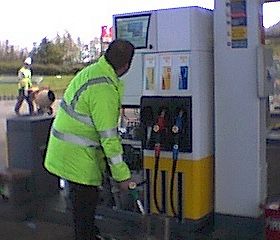
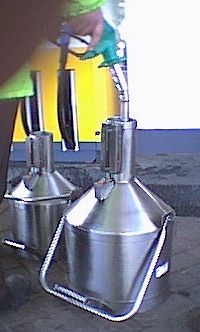
The pump units are primed and the first fuel is run through the dispenser. A delivery of 10 litres is run through each nozzle to clear any air from the hydraulics while the whole operation of the pump is closely monitored and a close inspection carried out on the internal hydraulics and external hoses, nozzles and all couplings for leaks. Only when this is satisfactory can measure checking commence. A 20 litre fast and 20 litre slow delivery is taken from each nozzle into a calibrated measure can, and any adjustments required are made to the meters until a delivery of "strike" (no errors) is obtained.

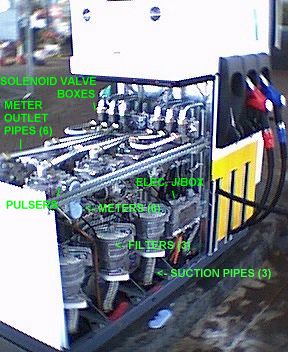
This picture shows the front of the dispenser with all of the hydraulic cladding removed for leak inspection. The fuel flow begins at the suction pipes, coming underground from the tanks. It passes through the filter which includes a non-return (check) valve into the pump unit which contains an air separator to remove any air in the fuel to atmosphere. Pure fuel then enters the meter where it drives a shaft via pistons in a precisely measured operation. This shaft then drives the pulser unit which converts the rotation into electronic pulses which it sends to the display head, where the CPU (central processor unit) computes this information using the price per litre to display the correct cash and volume for the sale, then transmits it to the POS (point of sale) terminal in the shop.
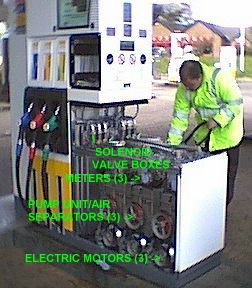
The rear side of the pump showing the motors, pump unit/air separators, meters and solenoid valve boxes.

There are three motors and pump units - one for each grade of fuel, serving two nozzles each (one for each side of the pump). There are six meters (one for each nozzle) and six solenoid valves (one for each nozzle) enclosed in two boxes, the main purpose of these being to ensure that fuel can only be dispensed through the nozzle which has been authorised by the operator when the shared pump unit is running.

GETTING YOUR MONEY'S WORTH

Before the pumps can be legally used for retail sale, an appointment is made with the trading standards officer from the local council. He or she usually attends with an assistant, and in the presence of the engineer, tests all of the measures on fast and slow deliveries into specially calibrated high-precision measuring cans. They use 20 litre, 10 litre and 2 litre cans for the tests, and when satisfied that the pumps have no errors, are functioning correctly and are fit for retail use, they will apply their official stamp to the many lead seals which effectively secure the measure adjusting screws and the major measuring components (meters and pulsers) into the frame of the pump. The pump is now ready for you to use.

LPG

In addition to petrol and diesel fuel, all of the major oil company sites in the UK (and a few privately owned sites) are installing LPG (liquefied petroleum gas), which retails at less than half the cost of petrol and has cleaner emmissions.

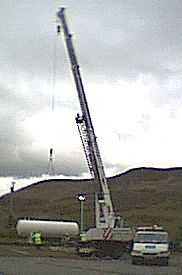
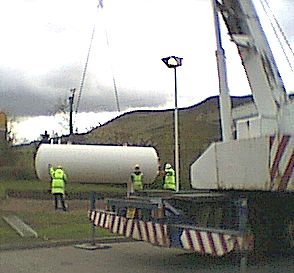
Here is the LPG tank being delivered and installed at this site.

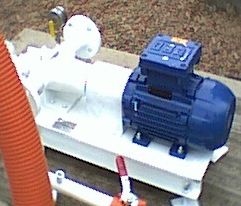
LEFT - The LPG pump unit and electric motor installed in the tank enclosure ready for coupling up to the tank.

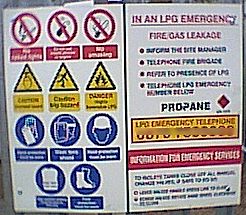
RIGHT - The warning sign on the LPG enclosure gate displaying the stringent regulations - much more comprehensive than those for petroleum.

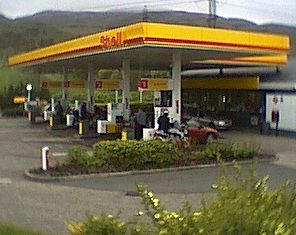
LEFT - The finished job - all pumps installed and the site fully open for business.

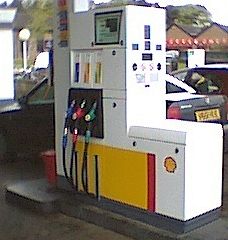
RIGHT - One of the new dispensers looking good and already in use.

MENU

Hosted by www.Geocities.ws

1