 |
| DIRECTED BY |
| Laurent Cantet |
| STARRING |
| Aur�lien Recoing |
| Karin Viard |
| Serge Livrozet |
| Jean-Pierre Mangeot |
 |
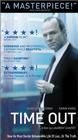
�Time Out� pretty much destroyed any interest that I ever may have had in business. But open further reflection, I realized that this story could be broken down to represent any demanding career and the effects that it can have on a person, really. This film communicates its story with true power because of its realism � its aura of authenticity � and its examination of a fragile state of things within one man�s seemingly-controlled-yet-extremely-disorderly life under these pretenses. Hell, even its lead actor � Aur�lien Recoing � defies any cinematic convention. He�s balding, bulky, and generally unattractive � and this is truly the story of an everyday man.
The film is plodding; meticulous; almost Rohmerian, yet it remains compelling. For quite a while, even, the film is devoid of any conflict � our protagonist takes care of shady business dealings until he finally gets into an argument with his wife over a �new job.� This sense of insidious dread actually made the film very interesting for me. The performances certainly helped achieve this as well � Karin Viard has been a favorite French actress of mine since first seeing her in �Delicatessen� and she�s very impressive here, articulating her thoughts and emotions in subtle ways and typifying the quintessentially mysterious-yet-simple female character.
There are more than a few interpretations that can be devised from certain developments in this film, as not everything is laid out clearly through overly neat dialogue like in many other films, for instance. By my interpretation, Vincent (Recoing) is fired from his previous job and � in a decision of dignity (not denial, because he hated the job anyway) � he lies to his wife and begins to fabricate a new career for himself that involves creating a fake stock scheme and convincing rich friends to invest in it. But things get out of hand when the pseudo-scheme gets around and Vincent ends up unintentionally letting too many people in on it. I don�t think Vincent does this to avoid work, but to use as a front until he may find happiness. This opportunity arises when Vincent meets a charismatic racketeer � he initially declines the offer but eventually agrees to do �business� with him. Through all of this, Vincent�s conflicting states of mind are fascinating to watch as his wife gradually begins to suspect his untruthfulness. Vincent is � by no means � an unlikable character; he is clearly a good man at heart who just happens to lose his footing in the game of life, which in turn leads to very unfortunate things.
But is this a film about the adversity of the business world? It really shouldn�t be approached that way � it should simply be looked upon as a study of the unhappiness of one man and his efforts to do something about it. Just about everything that happens here seems appropriate � character actions and motivations never seem overwrought or fabricated, which is what makes �Time Out� more than an excellent character study � it�s more of an excellent family study.
We see Vincent hand his son big money as a gesture of affection. It�s all about the benjamins in this society � sometimes even love. And when Vincent tries to escape this world � in a trip to the cottage with his wife � he�s still confronted with suspicions, and it�s cash and corporate life that ultimately destroys this man�s sense of virtue and rationality.
I thought it could�ve ended a little more neatly � we can only assume that Vincent is still with his wife. But the shot just before the final one � showing Vincent fleeing his car to simply walk out into the solitude of the night in hopes of forgetting his heartache just for a moment � is a perfect one that the film probably should�ve concluded with if ambiguity was the biggest concern.