The Spy Who Came In from the Cold (1965) |
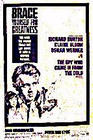 |
| DIRECTED BY |
| Martin Ritt
|
| STARRING |
| Richard Burton |
| Oskar Werner |
| Peter van Eyck |
| Claire Bloom |
 |
Warning: Spoiler in Final Paragraph
This must be what espionage is really like. Here we have a James Bond film without the infinitely confident protagonist, the charming lasciviousness, the clever little gadgetry, the car chases, the massive explosions, etcetera and etcetera � in fact, it�s just not that exciting. It is, however, an intelligent, convincing, and carefully paced depiction of the sordid world of espionage; the film never attempts to kick-start its audience into excitement by glorifying its subject material � if one can�t appreciate the story itself, then so be it.
This is not to say that the film didn�t bore me on occasion � the cinematography isn�t exactly imaginative and the deliberately vague plot developments even began to frustrate me. One can never be quite too sure what is going on here � is Alec truly betraying his country or is he indeed just following his orders? Shady characters and curious dealings are introduced at every turn until the film decides to finally give us clear-cut answers with a courtroom sequence, and does it ever come together neatly. Once these explanations are given, the film asks us to think back in order to put the pieces of this meticulously constructed plot together � but not too much, because it all makes sense quite quickly.
For many viewers � because of the uncompromisingly slow pace and verboseness � it will take some patience to sit through to the end. Richard Burton�s performance, however, was alone enough to keep my interest � his wide-eyed expressions of fear and stuttering, inebriated dialogues give a perfect picture of a spy who�s somehow gotten way in over his head and just doesn�t even have the energy to care that much anymore.
�The Parallax View� (1974) recalls this film in that it also depicts authority/omniscience as being one huge, dirty, and contemptible lie � so much so that our protagonists in both films never really realize what is actually going on underneath their nose. They�re essentially good men with noble intentions; however, their struggles ultimately turn out to be futile. This film perhaps makes an even greater statement concerning the unjust corruption and the guileful deceit of authority (in this case � espionage) and the ultimate inhumane destruction that it all leads to because it seems even more unwaveringly authentic.
| | |