 |
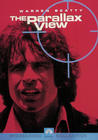
| DIRECTED BY |
| Alan J. Pakula
|
| STARRING |
| Warren Beatty |
| Hume Cronyn |
| William Daniels |
| Kenneth Mars |
 |
Warning: Spoilers in Final Three Paragraphs
Perhaps it�s a gross and unnecessarily depressing exaggeration, or perhaps it�s uncannily close to the truth? The mere fact that Pakula manages to create a believable atmosphere out of this film�s highly conspiratorial premise is enough to make it notable. �The Parallax View� may not actually reflect reality in any way, but its disturbing insinuations nonetheless make it more eerie and all-round disturbing than just about every horror film that I�ve ever seen. This is, of course, not a horror film in the traditional sense � there are no zombies or vampires. �The Parallax View� creates its own sense of horror in much subtler, more realistic way.
One wouldn�t normally connect stylization with Alan J. Pakula�s direction. He was generally a very traditional, dialogue-heavy director who relied on strong performances and interesting scripts to make his films good. �The Parallax View,� however, is a directorial diversion from those conceptions. Here, Pakula�s film is stylized in a very unusual way that doesn�t involve much dialogue at all, particularly in relation to the final act. He uses symbolism � the circular tower at which the initial assassination takes place represents the parallax of the film�s subject � everyone has a unique angle of observation. There is a use of many bizarre, elevated camera angles and odd time transitions. And at the forefront, the pace of the film is deliberately subdued and quietly ominous, successfully reflecting an ambience of paranoiac insidiousness.
The subliminal montage that we're treated to about halfway through the film is very reminiscent but even more perturbing than the one that Kubrick's 'A Clockwork Orange' has to offer. This is certainly one of the most convincing 'you never know who to trust' films that I've seen - it seems as if everyone has a reason to push Frady into a bottomless pit. The film's final statement - that contesting omnipotence is futile - certainly doesn't leave viewers with a particularly enjoyable taste in their mouth, but it's a powerful taste nonetheless.
Like Polanski was so fond of doing with his early films (see �Repulsion,�) the restrained pace of �The Parallax View� ultimately leads to big payoffs. Who was suspecting that boat explosion, anyway? Or that sudden close-up on Lee Carter�s corpse? I certainly wasn�t. There are flaws here, however, and many of them come during the airplane bomb sequence. Beatty�s performance is generally commendable, but he appears to be far too calm after finding out that there�s a bomb on board and the luck that he relies on in order to resolve the problem just isn�t believable. Pakula�s decision to still have the plane explode afterward is also executed in a fairly laughable fashion.
The film also contains what I would call a fairly major flaw. I understand that Frady was setup by the Parallax Corporation to act as a scapegoat for their actual assassin, but the fact that he was murdered at the end and then identified as the only person involved in the assassination doesn�t make sense. It was obviously not a police officer who shot him, so the film is now identifying the government as being flat-out dishonest rather than simply ignorant (as in the beginning.) Perhaps Pakula even intended to make this statement, although it just seems inconsistent to me. For all of these criticisms, however, �The Parallax View� still stands as the most intelligently constructed conspiratorial thriller that I recall ever seeing.