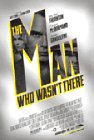
 |
| DIRECTED BY |
| Joen Coen
|
| Ethan Coen
|
| STARRING |
| Billy Bob Thornton |
| Frances McDormand |
| Tony Shalhoub |
| James Gandolfini |
 |
Certainly my favorite film from the ethereally revered Coen Brothers � they�ve finally outright impressed me both technically and narratively. So many detractors of this film appear to chastise it for being quite a deviation from anything the Coens have done � they�re used to the wry/black humor of their previous films, which is delivered much less tangibly here. This is, however, ultimately a credit to the story�s authenticity, making this film more uncompromisingly contemplative than any of the Coens� previous works.
Ed Crane (Thornton) has perhaps unwillingly relegated himself to being a laconic passive-aggressive; a personality trait that the lethargic, banal, and deceitfully boring world in which he inhabits has carved for him. Once he finds out about his wife�s infidelity, his decision to blackmail the other man (Gandolfini) appears to be done less out of disappointment than out of financial gain in order to invest in a dry cleaning opportunity � Crane simply wants to progress his life; he just wants to get something else on the go. The literal plot that follows is insubstantial compared to the central characterization.
For me, the film�s meticulous pace never gets boring thanks to the surprisingly refined sense of style that the Coens show here. Particularly impressive scenes: a vertically swooping camera, framing Thornton from the outside of two windows as he moves within a building; the Ed/Dave choking scene in which we externally see the office�s large window crack from pressure; and certainly the most elegantly/creatively filmed car crash scene that I�ve ever had the pleasure of watching.
Those searching for humor should find it within the Coens� sly sense of placement. Ed � grasping for something interesting to think about � decides to philosophize about a kid�s hair. Later on, we see him glaring at a customer�s hair once again, clearly intrigued. When Big Dave�s wife first tells Ed about UFOs, we later see him staring at a Roswell article and then � near the end � he imagines his own space ship not because he believes in it but because it�s much more interesting than his own reality. Billy Bob�s amazingly deadpan performance also makes for some laughs, particularly during the piano teacher scene. And Jon Polito�s incomparable ability to convey genuine sleaze is amusing. These small, witty additions are what enrich the Coens� films so fully and � unlike usually � it all seems completely appropriate here.
My few criticisms would be that perhaps a certain character's suicide could've been done slightly more convincingly and less abruptly. Maybe some dialogue could've been trimmed to make the film play a little more tersely.
Crane is just too disillusioned by his surroundings and by his actual life on the whole to really try to do that much about his circumstances � he just sort of goes with the flow, observing himself and the hole that he somehow dug himself into while he was simply trying to find some redemption. Another shot at redemption comes when he decides to try to help out a young girl (Johansson) but � sure enough � that goes awry as well. The way with which the film concludes only seems apt, and it�s not a cop out � the Coen Brothers went all the way with showing just us how difficult mere existence can sometimes be.