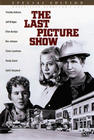
 |
| DIRECTED BY |
| Peter Bogdanovich |
| STARRING |
| Timothy Bottoms |
| Jeff Bridges |
| Cybill Shepherd |
| Ben Johnson |
 |
Warning: Spoiler in Final Paragraph
This is a film about lost significance; although Bogdanovich only uses his commentary concerning the loss of the cinema�s significance to television and other new technology in favor of exploring the lost significance of love, it�s about as fascinating a subplot as one can hope for, especially coming from a cinephile of a director such as Peter Bogdanovich.
All of the film�s relationships � from Jacy and Duane to Sonny and his first girlfriend to Lois and her lover to Ruth and her husband � with the exception of Sonny and Ruth, they all lack the most basic fundament of love: passion (not to be confused with lust.) But the one meaningful relationship is the one that is � of course � considered to be taboo. This summation makes the film sound much like a daytime soap opera, but it manages to transcend that clich�. It oozes with authenticity, from the radio-only soundtrack to the perfectly captured Texan vernacular used by each actor.
The cinematography, with its wonderfully crafted lighting, is somber without being bleak and Bogdanovich directs in a very subtle, restrained manner that causes many viewers to dismiss the film as just plain boring. But I think this style works very well in capturing the generally lethargic ambience of Anarene. The film is stylized in some ways as well � Bogdanovich makes use of many interesting shots featuring the actors speaking directly into the camera, and the editing is done in a cleverly energetic way at times (witness the fight scene between Sonny and Duane.)
What I really like about this film is the strong sense of nostalgia that it develops and the gradual degradation that it so convincingly depicts. Even though what they had when Sam was around wasn�t much, it�s still painful to see it slip all away. Miss Mosey�s final assertion that �nobody wants to come to shows no more� is so devastating because of the rather stoic way with which the boys reply � they�re pained to have to let go of their past - but just like their friendship, they can only say goodbye to it.
Perhaps the film would�ve been better off without so much symbolism � it�s evident that, by the end, the character of the mute boy is supposed to represent lost innocence, but I thought the incident was largely unnecessary and seemed to detract from the great element of realism in the film. I also thought Cybill Shepherd seemed a little too doll-like at times in her performance � she shows a penchant for �over-acting.� But only at these rare moments when �The Last Picture Show� seems to be more of a phony melodrama rather than a realistic portrait is it disappointing. There are also some loose ends that seem to have gone untied, though � such as Sonny�s relationship with his father, which was depicted as being awkward but never really explained. For that matter, Sonny seems to lack a family altogether. Perhaps it was just something that I missed, but that seemed a bit odd to me.
Kudos goes to Larry McMurtry for writing such believable, charming dialogue for his characters. Even the film�s most philosophical speech � coming from Sam at the beach � doesn�t seem contrived. We�re never bombarded with political subtext because the film is only about the people of Anarene and having to watch these characters gradually fade away with the town�s inevitable decadence is heartrendingly difficult. Sonny�s final attempt at rebellion could�ve gone either way for me � perhaps it would�ve made more sense for him to have simply left Anarene. Bogdanovich opted for a more hopeful ending that works fine too, because the final shot of a windswept, barren, and completely desolate Anarene tells us everything else that we may want to know.