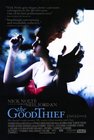
 |
| DIRECTED BY |
| Neil Jordan
|
| STARRING |
| Nick Nolte |
| Tch�ky Karyo |
| Sa�d Taghmaoui |
| Nino Kukhanidze |
| G�rard Darmon |
 |
Warning: Minor Spoilers
I wish I could compare Neil Jordan�s �The Good Thief� to Jean-Pierre Melville�s �Bob le Flambeur,� but I haven�t gotten around to seeing that 1955 French film yet. But then again, perhaps it is a better thing to analyze Jordan�s film as its own entity instead of in comparison with another.
No one seems to be complaining about Nick Nolte�s performance as Bob, the aging gambler on a losing streak who decides that his days of masterminding heists haven�t come to an end quite yet. And indeed he is quite a compelling actor to watch � with his woebegone-yet-chiseled countenance and charred voice � but it�s actually his character�s juxtaposition with Anne, an erratic teenage wayfarer, that provides the most interesting dynamic. Her future is uncertain to her, and the future is all that Bob has to look forward to. They come from two different generations, but their hearts are most definitely living in the same time period.
Although the screenplay certainly fits the profile, it�s difficult to classify �The Good Thief� as a film noir because of its constant variations in atmosphere and texture � it certainly isn�t a traditional film noir, but could be interpreted as a �modern� one. In particular, Jordan�s lightning-quick editing montages wouldn�t be seen in methodically paced film noirs like �The Maltese Falcon� or �The Third Man,� but they�re nonetheless very interesting to watch and show much visual flair.
The film concludes as if every twist within the plot comes together perfectly by the end, but viewers determined to make sense of each intricacy will probably find a number of character and narrative contradictions. For instance, the appearance of the twins is too convenient to be believable. Would Paulo and Bob really have tossed away their elaborately planned painting heist, suddenly in favor of money instead? And when it turns out that Bob, Paulo, and the twins successfully stole the money, it seems as if they didn�t even inform their comrades from the painting heist of their actual scheme, which doesn�t correspond with the �warmhearted criminal� persona that we�re meant to associate with Bob. Also, realistically, there's no way that Bob would simply be able to walk away from what he did when all is said and done and Roger finally realizes exactly what went down. I wouldn�t be so concerned with these so-called �plot-holes� had the film not been structured upon realism, which it indeed is.
And whatever happened to Ralph Fiennes by the end? Was there really much of a purpose for his character in this film at all? The plot and character motivations in Neil Jordan films have always perplexed me, and until I see a film by him that manages to fuse its elements together effortlessly in the end, I�ll be unable to think of him as much more than a visually virtuosic but narratively wayward filmmaker.