|
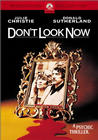 |
| DIRECTED BY |
| Nicholas Roeg
|
| STARRING |
| Julie Christie |
| Donald Sutherland |
| Hilary Mason |
| Clelia Matania |
 |
Warning: Spoiler in Final Paragraph
This film could easily be torn apart by someone who isn�t a major fan of filmic loose ends, red herrings, dues ex machinas, splintered editing, and/or vague storytelling. But Roeg�s �psychic thriller� still manages to hold up as far as confusing creepiness goes, and it actually does make some worthwhile statements concerning the irrepressible trauma that sudden bereavement may cause (especially of a young child,) and the destruction which all of that may lead to.
Roeg�s bizarre editing style frustrated me at first, but then I managed to constitute it to an actual theme of the film � he fragments a �future scene� within a current scene in order to provide his actual narrative structure with the psychical ambience of the actual storyline (ex: the infamous sex scene.) I, however, am not much of a fan of Roeg�s incessant insistence to simply insert distractions into his plot that ultimately never develop into holding any coherent meaning � a red herring should at least eventually come to make sense, but Roeg simply throws odd scenes in for the sake of confusion here (ex: the laughing psychics.)
The plot contains evident elements of a classic Oedipus-like tragedy, where the blind are capable of seeing the truth and the ones who can actually see stubbornly blind themselves from it. Even though I understand the intention behind it � that John was too �blinded� by emotional trauma to even consider otherwise � the ending relies slightly too heavily upon an abrupt coincidence for my taste. It�s an interesting notion that if one doesn�t embrace their �power� or �gift� then it�ll ultimately deceive and work against you (as it does to John, who actually foresees his own death but doesn�t realize it.) The film is fraught with an excellent aura of mystery; however, much of it never really connects, which is truly unfortunate.
| | |