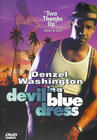
Devil in a Blue Dress (1995) |
 |
| DIRECTED BY |
| Carl Franklin
|
| STARRING |
| Denzel Washington |
| Tom Sizemore |
| Maury Chaykin |
| Jennifer Beals |
| Don Cheadle |
 |
�Devil in a Blue Dress� quickly creates a very appealing mis� en scene that�s constructed upon upbeat and sunlit scenery. Combined with director Franklin�s dexterous dolly movements and smooth camera techniques that follow the always-charismatic Denzel Washington around the culturally diverse streets of 1948 Los Angeles, it makes you want to throw your imagination into its storyline for a few hours. With brooding and insidious male characters, beautiful and mysterious female characters, voiceover narration by the protagonist, and a gradually revelatory, detective-like storyline we get the sense that we�re watching a more-colorful-than-usual film noir. There�s no question that it couldn�t have been setup much better; it�s too bad that it slowly-but-surely dissipates away into the realm of conventionality.
As far as underrated acting goes - Tom Sizemore is spectacularly sleazy as the coldhearted DeWitt Albright and Maury Chaykin is his usually creepy self as the political pedophiliac Matthew Terell. Easy Rawlins (Washington) is a familiar character � he�s a man who will do just about whatever he has to do in order to earn some cash, although he�s proud of his dignity and won�t sell himself short. He�s also more amiable and compassionate than the average man is, which is what ultimately differentiates him from the bad guys of the story. The lesser-seen element here, however, is that he also happens to be Afro-American. It�s refreshing to see a film concentrate upon this culture without trying to dictate too many things to us about it � race is an element of this film, but it�s not a particularly prominent or overblown one.
A myriad of different characters are introduced � sometimes it seems as if the film is actually relying upon the appearances of new characters in order to progress the plot, and even then some things aren�t made very clear. I understand that the writers were simply trying to convey the sheer volume of the situation that Easy has gotten himself into, but its lack of tautness just gets annoying after a while. And there is a cool aura of mystery surrounding the plot until you realize that it�s simply going down the all-too-familiar cinematic road of political corruption. The final theme of an average man achieving complacency through oppression is well communicated, but couldn�t it have been done in a slightly more interesting/original/unique way?
| | |