 |
| DIRECTED BY |
| Jim Jarmusch |
| STARRING |
| Johnny Depp |
| Gary Farmer |
| Crispin Glover |
| Gibby Haines |
 |
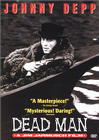
It�s difficult to walk out of a film like this with a clear summation of what exactly it was that you just sat through. There are implications made toward societal and social degradation that could be applied to 21st Century America; however, writer/director Jim Jarmusch decided to abstract these potentially clear-cut themes with the layering of an eccentric Western movie.
Those who are willing to accept the philosophical nature of �Dead Man� may appreciate the film for a number of reasons. Jarmusch�s specialty has always been creating witty dialogue between characters, and even though it commonly results in banter, it�s usually highly entertaining banter. When Jarmusch has the right actors delivering these lines, then he doesn�t even have to drive his scenes; he can put the camera on auto pilot, stick it in front of his thespians, and let the film make itself.
�Dead Man� contains a myriad of intriguingly crafted landscapes; Jarmusch films dreary hillsides, lonely oceans, and isolated towns through a black-and-white perspective that gives the film a compelling, existential ambience a la �On the Waterfront.�
With this film, Jarmusch shows his appreciation for the classic Western while also tinkering around quite a bit with its conventions. He plays down the stereotypes of the Western through his use of quirky humor that actually works within its own context, which is an accomplishment in itself. Much of what happens and is said in �Dead Man� seems to border on ridiculousness when, in actuality, it�s pushing the envelope of a time-weary Hollywood genre by developing it into a greatly contemplative cinematic work.
So, was Jarmusch simply trying to translate William Blake�s poetry into cinematic terms while also making statements concerning humanity and existence with this film? If so, then that perhaps explains the disjointed, almost poetic effect that he employs by using an ungodly number of lethargic fade-ins. But by the end, what �Dead Man� ultimately offers to viewers is a fascinatingly existential take on the Western genre; everything else about it is, for the most part, coiled in obscurity.