 |
| DIRECTED BY |
| Giuseppe Tornatore |
| STARRING |
| Philippe Noiret |
| Salvatore Cascio |
| Marco Leonardi |
| Leopoldo Trieste |
| Agnese Nano |
 |
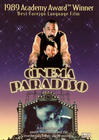
Wow � Italians sure can take their movies seriously, can�t they? �Cinema Paradiso� is widely known as director Giuseppe Tornatore�s paean to film and filmmaking, but he also makes it about much more than just the cinema. He (apparently autobiographically) chronicles the life of Toto, a young boy who quickly develops a love for cinema when he befriends an aging projectionist and then moves on to bigger and better things as he grows up, but still finds himself enraptured in nostalgia.
Tornatore really tries to play off of his audience�s emotions by trying to convince us that Toto has faced so much adversity throughout his life that it�s miraculous that he achieved any success at all. And this does work to a degree, but much of what we see Toto go through just didn�t seem as significant to me as I think Tornatore meant for it to be � particularly with the sequence showing Toto�s military service, which seems to be done so speedily that it borders on careless. Tornatore also attempts to weave the whole story around Toto as an adult by trying to convince his audience that we�re watching his memories. Unfortunately, this idea is executed quite awkwardly; a shot of Toto as a man is intermittently (and annoyingly) cut into scenes of the past throughout the film.
When the director handles the film�s pace assiduously, however, it is very affective. Some of the sequences involving Toto�s relationship with Elena are flat-out excellent, notably when we see Toto standing outside of Elena�s window night after night until he finally gives up and walks away as we see a fireworks-lighted sky shine above him. And one mustn�t forget probably the most impressive part of the film, when Alfredo slowly directs his projector�s image onto a nearby facade.
Upon reading a plot outline of this film, one would likely assume it to be relentlessly sappy. And indeed it does have those moments, but as a film about nostalgia and the importance (or unimportance, depending on your interpretation) of love, it certainly is memorable.