 |
| DIRECTED BY |
| Martin Scorsese
|
| STARRING |
| Griffin Dunne |
| Rosanna Arquette |
| Verna Bloom |
| Linda Fiorentino |
| John Heard |
 |
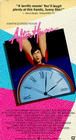
Certainly a very bizarre film if juxtaposed against director Martin Scorsese�s whole body of work, �After Hours� plays like a comedic nightmare through New York�s SoHo district. It�s initially presented as a fairly laid back social/societal satire, but as the film progresses it develops a kinetic pace and surreal atmosphere where a myriad of eccentric characters randomly appear and throw our protagonist into an endless array of creatively interwoven dilemmas.
Griffin Dunne is perfectly cast as Paul, the yuppie whose decision to pursue a small fantasy ends up leading him into a number of catastrophic misfortunes. I�m not sure if I�ve ever seen an actor go through so many differing emotions in such a short span of time. And the New York City that Scorsese portrays here definitely lives up to its moniker of �the city that never sleeps,� as the lethargic Paul sleepily schleps himself through seedy streets where something always seems to be dwelling.
Although some of �After Hours� is dated today (all Paul had to do was use an ATM machine to obtain the money he so desperately needed,) it still manages to work on a contemporary level as a fascinating exploration of what may become of a man when he suddenly finds himself in a place where he really doesn�t belong. Scorsese apparently made this film in an effort to secure financing for �The Last Temptation of Christ,� but, remarkably enough, it in no way seems put together unenthusiastically; hurriedly, perhaps, but that simply manages to benefit the appropriate pace of the film.
In his 1985 review of �After Hours,� famed critic Roger Ebert wrote that we see �clouds of steam escape from the pavement / suggesting that Hades lurks just below the field of vision.� Perhaps the atrocities do lurk below Paul�s vision, but in a way, they�re right in front of him as well. It�s this insinuation that makes �After Hours� such an important film � the pain and suffering that inhabits people is actually right there and out in the open for Paul to try to amend. He seems to have become a fallen angel who attempts to help, but only gets beaten down and degraded for his efforts.
If the theme that screenwriter Joseph Minion was trying to convey with �After Hours� was the misinterpretation among people and the destruction that it can lead to, then the film works both entertainingly and contemplatively. Even when Paul seems to be inching oh-so-closer to meeting the right person for once and catching a break, it�s just luck (or fate?) that saves him in the end. Therefore, the grand statement that �After Hours� ultimately makes isn�t particularly optimistic, but it could be interpreted as a realistic view of society that still, unfortunately enough, applies to life in our 21st Century.