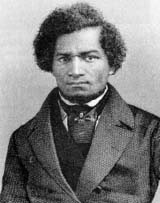
| We all know what the negro has been as a slave. In this relation we have his experience of two hundred and fifty years before us, and can easily know the character and qualities he has developed and exhibited during this long and severe ordeal. In his new relation to his environments, we see him only in the twilight of twenty years of semi-freedom; for he has scarcely been free long enough to outgrow the marks of the lash on his back and the fetters on his limbs. He stands before us, to-day, physically, a maimed and mutilated man. His mother was lashed to agony before the birth of her babe, and the bitter anguish of the mother is seen in the countenance of her offspring. Slavery has twisted his limbs, shattered his feet, deformed his body and distorted his features. He remains black, but no longer comely. Sleeping on the dirt floor of the slave cabin in infancy, cold on one side and warm on the other, a forced circulation of blood on the one side and chilled and retarded circulation on the other, it has come to pass that he has not the vertical bearing of a perfect man. His lack of symmetry, caused by no fault of his own, creates a resistance to his progress which cannot well be overestimated, and should be taken into account, when measuring his speed in the new race of life upon which he has now entered. As I have often said before, we should not measure the negro from the heights which the white race has attained, but from the depths from which he has come. You will not find Burke, Grattan, Curran and O'Connell among the oppressed and famished poor of the famine-stricken districts of Ireland. Such men come of comfortable antecedents and sound parents. |