Herbal Contents
|
|
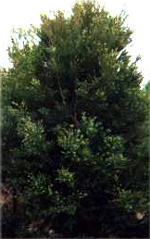
Tea Tree Oil Melaleuca alternifolia, or Australian tea tree oil as it is more commonly known, is a native Australian plant with many remarkable properties. When crushed and distilled, the leaves of this plant yield a 100% natural oil which is an antiseptic, a fungicide, and a mild solvent. Tea tree oil's major active component is terpinen-4-ol (typically 30-40%). This compound is responsible for tea tree oil's antibacterial and antifungal properties. Uses of Tea Tree OilFor medicinal purposes Infections, minor burns, cuts, sore throats, ingrown or infected toenails, sunburn, tinea, ulcers, golden staph, cold sores, pimples, and acne can all be treated using tea tree oil. Skin care Deodorants, soaps, hand creams and lotions, and an entire range of personal hygiene products are available that contain tea tree oil. Its soothing and antibacterial properties can be used to treat nappy rash, psoriasis, acne, and many other skin conditions. Hair care Anti-dandruff shampoos and conditioners are available that use tea tree oil. Tea tree oil can also be used to treat damaged hair. Pet care Some dog shampoos contain tea tree oil. Arthritis Tea tree oil relieves some of the painful symptoms of arthritis. Other uses Tea tree oil can be found in toothpastes, mouthwash, and lozenges used to soothe a sore throat. Tea tree oil's antibacterial action can also fight bad breath, foot odour, thrush, and rashes. More applications of tea tree oil are still being discovered. Benefits of Tea Tree OilTea tree oil is a 100% natural product. It is made entirely from a renewable natural resource and is completely environmentally friendly. Although allergic reactions to tea tree oil have been known, their incidence is extremely low when compared to synthetic products. Cases have been reported where the application of tea tree oil healed an infection that had survived a twelve-month course of antibiotics.
|
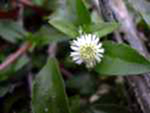 |
Eclipta Alba
This annual is a creeping and moisture-loving herb; it has a short, flat or round stem and small white flowers on a long stalk. It grows 3" tall; the leaves are opposite and lance-shaped. Eclipta grows abundantly in the tropics and is used with success in Ayurvedic medicine.
Medicinal Properties and Uses: The herb is an Ayurveda and Yunani medicine. According to Ayurveda philosophy Eclipta is bitter, hot fattening, alterative, anthelminticum, and alexipharmic. It is useful in inflammations, hernia, eye diseases, bronchitis, asthama, leucoderma, anaemia, heart and skin diseases, right blindness, syphilis etc. It is reported as beneficial for complexion, hair, eyes, and teeth.
Eclipta alba is mainly used in hair oils, but it has been considered a good drug in hepatotoxicity. In hair oils, it may be used alongwith Centela asiatica (Brahmi) and Phyllanthus emblica (Amla). The paste prepared by mincing fresh plants has got an anti-inflammatory effect and may be applied to insect bites, stings, swellings and other skin diseases.
This drug is traditionally considered safe since no signs of toxicity found during experiments on rats and mice.
|
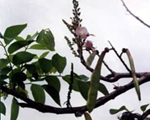 |
Madre de cacao Gliricidia sepium, apatot, balok-balok, kakawate, kakwate, kukuwatit
UsesMedicine: Crude extracts have been shown to have antifungal activity. Reported to be expectorant, sedative and suppurative. Madre de cacao is a folk remedy for alopecia, boils, bruises, burns, colds, cough, debility, eruptions, erysipelas, fever, fractures, gangrene, headache, itch, prickly heat, rheumatism, skin tumours, ulcers, urticaria and wounds. Reported to be expectorant, insecticidal, rodenticidal, sedative, suppurative, Madre de Cacao is a folk remedy for alopecia, boils, bruises, burns, colds, cough, debility, eruptions, erysipelas, fever, fractures, gangrene, head-ache, itch, prickly heat, rheumatism, skin, sore, tumors, ulcers, urticaria, and wounds (Duke and Wain, 1981).
|
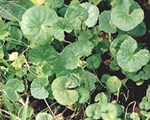 |
Centella Asiatica (Gotu Kola)
Its
chemical composition with certain types of triterpenes that seem to
account for its primary pharmacologic properties.
Triterpenes exert a significant wound-healing activity.
Taken internally or applied externally, they can hasten healing
of experimentally induced wounds, as shown in animal models.
Other observations made of animal models include a stimulation of
hair and nail growth, increased vascularization of connective tissue,
increases in formation of mucin in structural glycosaminoglycans,
increase in tensile integrity of the skin, increase of keratinization of
the epidermis and a balancing effect on connective tissue synthesis. Some studies have demonstrated a supportive role in hepatic, or liver, physiology and shown a therapeutic use of centella asiatica in the treatment of alcohol-induced cirrhosis by demonstration of regression of inflammatory infiltration. In addition, various types of venous or circulatory disorders (as evidenced by heaviness of the lower legs, paresthesias, numbness, tingling, nocturnal leg cramps, vein distensibility and peripheral edema) have been shown to improve significantly with the use of centella asiatica.
|