
So I tried media relations again.
Again there was a promise--and again no follow-through.
Indiana University and its Medical Center are stellar institutions in many respects. I currently spend a fair amount of time on the IUPUI/Med Center campus and benefit greatly from making use of various facilities there which are available to the public. I've attended a number of interesting seminars there. So I�d like to see both IU and the Medical Center prosper--and I hate therefore to have to dwell here on the negative.
But IU is a taxpayer-supported institution.
And there�s only a limited amount of money to be spent on state educational funding; there are some in Indiana government who think that more money should be spent on vocational schools and less on IU and Purdue.
And there is a special circumstance about all this having to do with me. In 1992 I wrote in my newsletter about the connection between birth control pills and cervical cancer. I invoked the names of Mrs. Marilyn Quayle and of Mrs. Kathy Rather. The latter person worked then at the Medical Center, as she did as recently as 2007. Kathy was related by marriage somehow to Mr. Dan Rather, who was then with CBS. The upshot of that whole business in 1992 was the Dan Quayle/Murphy Brown affair, a media uproar that helped end Vice President Quayle�s political career.
The whole thing began in a 1992 conversation about cervical cancer with Mary Maxwell and Pamela Perry of the media relations office of the medical center. Medical doctrine of the time cited promiscuity on the part of the patient as one of the causes of cervical cancer. I mentioned Marlyn Quayle as a possible questionable instance. It was a causual debating point to me then, and I hadn't the slightest mental forewarning that it was destined to have a considerable impact. I think it was Mary Maxwell who asked me to leave and never darken their door again. The reason for that didn't seem to be because the women in the office were big fans of Dan Quayle. The opposite seemed true.
There was something about what I was saying that they didn't like, but it wasn't any possible negative implications for Quayle.
It seems that much girl talk ensued after I left, and the whole business eventually got back to the office of the Vice President. Quayle then attacked the loose morals of a CBS TV character named "Murphy Brown."
The matter illustrates Quayle's defects as a leader. The previous administration provides a contrast. While president, Ronald Reagan had experienced intestinal polyps, which aren't an intrinsically glamorous condition. Nevertheless there was no effort to divert media attention from Reagan's condition. Instead, his illness became the occassion for cancer public awareness.
In 2007 it was revealed that the rate of HPV infection in the U.S. was considerably higher than had been thought. (At left is a link to an article that was posted.) Had Quayle followed Reagan's example, perhaps public discussion of cervical cancer might have advanced at a faster rate between 1992 and the present.
While political leaders may desire that personal information be kept confidential, close scrutiny is part of the burden of leadership. Some would-be leaders handle it better than others. Bill Clinton's possible "skeleton," as discussed in this material, might not do him that much discredit, in and of itself. As a matter that's been repeatedly covered up, however, and then reported somewhere in the mass media, it could prove politically catastrophic.
And if it's never reported, as could happen, the mass media outlets would have something on the Clintons, should Hillary Clinton have been elected president in 2008.
You might say that President Clinton would then have become a "wholy-owned" subsidiary of NBC and General Electric, among other companies. That wouldn't be likely to be good for society as a whole.
At the IU Medical Center there's been a complete refusal, as far as I can tell, to admit that those unseemly events of 1992 ever happened. But, in fact, they did happen. They weren�t the sort of events that would make Indiana politicians--Republicans especially--trust the Medical Center.
CONTINUE

page 1, top
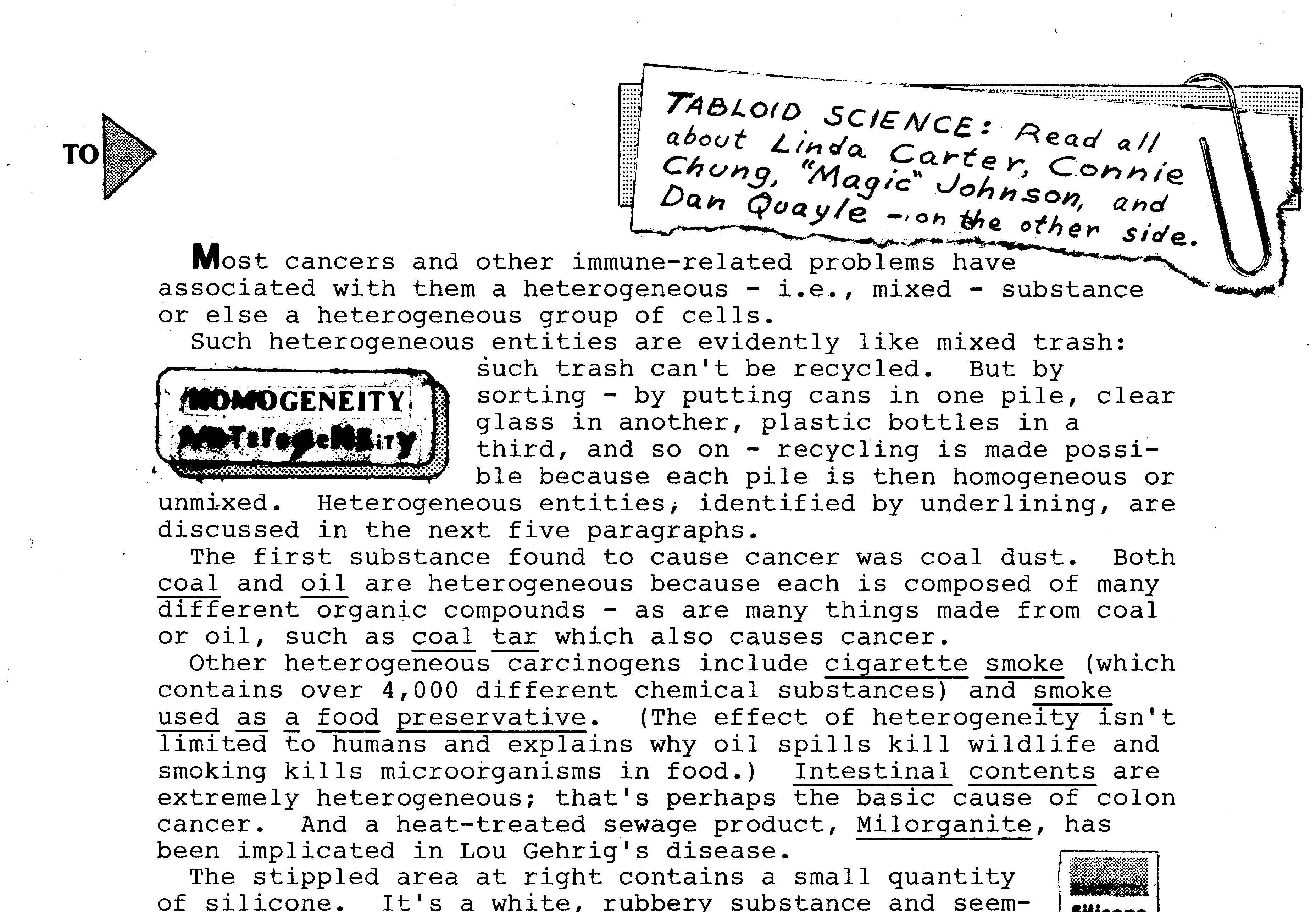
page 1, bottom
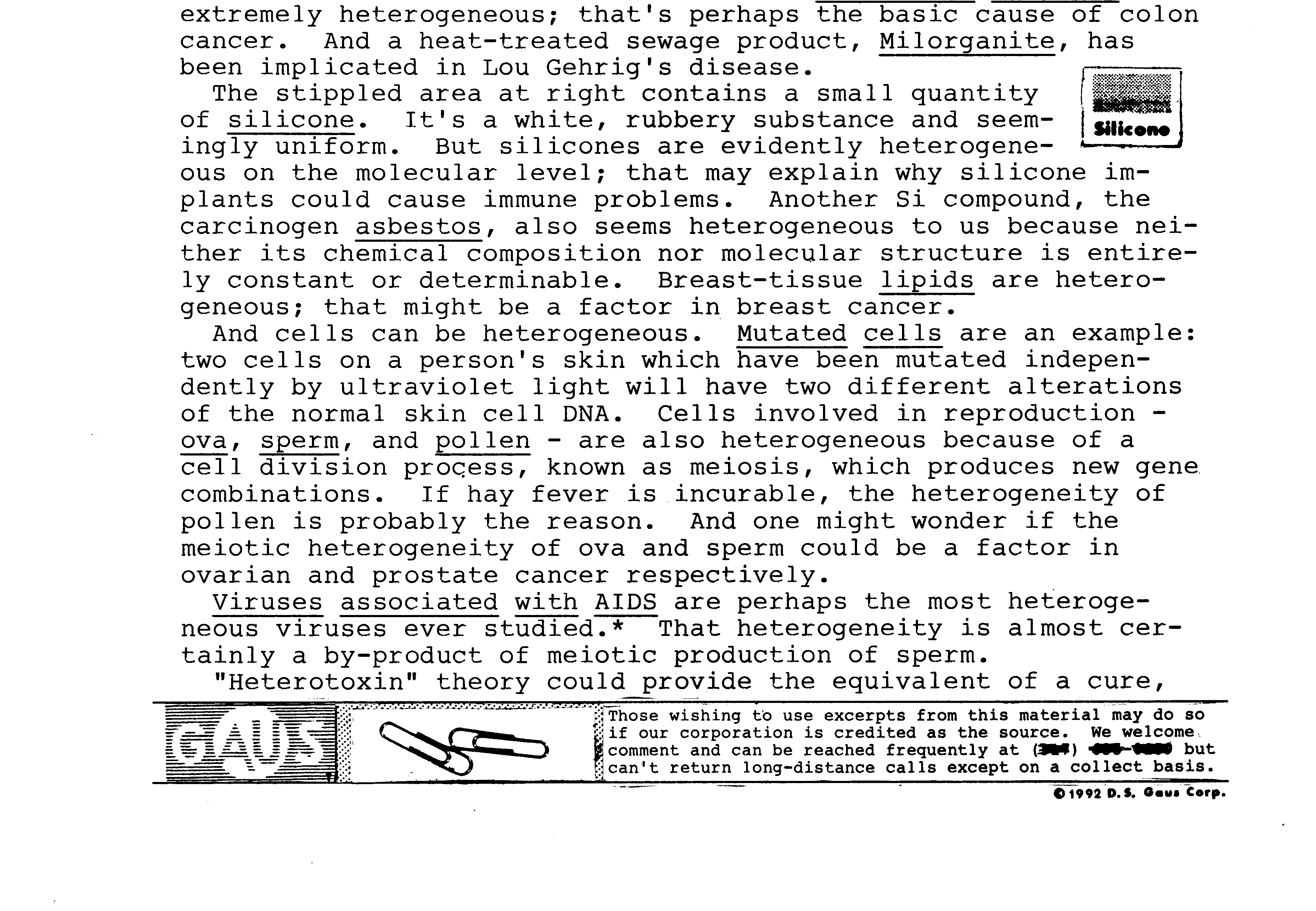
page 2, top

page 2, bottom
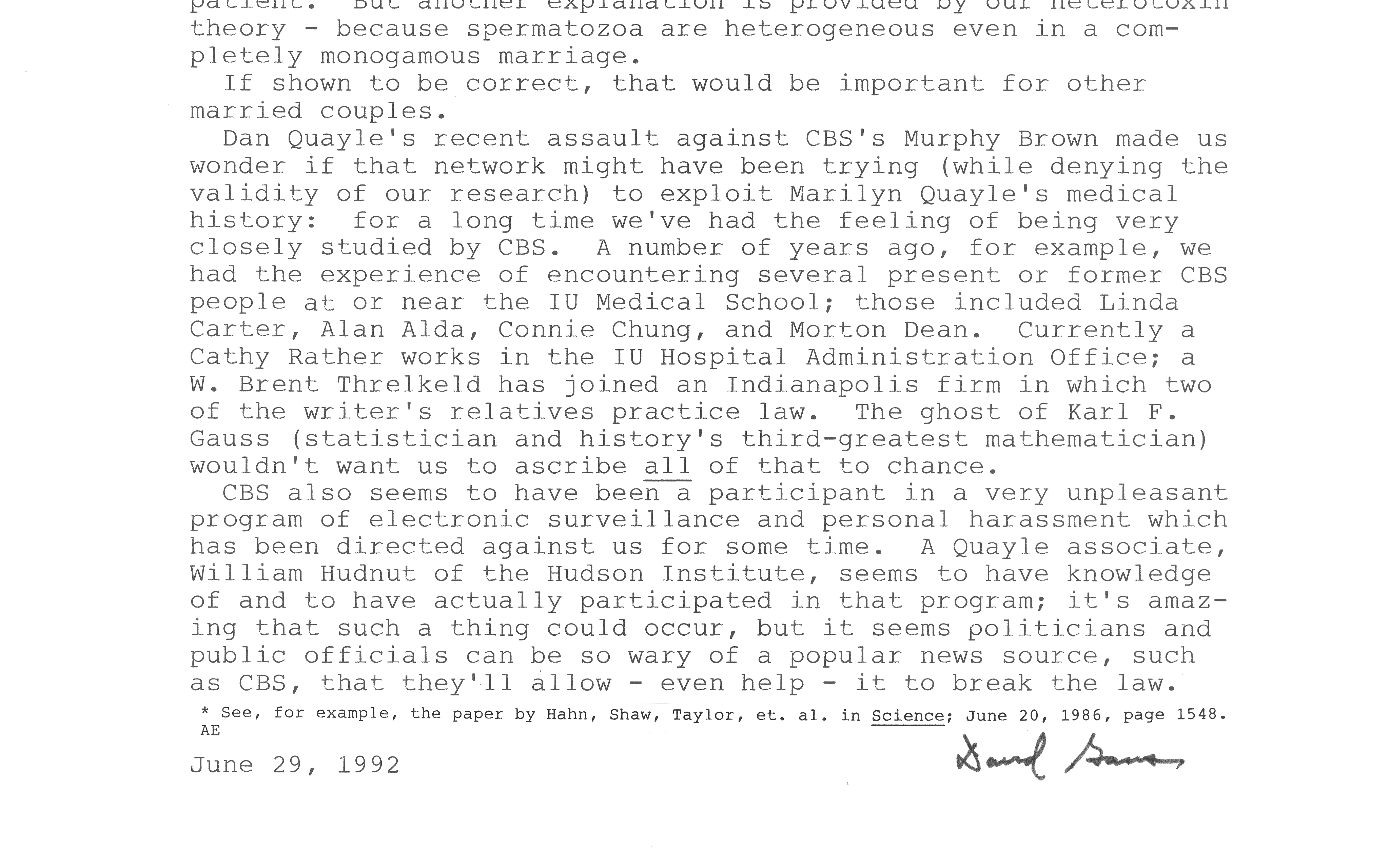
Text from that newsletter retyped for easier reading
(CLICK)