| . |
| As my 1981 newsletter cheerily noted, I was often staying at various rescue missions during that period and was well-acquainted with staff members at such places.
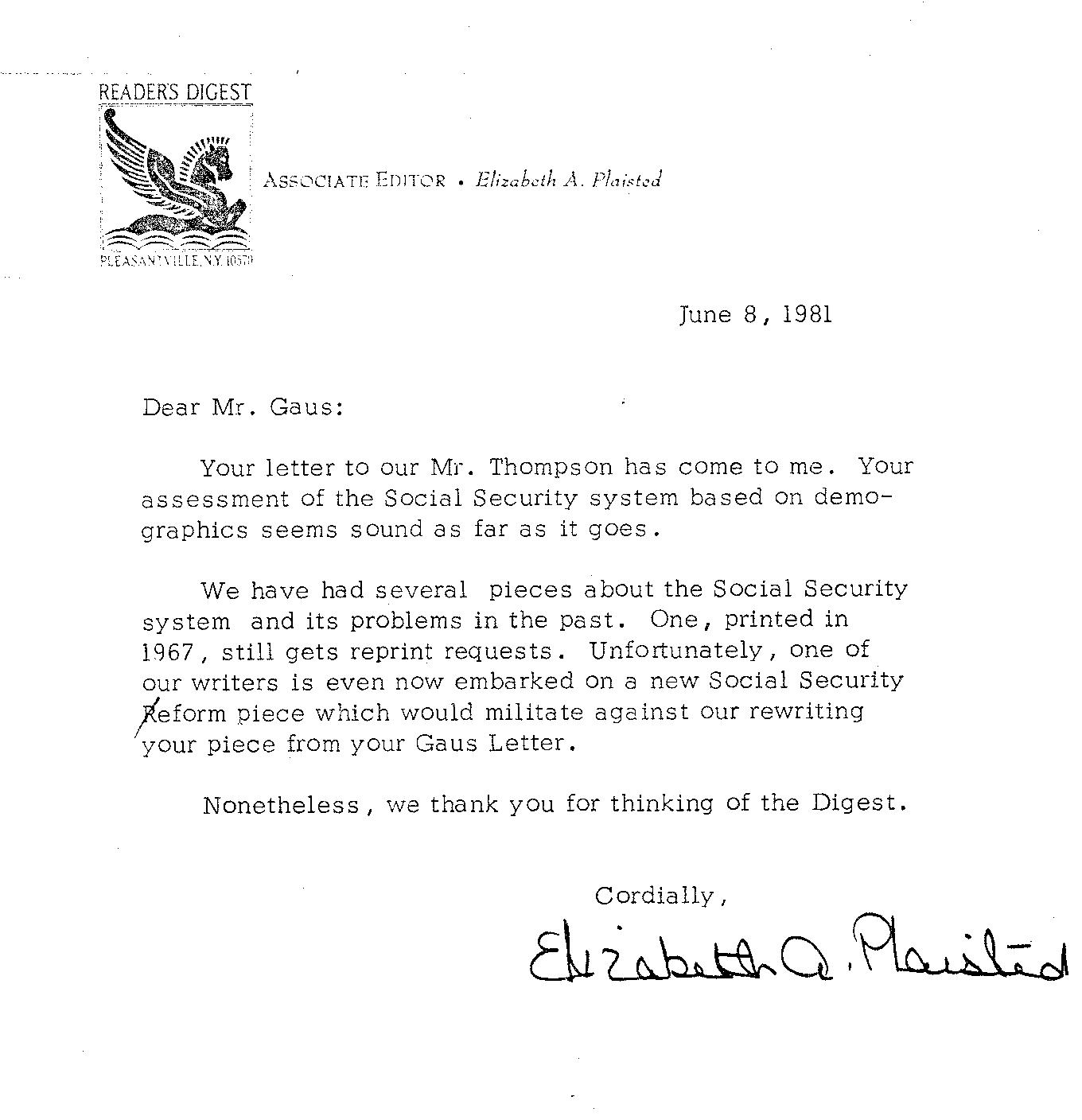
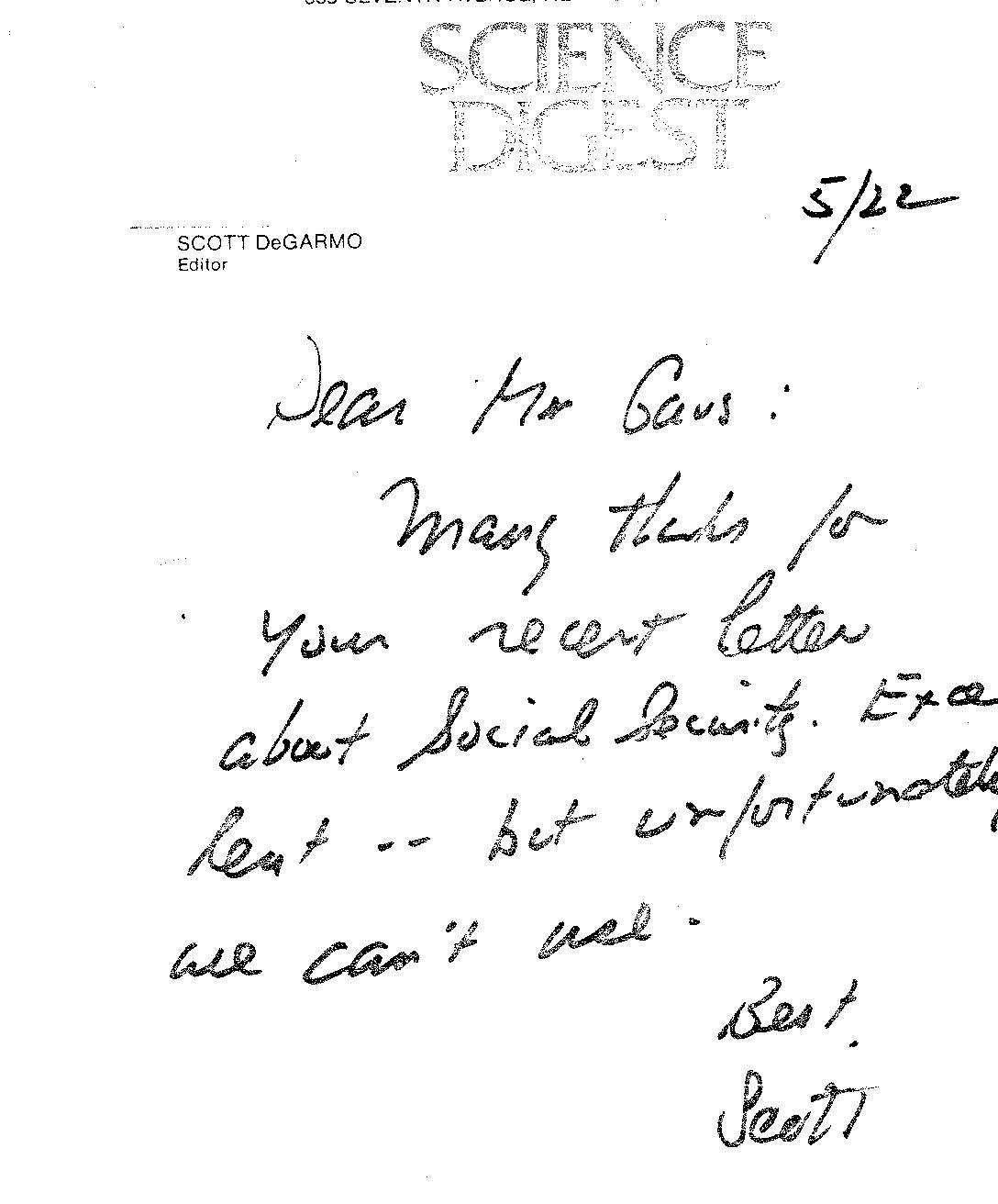
In December 1982 the Greenspan report, which was due to be issued in early �83, was previewed in newspapers nationwide. The late Sylvia Porter, a syndicated financial columnist, wrote as follows: �The National Commission on Social Security Reform has not yet voted formally on any reform proposals,� she wrote, �but it has already performed a great service. �Its discussions in three days of open meetings in mid-November emphasized that the so-called Social Security �crisis� is a short-range temporary problem extending over the next seven years.� But who had figured that out--what specific person? One member of Congress choose to portray the source of inspiration for the �83 Greenspan�s report as a deep mystery. If I remember correctly, Rep. Trent Lott, (who was later a senator) said that it was necessary that �Immaculate Conception� should resolve the Social Security crisis. Rep. Lott's interesting metaphor cast Alan Greenspan--who dressed in black and whose face was usually wreathed in a miserly snarl--in the role of the Virgin Mary. Whether or not Lott�s figure of speech found favor in celestial circles is hard for a mortal like me to guess. One might note, however, that Lott later lost his Senate leadership position and that his house was destroyed by hurricane in 2005. By 2008, he'd left the senate. While I had documentation as to what my role had been, that documentation was not of immediate interest either to powerful people in Washington DC or to those in the world at large. I�d printed about 1,000 copies at my own expense. The money for that had been earned by donating blood plasma. Copies were mostly distributed in Indianapolis for free, but a few were sent to the federal government and also to national publications. Two of those publications sent responses, scanned images of which may be viewed by the reader below this text, at the bottom of the page. The reader may also click at left to see them. �Excellent�but unfortunately we can�t use� came from Science Digest, dated May 22. Reader�s Digest, dated June 8, 1981, said that my analysis seemed to be correct, but that they were planning to do their own story. The latter response was irritating at the time, since it went against the editorial premise of the magazine. While their own article, published several months later, didn't in any way plagiarize what I�d written, their article also did nothing to help resolve the social security dilemma of that year. However, it was very nice of the editor to send a rejection note giving a specific reason, which I could then keep for my records. In 2005 or 2006 I phoned Reader's Digest--to learn if that editor was still at the magazine. Although the switchboard operator remembered her, it seemed that she'd recently retired or gone to work somewhere else. However, it did seem likely that she could still be located, if necessary, to vouch for the authenticity of her 1981 letter. CONTINUE |
| Click to see images of letters from: Science Digest Reader's Digest |
 |
 |
 |
|