 |
|
|
|
|
|
|
|
|
|
|
|
|
|
|
|
|
|
Chemists, Big People in a Big World. |
|
|
|
Plastic |
|
|
| By |
|
|
|
Garth Blocher |
|
|
| Plastic seems to be everywhere in our modern environment. If you are sitting at a computer then you are looking at plastic right now, not the actual computer screen but the frame around it, the parts inside it, and the mouse that you use to control it. Plastic plays an important role in our modern world both good and bad. By using plastic we have been able to make many things safer (like living... for elephants). But because of the widespread use of plastic in place of biodegradable wood, leather, etc., plastic contributes enormously to our monumental waste problems. |
|
|
|
Plastic is made from polymers, which are in turn made from monomers; monomers are small molecules that are made up of carbon, hydrogen, nitrogen, and oxygen atoms. They can also contain chlorine, sulfur, or silicon. Polymers are long chains made up of one or more type(s) of monomers linked together, sometimes randomly and sometimes in a specific order. Most modern plastics are made from petroleum products such as ethylene and benzene. Some of the early plastics were produced from cellulose nitrate (a product of plant fiber and nitric acid). |
|
|
|
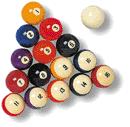
One of the first plastics to be used commercially was celluloid. It was discovered in 1866 by John Wesley Hyatt, who by accident found that collodion would congeal into a tough film if spilled in the workshop (he really did discover it by spilling some). One drawback was that the plastic (celluloid) was very brittle. By adding camphor (a product of the laurel tree) he was able to solve this problem. Because all billiard balls were made of ivory, an enormous number of elephants were being killed so that people could play their precious game (pool). With his new substance Hyatt was able to make a suitable substitute, giving the world an acceptable alternative to ivory for making billiard balls. |
|
|
|
 |
|
|
|
|
|
Back Home |
|
|
| Information from: |
|
|
| American Plastics Council website |
|
|
| "World Book Encyclopedia 2000 Edition" book #15 "P" �2000 World Book, Inc |
|
| Eyewitness Science "Matter" �2002 Dorling Kinsley Ltd., London |
|