Biography


Biography

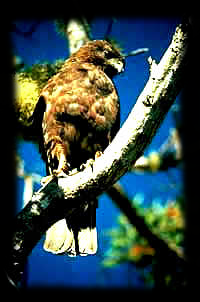
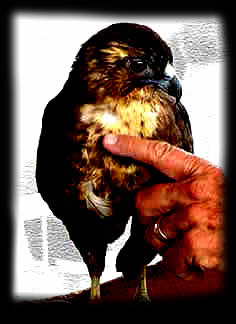
Long ago on the Hawaiian Islands there was a bird of prey that was lived undisturbed by man. The Hawaiian Hawk lived only on the big island of Hawaii. When European settlers and whalers first came to Hawaii they brought rats and mice. This created an abundant amount of food for the Hawaiian Hawk. Its population grew and it spread to the other islands. As the Europeans settled habitat was destroyed and sport hunting was developed around the Hawaiian Hawk. The Hawaiian people have come to the hawk's rescue saving it from extinction. The bird now prowls the skies of Hawaii still endangered.

The Hawaiian Hawk hunts for its food, drinks from Hawaiian rivers and lakes to obtain water, uses nests for shelter and reproduction space to achieve basic needs. The Hawaiian Hawk lives on the unique islands of Hawaii, which is considered a tropical rain forest, but does not have the canopy. Controlling rodent, smaller birds, and other small prey populations is most of the Hawaiian Hawk's niche.


Past and Present

The earliest record of the Hawaiian
Hawk was on Kaua`i by a naturalist working for Captain James Cook. This hawk was not recorded again until the U.S. Exploring Expedition of 1840-41. Based on six months of survey, it was concluded that the `Io occurred only on the Big Island. Historical records show that the bird lived within the same range of elevations as today, however, there is not much historical data on population size that can be used as a baseline to compare with current estimates.

In the past, some biologists have claimed that `Io numbers were reduced over previous levels; however, there were no population studies conducted to support this assertion. A 1982 `Io study showed `Io nests in a variety of habitats, both native and nonnative, and estimated the population between 1,400 and 2,500 hawks. Current estimates are still within this range.


Habitat & Behavior

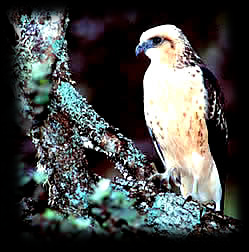
The `Io is endemic to Hawai`i and was a symbol of royalty in Hawaiian legend. The `Io is also the only hawk native to Hawai`i. They only breed on the Big Island but have been occasionally seen on Maui, O`ahu, and Kaua`i. Fossil records indicate that this hawk may also been established on Moloka`i and Kaua`i. They depend on native forest for nesting, but are able to use a broad range of habitats for foraging, including papaya and macadamia nut orchards, as well as forests dominated by native and introduced vegetation, from sea level to 6,500 feet elevation.

This mostly solitary hawk remains in and defends its territories year round. They nest from March through September, and usually lay only one egg. The female does the majority of sitting during the 38 days of incubation, while the male does the majority of the hunting. After the egg is hatched, the female only allows the male to visit when delivering food to the nest. The chick fledges at seven or eight weeks. Fifty to seventy percent of the nests successfully fledge young.

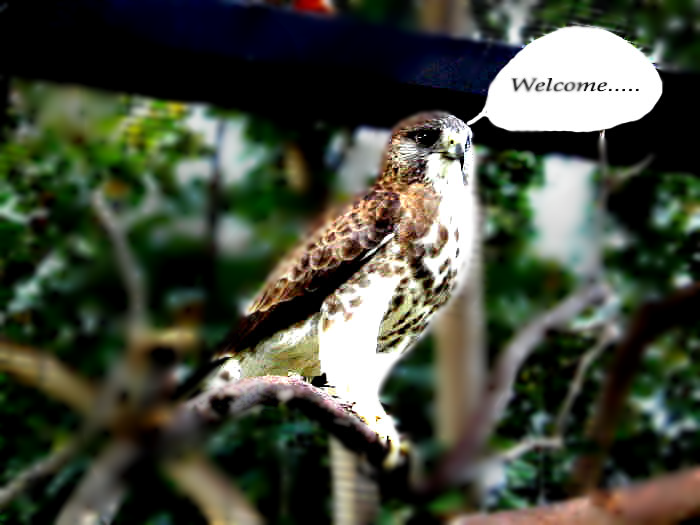
The `Io usually hunts from a stationary position, but can also dive on prey from the air. It feeds on rodents, insects, small birds, and some game birds. They are opportunistic predators and are versatile in their feeding habits. They have a shrill and high-pitched call much like their Hawaiian name: "eeeh-oh." They are known to be very noisy during the breading season. `Io
are strong fliers.



Conservation Efforts

The Hawaiian Hawk was listed as an endangered species in 1967 under the Federal Endangered Species Act because little was known about this species and raptors worldwide were experiencing significant declines. A Recovery Plan for the `Io was published in 1984 which presented research needs for the species and criteria for evaluating recovery of the bird.

The U.S. Fish and Wildlife Service (Service) conducted an extensive Hawai`i Forest Bird Survey from 1976-1979. This survey has given scientists a wealth of data to further study and understand the many species of birds that live here. From 1980 through 1985, the Service contracted the University of Missouri to conduct a study of ecology and life history of the `Io.

A Service-funded study focusing on breeding success, nesting habitat, survival, and population estimation is currently underway by the University of Washington. Secondarily, the study looks at parasites in the nest, environmental contaminants in eggs from failed nests, and whether the hawk population is infected with avian malaria and toxoplasmosis.


Is this website pimped out????

YES


†HÊ TØP


Hosted by www.Geocities.ws

1