

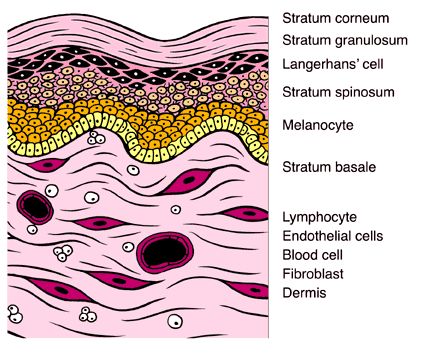
a thin epithelial membrane composed of stratified squamous epithelium. Over mose parts of the body it is only about as thick as a page of paper, and it consists of 4 out of 5 sublayers.
1. Keratinocytes: most numerous, synthesized keratin, which gives strength and water profung abilties.
2. Melanocytes: pigment cells, produce melanin.
3. Langerhans cells: type of macrophage produced in bone marrow, participate in immune system responses exposure to UV light impair the function.
1. Stratum basale: Deepest position layer, one layer cuboid, reproductive layers (divided by mitosis of the process), hair follicle and gland formed but not located here
2. Stratum Spinosum: above Stratum basale, fit closely together, don't divide. thick layer
3. Stratum Granulosum: a granular layer, form keratin
4. Stratum Lucidum: thick skin of palms and soles, difficult to see, located between Stratum Corneum and stratum granulosum
5. Stratum Corneum: Outer layer skin, dead cell, 20 layer cells, each cell becomes a tiny keratin sac.
1. Papillay layer- upper portion of dermis
- consists of loose connective tissue containing collagen and elastic fibers.
- lots of capillary, temperature regulation
- print reflect the arrangement of the dermal papillae
2. Reticular layer- below papillary layer
- irregular dense connective tissue composed of collagen and elastic fibers
- Permit skin to stretch and resume original shape
3. Subcutaneous layer (superficial fascia)
- under the skin fat
- achors the skin to underlying tissues
- loose connective tissue
- adipose tissue
- because it is loose it can be moved over the muscles and bones