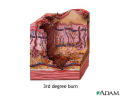
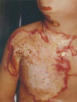
2. Inflammation: the most basic pathological response. It promotes repair mechanisms that destroy bacteria, dilute harmful chemicals, dispose of dead or injured cells and wall off the injured area. Its symptoms are redness, swelling, heat and pain.
3. Pus: usually occurs during the inflammation because of the fighting of the WBC and bacteria.
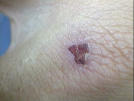
4. Scab: RBC and WBC proteins. It is a tempory covering that seals the defect in the skin.
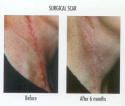
5. Scar tissue: White color. Lack of hair, sweat, and sensory receptor.
- least serious burn, and epidermis remains intact.
- blood vessels in the dermis dilate, causes inflammation with redness/swelling
- Sensitive to touch, but may be moist
- The skin usually heals within few days without scaring.
- The treatment is immersing in cold water or ice.
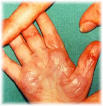
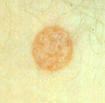
- superficial or deep dermal burns
- usually heals about two or three weaks
- possibly scarring.
- Require initial treatment
- Portions of epidermis and subcutaneous tissues are destroyed.
- Nerve endings may be destroy, so there is little or no pain.
- The skin may appear white, bright red, black, charred or leathery.
- Life threatening, and can be infected
- Sensory and other glands are destroyed.
- Color is black.