
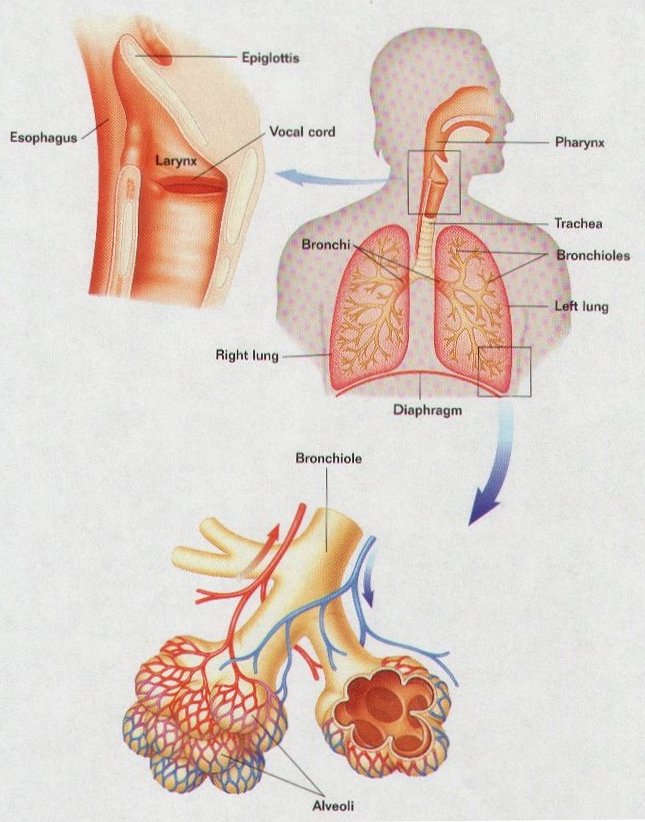
- Nasal cavity
- Pharynx
- Larynx
- Trachea
- Bronchi
- Bronchioles
- Alveoli
Note: Bronchioles and alveoli are made of lungs
- Cold
- Asthma
- Lung Cancer
- Bronchitis
- Pneumonia
- Tuberculosis (TB)
1) Respiratory center: located medulla and pons of brain
2) Pneumotaxic center: group of neurons in pons; it controls rate of respiration.
3) Inspiratory neurons: neurons from peumotaxel center sends messages to expiratory neurons in medulla.
- Expiratory neurons inhibit inspiratory neurons allowing expiratory to occur
4) Increasing concentration of Carbondioxide:
- Stimulation of respiratory center
- Increasing depth and frequency of breaths
Note: Breathing rate is harder when pH increases becaue the body need more oxygen
- lungs are covered by Pleura, the thin sheets of epithelial that functions in protection and reduction of friction
- Pleurisy is inflammation occurs with the fluids are excess in the cavity resulting pain
1) Nerve impulse travel on phrenic nerves to muscle fibers in diaphragm, contracting them
2) The thoracic cavity expands
3) External intercoastal muscle contracts, and the thoracic cavity expands even more
4) Intra-alveolar pressure decreases
5) Air gets into respiratory tract
6) Lungs are filled with air, and diaphragm sketches downward
1) diaphragm and respiratory mucles begin to relax.
2) Elastic tissue of lung starts tp recoil.
3) Tissies recoil, and intra-alveolar pressure increases
4) Air is squeezed out the lungs
Tidal volume: Volume that moves in and out of lungs during respiratory cycle, approximately 500 ml.
Inspiratory reserve volume: volume that can be inhaled during forced breathing inaddition to tidal volume, about 3,000 ml
Expiratory reserve volume: volume that can be exhaled (1,100 ml)
Residual volume: volume that remains in lungs all the time, about 1,200 ml.
Inspiratory capacity: total volume + Inspiratory reserve volume; maximum of air inhaled
Functional residual capacity: Expiratory reserve + Residual volume; approximately 2,300 ml
Vital capacity: maximum of air that is exhaled after taking deepest breath
Tidal + Inspiratory reserve + Expiratory reserve volume
Total lung capacity: total volume of the air that lungs can be hold.
Vital capacity + Residual volume