| Nervous System Divisions | ||||||||||||||||
| Nervous System is divided into two division: Central nervous system and Peripheral Nervous System. These divisions provide sensory, motor and interneuron functions. | ||||||||||||||||
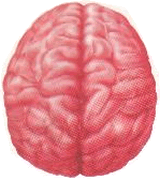
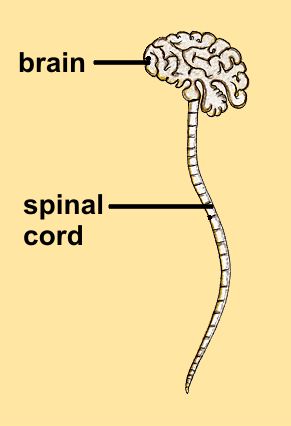
| Central Nervous System (CNS): consist of brain and spinal cord. Brain is located within the cranial vault of the skull. Spinal cord is located within the vertebral canal formed by the vertebrae. |
||||||||||||||||
![]() |
||||||||||||||||
![]() |
||||||||||||||||
| Peripheral Nervous System (PNS): consist of other nerves that connect the CNS to other part of body, such as cranial and spinal. PNS also consists of two divisions : Somatic and autonomic systems Somatic system: consists of cranial and spinal nerves fibers that connect the CNS to the skin and skeletal muscles. It controls conscious action. Autonomic or Visceral system: consists of fibers that connect the CNS to viscera such as heart, stomach, intestines, and other glands. It controls unconscious actions. It consists of two division: Sympathetic: prepares body for stressful or emergency conditions. Parasympathetic: is most active under ordinary or restful condition. |
||||||||||||||||
| Functions of Nervous System | ||||||||||||||||
| Nervous system provides three major functions: Sensory, motor and interneuron. | ||||||||||||||||
| Sensory: conduct or receive nerve impulse from PNS to Spinal cord and brain. Interneuron: transmit nerve impulse between neurons within the brain and spinal cord. Motor: Carry or transfer nerve impulse from brain to the effectors, such as muscle, glands, or other organs. |
||||||||||||||||