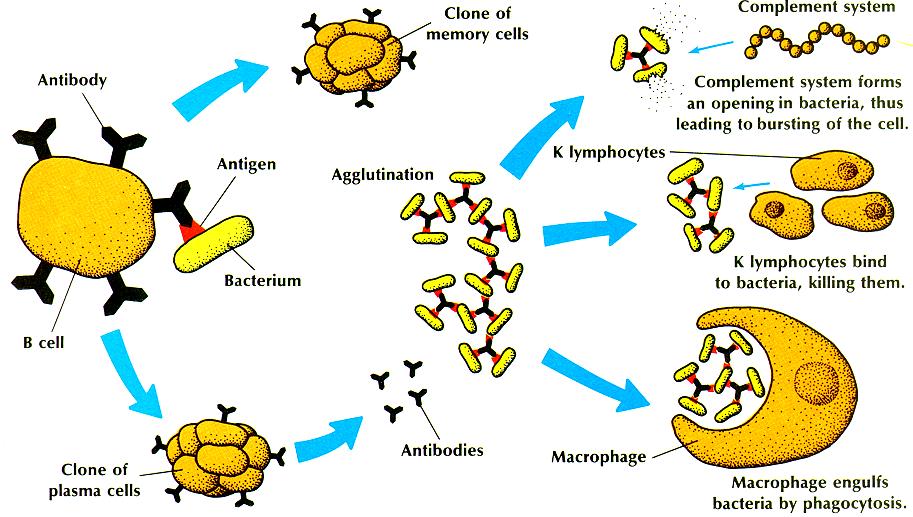
- The skin and mucous membranes: act as a physical barrier preventing the entry of pathogens, and as chemical barriers of anti pathogen secretions
- It includes:
1) oil and sweat: have pH of 3-5
2) Lysozyme in tears, saliva, and sweat: attack cell walls of bacteria
3) Mucous
4) Acids in stomach
A. Phagocytic White blood cells and natural killers: Neutrophils (60-70% White blood cell), Macrophages, Eosinophils
B. Antimicrobial proteins: Complement, and interferons (aiding other cells to resist infection by virus)
C. Inflammation: the chemical signal that occurs when white blood cells respond to the entry of the invaders; symptons of inflammation include
- the wound starts swelling.
- Blood and lymph flow to the wounded areas.
- Body temperature increased
Specificity: immune system's ability to recognize specific antigens
Antigen: particles causing the immune system or inflammation response
Antibody: Proteins that have ability to destroy antigens and other foreign invaders
Diversity: immune system's ability to respond to numerous kinds of invaders which are recognized by their antigenic markers
Memory: the immune system's ability to recognize previously encountered antigens and to react faster, and more effectively to subsequent exposures
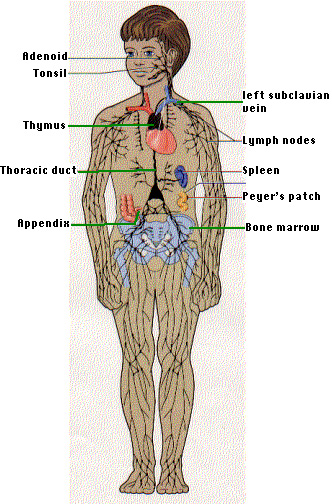
- B- Cell: a type of lymphocyte; manufactured in bone marrow
- produces plasma cells
- Activated by antigen
1) prevent antigen reproduce in cells
2) destroy bacteria
3) precipitation of soluble antigens
4) activation of complement- split cells, and attach to antigens
- T-cell: begins early life in bone marrow, and mature in thymus; not an antibody; provides cytotoxic T cells and helpers T-cells to destroy infected cells
- Person with HIV has no T-cell.
- the body able to prevent and get rid of infection
Passive immunity: inheritance: mother to fetus
- antibodies transported or sent from one body to another
Vaccines: an inactivated toxins killing microbes or mutated viruses; cause the body to build a memory response for antigen; it is an active immunity