
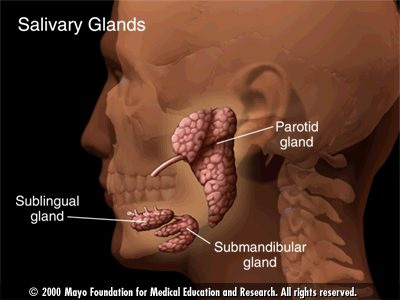
- There are three salivary glands: parotid, submanibular, and sublingual
Pancreas: located near duodenum, serves both endocrine and exocrine functions.
- secretes digestive enzyme into duodenum including pancreatic amylase, pancreatic lipase, trypsin, and carboxy peptidase.
- Regulates the normal blood glucose, and secretes insulin and glucogon.
Liver: largest internal organs, consisted of two lobes: right and left
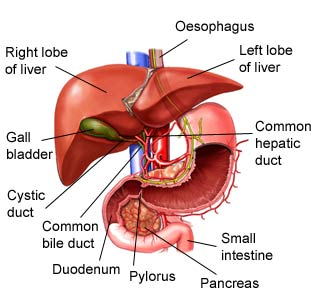
- Maintains normal blood glucose level, and response to glucogon and insulin.
- Storage of glycogen, iron, Vitamin A, B, and D, and blood.
- Produces bile, yellowish-green substance containing bile salts, pigments and cholesterol, to digest fats.
- Protein metabolism: forms urea, and makes clotting factors.
Gallbladder: Located inferior to the liver, connects to the duodenum by common bile duct.
- Storage of biles produced in the liver.
Spleen: located near stomach
- produces the white blood cells, and other immune systems.