
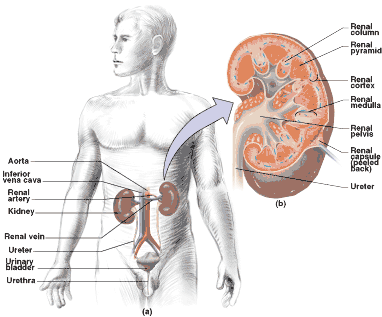
1) Pair of kidneys: function in removing substances from blood to from urine.
2) Pair of Ureters: function in transporting urine from kidneys to urinary bladder.
3) Urinary bladder: functions as urine resevoir that takes in urine from ureters.
4) Urethra: takes urine from bladder to outside of body.
5) Renal arteries and veins: carry blood to be filtered to kidneys and carries filtered blood away from kidneys.
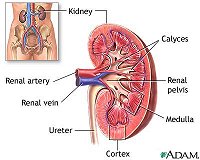
- Functions: to regulate the volume, composition and PH of body fluid.
- Consists of three layer portions: Renal cortex (outer), medulla, and Renal pelvis (connected to ureter)
- Covered by Renal capsule
- Consists of approximately 1 million nephrons (functional units vertebrate kidney)
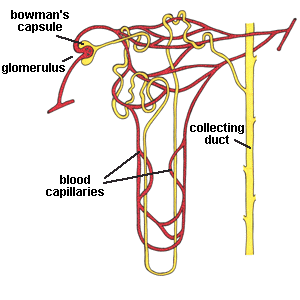
- Glomerulus is a capillary network which fits into Bowman's capsule.
- Urine and wastes are transported to the collecting duct to the ureter.
ADH (Anti-diuretic hormone): target the kidney; produced in hypothalamus, and stored and released from Pitutuary gland.
- Stimulates distal tubules and collecting duct to reabsorb more water.
- High fluid intake, high blood volume
- low blood sodium level
- Alcohol consumption
Consequences: Water reabsorption decreases,and urine output increases because kidneys are unable to reabsorb or conserve water.
- low fluid intake, blood volum
- High blood sodium levels
- Nicotine
- Morphine
Consequences: water reabsorption increases, and Urine output decreases. Resulting diarrhea, and excessive sweating.