Dario Argento
1940 Rome, Italy
Argento, who is generally regarded as the best Italian genre director, and who is sometimes referred to as "The Italian Hitchcock," was born to producer Salvatore Argento and Braziian photographer Elda Luxardo.
Dario began his career as a film critic for Italian newspapers and magazines including "Il Paese Sera," then moving on to writting screenplays. among the scripts he wrote in those early days include Umberto Lenzi's La Brigadas De Los Condenados aka: Battle Of The Commandos and Sergio Leone's last masterpiece C'Era Un Volta Il West aka: Once Upon A Time In The West.
In 1969, Argento was givin the opportunity to direct his first film: L'Uccello Dalle Piume Di Cristallo aka: The Bird With The Crystal Plumage. the film went relativly unnoticed for a year or so, but slowly built up to be a huge hit in it's native Italy, as well as in the UK and America. It began a trend of animal themed gialli and inspired many well known American directors such as John Landis, John Carpenter, and William Lustig to become involved with the film world.
"L'uccello..." was followed in 1970 with Il Gatto A Nove Code aka: The Cat O'Nine Tails, then in 1971, Argento took his stylish Flair one step further with Quattro Mosche Di Velluto Grigio-Four Flies On Grey Velvet. The film featured several imaginative and stylish set peices and experimental camera movements. Things that would become his trademark as a director.
After the failure of his next film, La Cinque Giornate aka Five Days In Milan, Which Argento was originally only going to produce, but filled in as director after Nani Loy pulled out, Argento Began work o one of his masterpieces-Profondo Rosso aka: Deep Red. A stylish and complicated thriller which once again invigorated the gialli. The film concerns a pianist (David Hemmings) who witnesses the murder of a medium. He becomes obsessed with the thought that he saw a pianting of some sort that is now missing from the scene of the crime. Hemmings is convinced that if he could just remember what the picture was he could solve the crime. Meanwhile, the killer is killing off all of Hemmings leads, and starts to go after him. The film ends in a splendid twist, which would be a crime to give away.
Profondo Rosso also marked the first time Argento would Collaborate with the Italian band Goblin. The wild experimental music fit the onscreen action perfectly, and Argento would use Goblin, as well as ex-goblin member Claudio Simmonetti on several of his future films including Suspiria and Tenebre. The Band's work on Profondo Rosso made them a hot commodity in Ialian horror, sci-fi, and action films, before their breakup in 1983.
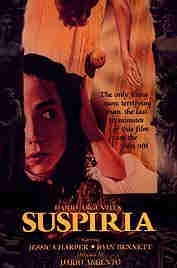 His next film, a favorite among fans and critics alike was the dark fairy tale-like Suspiria. Opening with may very well be the most intense and stylish murder scene in any movie ever, the film deals with a ballet academy that doubles as a witches coven and home to "Mater Suspiriorum"-the mother of sighs. Goblin's intense, droning score once again complimments the action perfectly, and the beautiful photography by Luciano Tavoli provides us with some exellent eye candy. The Creative use of lighting and the tri-pack technicolor gives the film an other-worldy feel.
The second (and last so far) film in the "Three Mothers Trilogy" was Inferno. While basically a good film, several factors keep it from becoming great. The acting, especially the lead played by Leigh McCloskley, is horrendous. The same goes for the music by Keith Emmerson, which aside from a wild synth track during a cab ride and the main theme-an Omen like chant backed by thumping electronic music, the score is incredibly innaporpriate and ineffective. The worst example is a climatic rat attack during a lunar eclipse; the music soars and it sounds as if superman or king aurther is going to come to the rescue! Despite it's flaws however, the fllm is a mst for Argento fans as it contains some of the most arresting visuals in his entire repertoire, including: an underwater room, a decapitaion by window pane, a cat attack, and a really cool double murder.
In 1982, Argento diected what may be his best film Tenebre (well it's my favorite at least.) In many ways, it plays almost as a parody of the giallo, with it's overly complecated plot, black-gloved whispering killer and bizarre "just for the hell of it" camera movements. Argento based the film on a real life stalker who had threatened his life while living in New York. In this film, a killer uses an author's book as a blue print for murder, and son goes after the author himself. The best scene in this one goes to the double murder of two lesbians. In an incredible and audaciuos 2 1/2 minute tracking shot, the camera moves out of a wndow, over the top of a two-story house and stops outside a window on the opposite side! a iraculous feat which must have cost a fortune-though having your father as producer probably helped quite a bit. The ending is a very surprising twist, as well as a fuckig bloodbath. A great scene of a woman having her hand chopped off with an axe, and literally painting the walls red with her blood. In the last 10 minutes there are three axe attacks, a self-inflicted throat slashing, and a gruesome impalement by modern art.
Argento went on to direct the odd half girly chick flick/half gory horror flick Phenomena. The film stars Jennifer Connely as a young girl sent to a boarding school in Switzerland. Jennifer has the strange ability to communicate with insects telepathically, and a maniac is killing off the students at her school. This film marked the end of coherency in Argento's films. A trend that came to a head with 1987's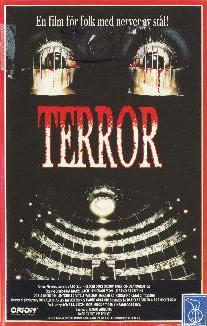 Opera, a film that Argento himself would have a hard time following. Not that that's a bad thing-just enjoy the ride, and try not to make sense of it. It does however make up for it as being one of Argento's most mean spirited and brutal film.
After Opera, Argento made his first American lensed production, Trauma, a dark, romantic thriller set in Michigan. Not too popular among Argento purists, I found it quite good. the acting (including Argento's Daughter Asia in her first role for her father), the direction, the effects courtesy of Tom Savini, not to mention an incredible atmosphere.
Argento would direct his daughter in his next two fllms, La Sindrome Di Stendhal aka:The Stendhal Syndrome and Fantasmi Dell'Opera aka The Phantom Of The Opera.
Sadly, none of Argento's films have been released theatricaly in the states since Opera, and that one barely at all. Argento is currently working on I Can't Sleep starring Max Von Sydow, and featuring music from the newly regrouped Goblin, so maybe our prayers will be answered.
Buy Dario Argento Films Online
DVD Or VHS
Back To The Directors Index