|
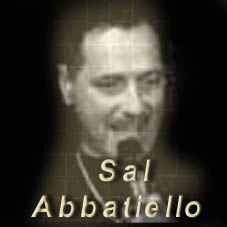
Sal Abbatiello was born and raised
in the Bronx, the borough of New York City with the worst, most
exaggerated reputation for poverty and crime, but still recognized
as the birthplace of rap music.
Beginning his career as a nightclub owner in the early 1970s,
Abbatiello's career skyrocketed with the opening of Disco Fever
in 1977. After hearing young guys in the streets of the South
Bronx rapping over records,
Abbatiello decided to bring them into the nightclub and allow
them to perform for the crowd. Disco Fever's DJs were Grand Master
Flash and Kurtis Blow, two of rap music's earliest pacesetters.
"My thing was owning nightclubs," says Sal Abbatiello
over a cup of hot tea at a fast food restaurant in Yonkers, a
city just north of the Bronx in Westchester County, amid the
chaos of organizing Freestyle Fever 2000, as his twentieth anniversary
celebration was dubbed. "I wasn't really a record person.
That was on the side, but I had a good ear for music, for talent
and I had a really good sense of trends. I knew the rap thing
was a hit. My people thought I was nuts."
Crazy as he may have seemed,
the Italian in his early twenties was at the forefront of the
hip-hop movement and in addition to supplying Grand Master Flash
and Kurtis Blow with their first paying gigs, in 1983 he was
responsible for co-writing and releasing the first rap single
that combined singing with rhyming on Sweet G's "Games People
Play" on his own newly formed label Fever Records. Additionally,
Sal discovered the Fat Boys at a talent contest he sponsored
with Coca Cola and New York's urban radio station WBLS. Originally
named The Disco 3, Abbatiello changed their moniker to the Fat
Boys and wrote their song "Jailhouse Rap."
As rap music gained popularity and notoriety, it became linked
with Abbatiello's club The Fever. Approached by Warner Brothers
with a movie offer based on the early rap music industry, Sal's
club was featured prominently in the 1985 film Krush Groove,
exposing the country to the tremendous impact The Fever had on
rap music.
In a brief cameo appearance was
a young 16-year-old Cuban girl from the Bronx, whom Sal had discovered
along with Andy "Panda" Tripoli, who would change the
face of the post-disco dance music scene. Her name was Nayobe
Gomez and together with Andy Panda she created what is arguably
the first Latin hip-hop or freestyle song "Please Don't
Go."
"I know it was my record," states Abbatiello, "but
it definitely was the first freestyle record." Explaining
his reasons why he feels that "Please Don't Go" was
the leader, Abbatiello continues, "Lisa Lisa was out with
'I Wonder If I Take You Home,' Shannon was out with 'Let The
Music Play,' Alisha was out with 'All Night Passion,' but I just
don't consider them freestyle or Latin hip-hop. I thought Nayobe
was the first one. She was your typical, urban Latino artist.
She was 16-years-old, she had a Latin 19-year-old producer, she
was Cuban, he was Puerto Rican, she was from the heart of the
South Bronx, he was from Brooklyn, and from that came the first
true Latin freestyle record." "Please Don't Go"
was a huge underground dance hit, particularly in Florida. "It
went to number one in Florida," Abbatiello remembers excitedly
as if it were only yesterday. "It beat out Madonna, Whitney
Houston. It was the record of the year on the pop station, the
Latin dance station, the record pools, everything. She used to
perform there every week." After the success of "Please
Don't Go," Andy Panda wrote a song for a Florida-based singing
trio named Expose. The song was called "Show Me," and
Expose declined to record it. Not wanting the song to go to waste,
Panda and Abbatiello decided to form their own female trio. With
auditions being held at Abbatiello's club called the Devil's
Nest, which he opened specifically to house the type of music
he was producing and to draw a Latin audience, the Cover Girls
were formed with three local singers: Louise "Angel"
Sabater, Sunshine Wright, and Caroline Jackson.
"Andy came up with the name 'Cover Girls'" Abbatiello
recalls, "and we tried to form them as the Latin Supremes.
As the other groups tried to be trendy, we went old-fashioned
with sequins and big hair." "Show Me" became an
instant, out-of-the-box hit, selling 20,000 12-inch singles the
first month after its release. The Cover Girls then recorded
an album's worth of material with such up and coming producers
as the Latin Rascals, and Robert Clivilles and David Cole. Their
debut album release party was held at the New York nightclub
1018 and featured performances by an eight-year-old girl named
'Lil Suzy, Fever's first lady of song Nayobe, and the Cover Girls
themselves.
The crowd went wild for the Cover
Girls and it was an early indication of how they would be accepted
by mainstream America. Shortly after the release of their
album, original member Sunshine Wright was fired from the group
due to "a difference of opinion on the way the group should
go," and was replaced by the gorgeous Margo Urban. "Her
showmanship brought the group to another level," praises
Abbatiello of Urban. "These Latin girls played every little
white hillbilly farm show. When they were in a room, the whole
crowd would turn around. The had that aura about them."
With quite a number of hits under their belts including "Inside
Outside," "Because of You," "My Heart Skips
A Beat," and "Better Late Than Never" from the
soundtrack of the movie Coming To America, the Cover Girls
were well on the road to incredible fame, but like a tale out
of Behind The Music, all was not well within the ranks
of the group. "We're opening up for New Kids on the Block,"
Abbatiello recalls, "and we're ready to blow up. 'We Can't
Go Wrong' comes out. It's number five on the pop charts and everything
was going great. Right in the middle of the tour Angel thought
it was her chance to get out of the group and go solo, and she
walks out on us."
After missing several tour dates, Angel returned to the group,
but the damage had already been done. The Cover Girls were dropped
from Capitol Records and Angel left the group to pursue her solo
career. "Like I said, I always have the foresight,"
states Abbatiello. "I knew things were changing and I said,
'We have to change the sound.'" Michelle Valentine was brought
in to replace Angel as the lead singer, and with the new Cover
Girls lineup in place, and two introductory singles "Don't
Stop Now," and its huge radio-hit B-side "Funk Boutique,"
their cover of "Wishing On A Star" flew up the charts
to number two. True to the record industry handbook, Michelle
Valentine soon wanted out of the group to pursue a solo career
and once again, the Cover Girls lost their deal with Epic Records.
"Both of them ruined the group by listening to friends and
family," states Abbatiello with a hint of regret in his
voice. "If they had stayed in the group, put an album or
two under their belts, they probably would've gone on to be famous
stars because they both had the talent. I always thought Angel
could've been the next Cyndi Lauper and Michelle could've been
the next Deniece Williams."
No longer known as Angel Sabater, the former Cover Girl Angel
Clivilles recently released a progressive house version of "Show
Me," which was produced by Johnny Vicious, and her self-titled
solo album hit the streets in September of 2000.
For Nayobe, her two subsequent hits after "Please Don't
Go," the classics "Good Things Come To Those Who Wait"
and "Second Chance For Love," led to a deal with WTG/Epic
Records, but they wanted to take Nayobe in an R&B direction.
After one album Promise Me and a minor hit with "I
Love The Way You Love Me," Nayobe was dropped from the faltering
label. In the mid 90s, Nayobe released a Spanish language album
Dame Un Poco Mas and in 1999 she released her first Salsa
album Nayobe. Nayobe is now back in the studio recording
freestyle tracks with producer Artie Rodriguez.
As the popularity of freestyle
music waned, Abbatiello continued to remain true to the genre
by releasing Freestyle Lives, a compilation of songs by
such A-list artists as Safire, Tony Moran, the Cover Girls, Nayobe
and another Fever discovery Lisette Melendez. Though the songs
from the album didn't receive any radio airplay, the album went
on to sell 30,000 copies, which is pretty impressive for an album
of all new material that received no promotion. Last year, Abbatiello
released Fever Freestyle Flashbacks and The Cover Girls'
Greatest Hits on Warlock Records.
Two more Fever projects are scheduled
for release in the next few months: Lisette Melendez's Greatest
Hits and Fever's Divas, a compilation of songs by
Fever Records' female recording artists. With the number of album
releases coming out of Fever Enterprises on the decline, Abbatiello
has had more time to manage the careers of some of the artists
he helped to develop, including Cynthia, Angel Clivilles and
Latin sensation Luis Damon.
At Club Exit on October 8th, 2000, Abbatiello is dressed in a
handsome black suit and both he and Erica Roman, his right hand
for many years, are running around with walkie talkies and headsets
making last minute adjustments to the scheduled lineup of performers
which included DJ Skribble,TKA, Cynthia, Freedom Williams of
C&C Music Factory, Seduction, Safire, Lydia Lee Love, Nayobe,
Coro, Angel Clivilles, Lisette Melendez, Lil Suzy, Rob Base and
DJ EZ Rock, Tony Moran and Pajama Party. Without a doubt, all
the performers who showed up to pay tribute to Sal Abbatiello
did so because they wanted to. "It's awesome,"
said Cynthia backstage before wowing the crowd with a performance
of her greatest hits. "He's been my manager for about nine
years and he's helped me through the good times and the bad times
of the whole freestyle music era. This show is paying tribute
to him, saying thank you for all these years of supporting me
as an artist and supporting the music in general."
"It's funny to see how something
that started twenty years ago has populated the way it has. And
you see the turnout.There are quite a bit of people here. It's
packed. I'm bugging out actually." Echoing Nayobe's sentiments,
K7 from TKA proclaimed, "I feel great being here. Sal is
responsible, not only for a lot of the Latin freestyle groups,
but a lot of the hip-hop groups that are popular. "I feel
like I'm celebrating my own anniversary," stated Nayobe,
dressed in bright orange denim with blonde hair pulled back into
a high ponytail, minutes before performing "Please Don't
Go" and "Second Chance For Love" for the enthusiastic
crowd. .
He's responsible for giving those
people a break, as well as TKA and all the other freestyle groups.
We're happy to be here because Sal has always been a good friend
of ours. He opened doors for a lot of people and just to be a
part of anything that he's a part of is an honor for TKA and
K7." Laughed Angel Clivilles, "He's a part of my whole
life. I grew up working with him. You know what, there's ups
and downs in everything, so yeah, we've had our ups and downs,
we practically fist fought, but we're friends. I still love him,
he still loves me. I hate him sometimes, he hates me. But we
can work together."
While much of the freestyle royalty at some point took the stage
to pay tribute to Sal Abbatiello, many remained backstage to
show their support of him. Both Albert Cabrera, formerly of the
Latin Rascals, and George Lamond, who were not scheduled to perform,
were seen backstage posing for pictures and making the rounds,
as well as many of the "new school" freestyle producers
and artists such as Synthia Figueroa, Legit, Willie Valentin
and Artie Rodriguez.In summation, the night of October 8th, 2000
will go down in the freestyle history books as the night Sal
Abbatiello, once again, accomplished what he had set out to do
for the evening: to celebrate his twenty-year career with all
the people whom he helped and who helped him to make it to the
top. "I got the cream of the crop [performers] and to bring
together all my family and my friends, and all the people from
the record industry, to have just one nice blast. That was the
purpose for me to do it."
<
Back to The Creators Listing
|
|