 |
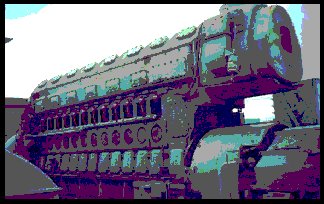 |

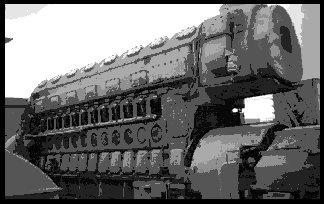
Beloit, Wisconsin, the town where I was born, has no mountains and it sits mainly on the floodplain, except for low bluffs on either shore of the Rock River. Seen from a maps-eye view, Beloit seems to squat on the Wisconsin-Illinois border, with the Illinois part called South Beloit. The city's peculiar location at the bottom of the Dairyland and it's tendency to dribble south into another state, had earned it the old nickname of The Asshole of Wisconsin. Beloit has since joined the League of Rustbelt Cities, a growing confederation of industrial failure and abandonment, but when I was a kid, it had several thriving manufacturing centers producing everything from diesel engines to paper making machines, and everyone was flush.
|
|
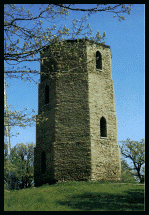
By the time I was in college, getting a good paying summer job at Fairbanks-Morse where my father worked was a cinch, just by walking into the employment office across the street from the old stone water tower. The Navy Department had built an entire addition to the plant during WW II just to make engines for submarines and small ships, so they sold most of their diesels to the Navy. Those military contracts put bread on thousands of tables in the war years and long after, but this meant little to me at the time. I didn't work for a living, after all.
When I was still in high school a couple of years before my year on the mountain, my friends and I had decided to take a short trip to Madison, the state capitol. I had blood relations in Madison, but I wouldn't be going up there to visit them. They were mainly shirttail relatives on my grandfather's side, some of those old Norwegians from Stoughton who'd moved off the farm during Hard Times and joined the rest of the plebs in the Capitol back in the 20's and 30's, and in the War years. My already dimming memories of that branch of the family, mostly from picnics in Madison and Stoughton when I was a kid, were often images enhanced by adolescence. These were pleasent recollections of my older female cousins and their friends - a reminiscence of light, almost colorless hair, pale blue eyes, and long, sweet legs under cotton summer dresses. Madison was also childhood images of the parks, the endless green tunnels of the elm bowers over every street, and that strange feeling of diminution I felt when, during a third grade class trip, I had stood under the great dome of the Capitol for the first time. But more often it was a July memory of blond northcountry girls with summer legs and my grandfather's name, and I would probably never meet them again.
The increasing vagueness in my memory of our blood ties has less to do with distance than with a marriage that was celebrated decades before I was born. In the teens of this century, the notion of a Shanty Irish Catholic girl marrying a nice Norwegian Lutheran boy from Stoughton was beyond absurd, it was near blasphemous. Nana told my sister a story once, about a moment in her young married life during a visit to Grandpa's hometown, a small incident that always seemed to me oozing with Old World malice and ignorance. She was walking down the main street of the village, which in the early 1900's was still unpaved, with wooden sidewalks. Three old worthies stepped from a dry goods store and approached her from down the block. She recognized one as an aunt of my grandfathers. She said they began talking amongst themselves in a low voice when they saw her. When they were still several paces away, they all stepped off the sidewalk into the mud and horseshit. Then, in a venerable sign of female disdain, they lifted the soiled hems of their skirts at her, snapping them in her face like an old towel. Recounting this bit of atavism still made her voice tremble after all those years. Those old Christian ladies, who wouldn't have shown their ankles in public for any reason, exposed half their stocking-covered legs to a young woman for whom they had nothing but contempt. So, the Lutherans had never warmed much to the Papist graft on the family tree, and contacts between the branches, though friendly enough in later years, were usually limited to an occasional picnic or wake. As often happens in families, these contacts, even for a funeral, became less frequent through the years. By the end of the century, the breach is complete.
 |  |
By the time I was in high school my friends and I knew that our hometown was definitely not going to be the place where we would age and die. As far as that place was concerned, it seemed that we lived somewhere between here and there, a dot on the map between Milwaukee, Madison, and especially Chicago, 100 miles to the south. The recently completed toll road to the Big Windy only increased it's imminence in our minds, now only two hours away. Beloit suffered mightily by comparison to these great cities just over the horizon, and by the time of my late teens, leaving forever was a vague but persistent daydream.
We all had three escape fantasies, one-way road dreams of liberation from school, parents, and the postwar white trash subculture of a Wisconsin factory town. We knew that two of these dreams were as unattainable as a night with an French movie starlet, but the last was a possibility.
How many times had we talked about how cool it would be to be a part of the crew of the Calypso, and sail off on the wine-dark seas with Jacque Cousteau, exploring sunken ships and photographing the wonders of the deep? After a few hard days below the waves we would spend the rest of the time lolling around the deck under a Mediterranean sun, bearded and tanned. Of course, we would have to learn French, or at least talk with a decent Frog accent, like Jacque.
And then, there was the ever-popular and apparently universal Monkey Hunt Fantasy. As this one unfolds, we are slogging through the undergrowth with Jane Goodall, observing and photographing the simian fauna. There is a television special in the works and our research would be broadcast to the world, so that other young people will be inspired to Save the Wildlife. Well, of course, there was also the fact that Jane, in faded shorts and tight sleeveless blouse, was a bit of a babe, in a high-toned Limey kind of way. As the fantasy rolls on, we are next to her as she squats silently with camera in hand, moist in the jungle heat, her thin cotton blouse clinging to her damp skin as she aims the old Leica at a troop of apes in the clearing. We are surrounded by the faint smell of decaying vegetation and the musk of some unseen long-toothed cat upwind. Her hair is pulled back away from her face in her trademark ponytail, exposing a long, white neck and inviting cleavage...
It was a dream even more painfully beyond reach than diving for Greek amphorae filled with 3000-year old vinegar.
The third fantasy was well within grasp - get in a car, drive west, and don't stop until you see the Pacific. California was the Garden of Eden of our generation, whether we had the do-re-me or not. Unfortunately, It was a paradise a few of us would only get to see on the way to Viet Nam. Right now, a train trip that we had planned to Madison was as close as we were going to get to liberation from the lower gut of the state.
When I was in high school, the Chicago-Northwestern still ran a passenger train to Madison. In fact, it amounted to an interurban, even if they didn't call it that. The old Interurban tracks had been pulled up long before, and when my father talked about that old inter-city line, it was culled from memories of his own youth. The ride north now was in a nearly empty Pullman car. Some of my friends and I planned to take our weekend trip to Madison on this train. As it turned out, only two of us would go.
The older brother of one of my buddies was in the seminary at the time studying for the priesthood and although he was older than the rest of us, Mike and his brother were close, so we often bummed together in the summer time. He had quit his summer job at a drive-in called the Bet-U-Like-It, down by the Chicago/Northwestern tracks on Liberty Ave. During the age of the drive-in, the Bet was the busiest one in the Stateline Area. It sat square in the middle of two city blocks, a little white cube with green awnings hanging over windows on each side, surrounded by an immense parking lot. It was always packed, from April to October. We used to call it the "Bet-U-Puke-It" in memory of some kid that had tossed his cookies in the parking lot on Mike's first day of work several years before. He was elected cleaning lady after only two hours on his new job and got to wipe it up in front of about half the West Side. We always made a point of asking someone else to cook our burgers whenever we stopped by. Mike got his brother a job there when he was old enough to get a work permit, so they worked together through the summer. He had already returned to the sem for the new school year, and he was home on a rare weekend visit. Seminarians with family health problems could get off like that, and Mike's mom was not doing well that year. It would be an excuse for him to join us for our little rail excursion, but the way things worked out, he and I would be making the trip without the other guys.
Besides being older, Mike was a different kind of guy from the rest of us. Like many first sons raised by a long-widowed mother, he had been allocated much more responsibility than we would know for years. One of the things I remember most about him was that we never caught him in a lie. That was a novel characteristic for our bunch. He wasn't a candyass, he just didn't do it. When I told my folks that I wanted to take the rattler to Mad City and possibly even stay over night, their refusal was wasen't long in coming - until I cooked up some stuff about staying at Mike's seminary in the guest rooms, something his brother had done once or twice before. Mike just told his mom we would find someplace, even if we slept in the park. And, so we did.
 |
 |
The C/NW train out of Beloit to Madison and points north was mainly two mail cars and some freight cars. The one or two old Pullman cars attached to the end just in front of the caboose were strictly pro forma. It allowed the railroad to call it a passenger train, while the only real purpose was to ship the mail by rail, in a time when the mail truck was taking over postal freight. The mail was about the only reason to run a Pullman service at all, because nobody attached a passenger car to a freight train. But, for the railroad, it was a losing battle, and everyone knew it. The old passenger cars were decrepit and sad. I had seen pictures in Post magazine in an article about the retirement of old rolling stock. They just ran those old Pullman cars onto a spur and burned them up, and then sold the iron trucks for scrap.
The train conductor on duty the day we left for the city was not some kindly white-haired fellow with a huge gold watch, right out of a Disney movie. In those last days of passenger rail in Wisconsin, a Pullman conductor on these short runs was usually some vile-tempered old fart with bad breath, pee stains on his faded slacks, and a red-veined face that made Mr. Potatohead look like Adonis. They all had one foot in forced retirement, and the other one on axle grease. Our conductor of the day had "time expired" stamped on his forehead. When he caught us horsing around in the parlor car, Old Crankybutt the Conductor had us understand something right off - there were few things he hated more on his goddam train than unattended kids, and anyone younger than twenty was kids to him. During the rest of our ride to Madison we never left our seats at all except to use the dumper.
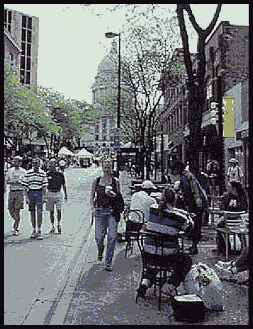
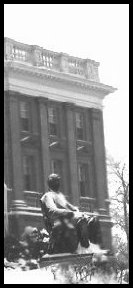
Because of what happened when we got back, I don't remember much about my first trip without parents to a big city except for our afternoon at the Student Union and our night in the park. We had planned this little jaunt for about a month. The other guys had planned to go, too. But they had dropped out one by one, for what I thought were some fairly lame reasons, like jobs, family trips that they couldn't wiggle out of, and illness. My first clear memories of the day, after arriving in Mad City, are of walking down State Street toward Bascome Hill and the Student Union, just after we had hit the platform at the downtown station on West Washington. The old city depot has since degenerated into a boutique next to a beached locomotive on a truncated sidetrack. That old Alco passenger engine has been converted into a T-shirt shop and stuff bought there smells faintly of diesel oil. At least they haven't torn the depot down.
 |
 |
I had my first fake ID in my pocket and Mike and I were going to the Union to buy beer. Madison was a beer town in those days, with beer joints for the college students all up and down State Street and University Ave. They served nothing but beer, and only Milwaukee brew, and at that time, the drinking age in beer bars was 18. The bartenders at those places could spot a phony ID a mile off, but student help staffed the Union and they were rumored to go easy on underage drinkers. Mike had no problem, because he looked old enough, and could get past the toughest card checks during the school year. I was to be lucky that day. As it turned out, all the rumors about the Union were true.
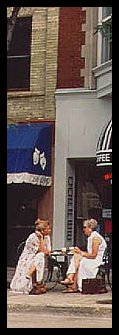
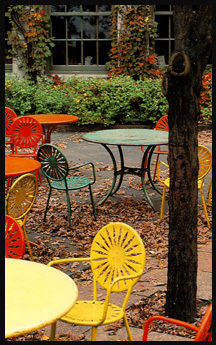
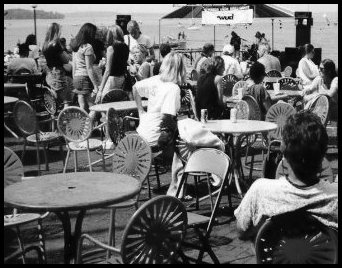
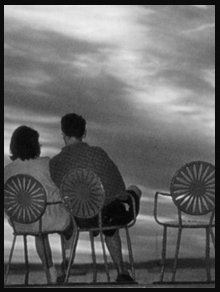
We were sitting on the Union Terrace by the lake with a pitcher of Milwaukee's Finest and two glasses. The leaves on the trees around the Terrace and by the lake were just starting to turn. It was going to be an early fall that year, and it was chilly already. Mike was talking about life in the sem, and he had a million stories about his professors and the guys he went to school with. We had heard many of them before, but the beer had greased his jaw and Mike not only had stories to tell, but shared other thoughts with me, as well. Few of these would be particularly humorous, at least to him.
Classical music from the state radio station a block or so away was playing softly over speakers on the wall behind us. There was a low murmur of afternoon conversation from people on the lake patio and the breeze blew an occasional leaf or crumpled napkin past as we watched the sailboats on the lake. Although it was a chilly afternoon, the cold beer had a decidedly pleasant snap to it. It was good to see the golden half-full pitcher in the center of the round patio table, and to know that there was an infinite supply just 100 or so feet away. I had been watching a coed in a short skirt reading the Daily Cardinal college paper by the bandstand next to the water. I remember hoping that perhaps that look was becoming the general fashion, and not just on college campuses. The mini had not yet arrived, but precursors were certainly welcome. After finishing her lunch and Coke in what I thought was undue haste, she gathered her books and left the Terrace, and I started to pay attention to what Mike was saying, instead of just nodding now and then.
 |
 |
By this time in his career as a divinity student, Mike told me that he was becoming convinced that the seminary was a last refuge for a lot of clowns, teachers and students alike. What was worse for him lately, was that he realized that their presence there was tolerated, and that a good many of them would muddle through until they were done. As his own ordination was only a few years away, this realization bothered him more and more. He understood that these people, his classmates and many of his friends, fell into loosely defined classes. They could be understood in this way, based not on vocation or special gifts, or anything approaching sanctity, but upon their reasons for being there at all. Outside of the guys who were there with what appeared to be a real vocation for the priesthood, he thought that there were three categories of seminarians in every seminary, and from what he could tell, the Protestant schools were not much different, in their own way.
There was the first group, the ones who imagined that they had a vocation just because their parents and the nuns had always thought they did, ever since they were in grade school. They just seemed like such priestly little fellows and they actually got used to the idea. When we were kids, we usually thought they were all just whimpy little putty-butts who volunteered for things and raised their hands way too much.
 |
 |
Then there were the others who were shuffled off to the sem just as some parents have always sent their boys to military schools and to the various bugger academies that used to advertise in the back pages of the National Geographic. They knew better than anyone that they didn't belong there, but they had no idea what they could do about it. This bunch usually cleared off after high school without bothering to go on to the major seminary, after costing their parents, and sometimes their parishes, thousands of dollars.
Then there were the guys with priest uncles, and even bishop uncles. Those were the worst. Superficially, they resembled the nun-boys, except that they had been singled out early on by the Robes as priest material and had never really thought about it much. Although rare, and not as typical in the American seminary system as in Europe, they stood out, and their future was assured. They were the Catholic equivalent of the Preacher's Kid. These were generally the careerists who would one day end up in the Chancery Office, always one baby step behind the bishop. The least they could expect would be some pointless sinecure on the seminary staff, or planted in some corner of the diocese out of harm's way. Maybe there would be an appointment as a first grade and catechism teacher in some little six-classroom parochial school, with a Mass or two on Sundays and damn few hours in the confessional except during Holy Week
And of course, for all of them, the increasingly urgent messages they were getting from their loins were repressed in the time-honored fashion of Irish clerical practice. The pre-Vatican II Gaelic-dominated seminary in this country was the seedbed for the Jansenist mentality of the American Catholic Church, and the brooder for the hothouse priest in it's Yankee variety. And, like all over-cultivated breeds, they were frequently high-strung, slightly fragile, and except for inverted or bizarre exceptions, almost sexless. Along with the nuns, they could also be grossly priggish, a characteristic that bothered us even as children, although we didn't really know why. I didn't see Mike fitting easily into this system that he often described with a mixture of humor and sarcasm. I think he was seriously beginning to question the whole thing for the first time this year.

Eventually, Mike left the diocesan fold, joined a missionary order specializing in converting the Africans, and drifted away from us forever. But, these things had really starting to bother him this summer, and would bother him for the next few years that I knew him. I heard later that his family was concerned about this time that he might drop out altogether, although his mom never really understood why. He was too good to be racked like he was over those issues. Serious attacks of scruples are common in the seminary, but this was different. I understood his mortification at the cynicism he saw around him and what it had done to his classmates, but I was really ashamed that I couldn't share his consternation, or fully understand the pain his doubts were causing. It was selfish, of course, but it wasn't my world. I never told him, but all those slackers and posers that he used to tell us about - to me they were usually just funny.
It was getting to be evening. We had emptied three pitchers by now and were very hungry, so we went into the crowded Rathskeller next to the terrace to buy subs and chips. The large room was warm and rather close after the growing chill around the veranda tables outside. The clear air of the lakeside was replaced by an atmosphere rather thick with the haze of cigarettes, conversation, and the odors of deep fried food from the kitchen. The heavy wooden tables, their tops scarred, nicked, and autographed by generations of students, were piled high with books and the remains of meals. The tables were placed as close together as they could be, so that walking across the room was a peripatetic ramble, like following the trail of a snake over sand. In a time before tobacco use was banned from the public areas of the campus, the low ceiling was often obscured by smoke, and every table was taken. The Rathskeller in the Student Union is a fair copy of a German beer hall, complete with frescoes of inebriated monks and German university scenes covering the walls, the low ceiling, and the heavy pillars supporting the second floor. It had a more Bohemian population in those days, and every beatnik and theater student at the University lounged beneath the gaze of the drunken clerics and students capering on the plaster. On certain tables in the room chess games in progress would be undisturbed for days at a time , with the knights, royalty, and fighting bishops waiting patiently for the End Game. It was a very cozy place, was the Rathskeller - an island of genuine conviviality in the middle of a beautiful but often unfriendly university campus. By comparison, the vomit palaces on State Street were mere pissiors.
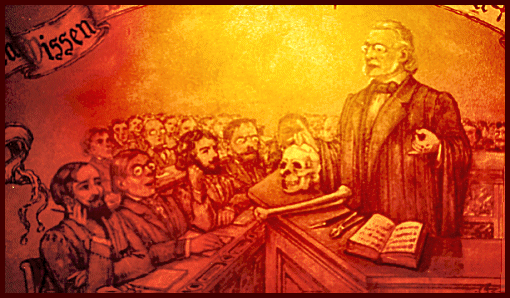
The murmur and laughter of hundreds of conversations surrounded us as we made our way to the food line in the other room. We grabbed our suds and food and went back outside. Another two or three pitchers later, and it was about 10:00. The place was closing up as waiters began to pile the chairs against the wall to get them out of the evening dew. I had only brought a light jacket and I would soon learn that night, that getting totally loaded and then sleeping on the ground in the park at about forty-five degrees of temperature is an uncomfortable thing to do.
I remember that we spent about half the night wandering. It was warmer that way. I slept for a while in an unlighted phone booth on Gorham Street near the beach, while Mike tossed and turned on a park bench. The sun eventually came through the trees in the park, and traffic was getting heavy on Gorham heading in towards the campus and the state office buildings near the Capitol. All we could think about was hoofing it over to the downtown station for the 9:05 southbound, when Mike remembered that the place had been open all night. All that time we could have had some good Z's on a perfectly comfortable waiting room bench, and avoided a backache and a real oil-burning hangover. It was the story of our weekend.
The train back ran minus one of the mail cars, and was pulled by two engines, one of them deadhead. The lead engine was an old Fairbanks, erected at the factory in Beloit where my father worked, and where I would work in the summer time during my college years. Mike and I didn't talk much on the way back. The Pullman car was nearly deserted. We thought we could pull some shuteye, but the seats on a railroad car are not for sleeping, and it was far too noisy anyway. A doughy-looking, bad tempered woman across the aisle dressed in Capri pants and a Beloit Iron Works bowling shirt was arguing with an obnoxious, howling child, who was definitely begging for a serious beating. Every loose joint in the car was creaking and rattling. I seemed to notice all the towns we passed on this trip back, as I hadn't coming up, when I was thinking about all the things we were going to do in Mad City. My hangover was murder.
We rolled through Janesville, just north of Beloit, at about 10:00am, stopping only to let off three or four people. An old man out on the platform that I thought I recognized was arguing with Mr. Crankybutt, who was again our conductor of the day. The harpy on the other side of the car began earnestly mauling the snotty kid in a most satisfying way, and it looked as though he might actually shut up. Soon after we pulled out of the Janesville station, we were running next to the Rock River. Early patches of color were already appearing in the hardwoods along the strand, and in the woods on the other side of the tracks. The train had picked up speed after leaving Janesville, and I knew that we would be slowing down again for Beloit in about 25 minutes or so. The prospect of bed was most comforting, and I hoped the folks were shopping when I dragged in, so I could crawl upstairs unnoticed. Getting my sisters not to rat on me would be another matter.
I didn't pay much attention to anything until we began to pass the first signs of the approaching town. There were the river farms, then the tick-tacky suburb south of Afton that had sprouted up after the War, kind of an immobile trailer camp filling quickly with returned GI's who never seemed to go anywhere after that. Then we could see signs of serious habitation, on the north side of Beloit itself. There was the cinder block housing project built by Fairbanks for Blacks recruited from Mississippi shortly after 1941. They would work in the foundry in the Navy shop at the diesel engine plant, doing work that the white guys wouldn't touch. This was the true city limits, and the train began to slow for the roll into town and the C/NW depot on Grand Ave. We passed the busted up houses along the river, where the bank falls so quickly. Here was the real flood plain where nice folks would never dream of building a house. Then, on the left, the Waverly Ballroom, an oblong, rickety wooden building that sagged in the middle and finally caved in completely during a heavy snowfall years later. It was the scene of many a good Saturday night knuckle-duster, as a polka band played up a storm. Only the bad kids hung out there.
We were getting our stuff together and thinking about going home and getting some serious sack time. I had been reading the train travel brochures I'd picked up from the racks at the city station in Madison, when the airbrakes began to screech and we nearly got tossed onto the floor of the car. The snotty kid across the aisle slid off his seat and landed edgewise on a suitcase and started bawling like crazy. Mr. Crankybutt came hustling down between the seats toward the front of the train, putting on his conductor jacket and hat. He was saying I'll bet we hit a goddam car or something, I heard a crash, that goddam engineer is drunk, sure as hell. We got up and looked out. The train was slowing and then stopped across Liberty Ave. As slow as we were going, it still took half a block to come to a halt. We could see the Bet-U-Puke-It across the street, and there were a lot of cars there for a cool fall day. A small but growing crowd of people was gathering quickly at the edge of the Puke-It parking lot, which was higher than the tracks, so that everyone was looking down at something ahead of us. Mike and I decided to get off to see what was going on. After Mr. Crankybutt's grumblings, I think we expected to see a smashed-up car in front of the lead engine, like the pictures in the old National Inquirer in it's pre-Hollywood gossip days, when the standard fare was photos of messy suicides and really bad car wrecks.
Almost as soon as we started to get off the train, Crankybutt, who was standing just off the roadbed, starts yelling to get back on. At first we stopped, but then jumped after Capri Lady and her brat nearly pushed us off the step. We didn't see any crumpled car in front of the train. What we saw was under the wheels. Below our car and the mail car in front of it, mostly between the tracks, was a string of what looked at first like the remains of some crudely butchered animal, a veal calf or maybe a deer. It looked like someone had gone at it with a machete, and worked on it until they just couldn't swing any more. Except that animals don't wear clothes. Amongst the gore and shattered bone, there were remnants of what looked like a torn dress and there was a tightly laced shoe with a foot in it near the wheels of the mail car. That foot was the only thing we could recognize as human. There was no face, no hands, nothing but a disarticulated body stretched out for nearly 50 feet of roadbed. It was the ghastliest thing I had ever seen, and as I stared at the pathetic remnants for several moments, I told myself over and over that it was a dog, or anything, but not a person.
We stood there, dimly aware that someone was calling Mike's name. It was his brother, standing up on the parking lot, wiping his hands on a dirty apron. As the rest of the train's passengers were getting off, Mike and I walked up the hill and right away his brother asked us how this happened. I suppose he figured since it was our train, we should know. One or two passengers and a few spectators began to approach tentatively for a closer look at the defunct, until Crankybutt started howling as soon as they stepped onto railroad property. About this time, the first cop car pulled in. They must have been right in the neighborhood when they got the call. Soon there was an ambulance from the hospital, and then another. The crowd was so big now that the cops were having a royal time getting the rubbernecks to back the hell up and clear the area. It seemed like it took forever for the ambulance people to start gathering up the remains, which they were putting on two gurneys next to the train. About half way through their job, the engineer and old Crankybutt, who were talking to the cops, both got into the engine and the train slowly started to move downtown beneath a cloud of greasy diesel smoke. We learned later that it went to the roundhouse in South Beloit, where the track crew from Rockford spent the rest of the day steaming off the undercarriage.
Now, the ambulance boys and a couple of cops in galoshes went to work in earnest. I moved in a little with the crowd, which wasn't getting any smaller, and I caught sight of one of the gurneys. A bloody sheet covered whatever they had been gleaning from the tracks. I saw a roll of flesh, about the size of a small ham, but limber, and hanging loosely over the side. One of the ambulance boys reached over and, with a bare bloodstained hand, deftly tucked the meat back under the sheet. The only people who used rubber gloves in those pre-AIDE's times were surgeons and housewives.
Later, Mike's brother would tell how all the meal trays had come back at once. The carhops couldn't carry them fast enough. They were piled up in the window so you couldn't see the street from inside the Puke-It. We hadn't said a lot up until now, to each other, or to anyone. The grim spectacle below the train, the pissed-off cops, the flashing lights, the hundreds of milling people, and the fact that we were tired and totally hung over, had made us a little more contemplative than usual. We would talk plenty about this day all right, bye and bye, but not now.
Mike and I hung around until a fire truck arrived and started to hose down the tracks after the ambulance boys had left. Soon, Mike's brother came back out and said he could leave for the day, that they were closing up. I said I was heading home, too. Right then, Mike and I both remembered that we had left our stuff on the train.
By the end of the day, everyone knew, mainly from the neighborhood rumor mill, and later the paper, that it was some kid, a girl about 17 or so, just laid down between the rails in front of the southbound mail train from Madison. The cowcatcher on that old Fairbanks switch engine was low and close to the tracks, and it caught her right off. A witness came to the Puke-It later and told everybody that would listen that her body was rolled under the wheels, just like some kid rolling Play Dough under his hand on a table. Except that, while she was rolling, she just came apart. The train was already breaking like crazy by that time, but it was way too late. She didn't leave a note, according to the Beloit paper. She didn't leave a note, and nobody knew why she did it. She was some kid from down by the Waverly, that part of town...down by the river, where the poor people lived. Nobody knew why she did it...
It was my first encounter with death. It had been right beneath me, only a few feet away. While I was looking at pictures of the Superchief winding through the Rockies, with happy, waving families grinning beneath the glass bubble of the dome car, a girl was being taken apart by tons of iron and steel, right under my seat. I wanted to believe that she was just trying to get across the tracks, that the neighborhood gadabout at the Puke-It with the suicide story was wrong. Maybe she was racing the train to the crossing on Liberty Ave. Kids do stuff like that. Girls usually don't, though, and I knew it. We were about the same age, as I read later in the Daily News, and that was the worst of all. I could understand the old, the sick, the crazy .....
I never told my folks I'd been there, that I'd seen the whole thing. I felt like an accomplice in a shameful crime. I had just wanted to fade into the clumps of the bystanders on the hill. Maybe the folks wouldn't put two and two together, and would think it was another train and not mine. Somehow, it seemed like bad luck to remember it at all, but I couldn't help recalling that exposed flesh on the gurney. I only hoped I wouldn't dream about it. I just walked across the river to the East Side, and the long walk home.
 |
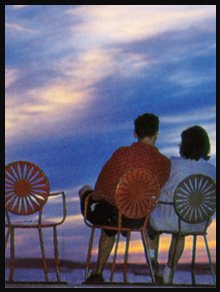 |
Last week, I was in Madison for my quarterly meeting with the big shots at the state office building. We always get together for lunch on the first day, and we decided we would take in the fall scenery from the Terrace at the Union. It was a fairly nice day for early October. The university students packed the place for lunch, as usual, but we snatched a decent table down by the water. The leaves were already turning on most of the trees along the beach where they dock the racing boats in the summer time. It was definitely chilly though, even under the sun. I have a feeling we're going to have an early fall this year.