


|
A Hockey Break-Up for Huntington |
|
Basically, it happened like this: one Sunday night, the regulars were there. Skating shifts. Chumming it up on the bench. Sitting in locker room 6. Talking about the NHL season that might have been. Talking about the passes they missed. Talking about the passes they’d make next weekend. And then they left. Monday, the doors were locked, opened long enough for
those regulars to come back in, clean their stuff out of locker room 6,
and leave for good.
It’s a strange feeling to know that the end is coming,
but be surprised when it actually arrives. Everybody that took to the ice at
Tri-State basically knew we were skating on borrowed time. We weren’t waiting for the money
to run out. We knew it was
already gone. We knew that we
were skating on the generosity of investors who had maybe waited too long
to cut their losses. Still,
every week, we chipped what we had for the privilege Hockey, if you’ve ever played it, can be very frustrating at almost every level. If you’ve never skated before, it’s frustrating to know you’ve got to fork over hundreds of dollars for the most basic equipment, and then realize that even with that, you’re starting at the very bottom. There’s a lot of falling and awkwardness. There’s a feeling that you’re a liability when you play with others who are better than you. There’s nothing worse than knowing you’re a cone out there. For those who pick up the game later in life, it takes a true love of the game to get to the point where the falling and awkwardness go away. The next level of frustration comes in when you’ve got that kind of love for the game. You start to realize that not everybody feels the same way about playing that you do. There are a core group of players that wouldn’t miss a night of open hockey. But others don’t feel that way. They don’t always show up. You realize that the ice rink where you play isn’t making money hand over fist. It's treading water. And so, you do everything you can to get those people on the brink to come and play at an arena that’s probably on the brink itself. It becomes your obligation. Warren Wright took up that responsibility. There was hardly a Sunday or
Wednesday that went by that
In late 2004, I moved to
At Tri-State, I watched people leave. Regulars from
The rink’s closing sent shockwaves through our small hockey community. For those people who had never been there before, there was a feeling of “Oh, that’s too bad.” But for both groups: those of us who care and those of us who don’t, it’s just a rink. It’s just compressors and glass and ice and cinder blocks, video games and padded floors. The ice was never particularly good. The locker rooms were crappy at best. It was always too cold when you put on your equipment. If you left your stuff at the rink, it never dried out. The lobby was semi-inviting at best. Nobody ever left the place saying how impressed they were. But for guys like
Most of the Tri-Staters will find a new place to play. But some of us still feel a profound sense of loss that’s hard to understand. We took our rink for granted, and after it’s melted away, like we all knew it would, we all now realize that maybe we all could have tried a little harder to shoulder the responsibility of keeping a game and the place where we play it alive. It’s a relationship that was doomed at the start, and we find ourselves, again, nomads with hockey sticks, looking for someone new to take us in. We just can't keep ourselves from falling in love. |
 April
16, 2005: Falling in love can be a cruel experience.
April
16, 2005: Falling in love can be a cruel experience.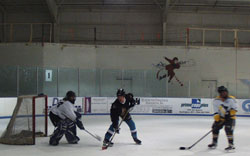 of getting out
there and skating.
of getting out
there and skating.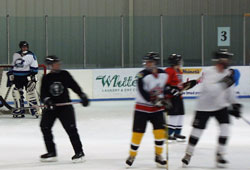 In the end, there were just too many people like me.