|
|
The Freedom Files |
|||||
|
|
Winner of the Advocates for Self-Government Lights of Liberty Award!
The Freedom Files
"Laissez-faire, laissez-passer, le monde va de lui-meme."
DIY since 2001…
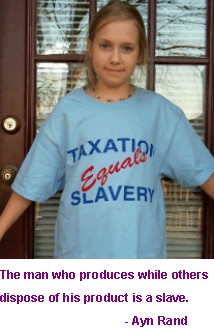
Hello Freedomphiles! Today I am going to tackle a popular, if controversial, libertarian slogan: Taxation is Theft. This statement makes liberals and conservatives alike balk, which is almost a good enough reason for me to believe it out-of-hat. This immediate revulsion from the two sides of the four-sided spectrum is, in my estimation, due to a secret or not so secret love of Big Government, or at least resigned acceptance of it. But the truth is, taxation is theft, and I intend to show you why.
First things first, though – we need to deprogram you. We have to break your acceptance of the idea that the government has some sort of moral authority to do things you would never in good conscience do yourself.
To do so, I have to make one thing absolutely clear. No matter what the liberal moral relativists of the last century have tried to convince you of, there is a difference between right and wrong, and furthermore, you already know what it is.
In his book Mere Christianity, CS Lewis speaks of this as a moral code:
Every one has heard people quarrelling. Sometimes it sounds funny and sometimes it sounds merely unpleasant; but however it sounds, I believe we can learn something very important from listening to the kind of things they say. They say things like this: 'How'd you like it if anyone did the same to you?' - 'That's my seat, I was there first' - 'Leave him alone, he isn't doing you any harm' - 'Why should you shove in first' - 'Give me a bit of your orange, I gave you a bit of mine' - 'Come on, you promised.' People say things like that every day, educated people as well as uneducated, and children as well as grownups.
Now what interests me about all these remarks is that the man who makes them is not merely saying that the other man's behavior does not happen to please him. He is appealing to some kind of standard of behavior which he expects the other man to know about. And the other man very seldom replies: "To hell with your standard.".... Quarrelling means trying to show the other man is in the wrong. And there would be no sense in trying to do that unless you an he had some sort of agreement as to what Right and Wrong are; just as there would be no sense in saying that a footballer had committed a foul unless there was an agreement about the rules of football.
This concept is known as Natural Law, or Natural Rights. Lewis believed that this natural moral code came from God. Others, like the Physiocrats, from whom I stole my masthead, believed this came from the immutable laws of Nature. I don’t really give two shits which you believe – it is irrelevant to our purposes here today, and the result is the same – so just pick one, and we’ll move on.
 These
Natural Rights boil down to one principle: The Non Aggression Axiom.
As far as I can tell, this was first clearly articulated by libertarian
philosopher Murray N. Rothbard in his book
For a New Liberty: “The
Libertarian Creed rests upon one central axiom: that no man or group of men
may aggress against the person or property of anyone else.”
These
Natural Rights boil down to one principle: The Non Aggression Axiom.
As far as I can tell, this was first clearly articulated by libertarian
philosopher Murray N. Rothbard in his book
For a New Liberty: “The
Libertarian Creed rests upon one central axiom: that no man or group of men
may aggress against the person or property of anyone else.”
This is a pretty simple axiom, and from it, all true, consistent rights flow. Further, as your body is your property, I think it can be simplified even more: Your property is yours, and no one has the right to do anything to it without your consent. Every other right is contained within this straightforward principle. Think of it as the central nervous system of your rights.
For instance, let us look at the right of free speech. Is it really the right to speak? Has any government ever prohibited anyone from opening their mouth, sending air across their vocal cords, and shaping the sounds of their vibrations with lip, tongue, and jaw movements? No.
The right of free speech is really the right to disseminate your opinions without government interference. In other words, it is the right to rent, own, or operate a printing press, radio station, lecture hall, recording studio, movie studio, or whatever form of media you choose in whatever manner you choose. The right to free speech is useless without this fundamental property right, just as the right for Matchbox 20 to make music is useless without the right for people to have bad taste.
Similarly, the rights of freedom of association and religion are merely the rights to build, rent, or own a church, assembly hall, synagogue, or any other building for whatever purpose you choose without State interference. All rights are just applications of your property rights.
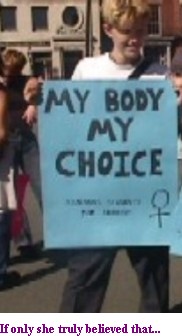
This knowledge is what led the inimitable James Madison, the “father” of our Constitution, to say, “Government is instituted to protect property of every sort…. This being the end of government, that alone is a just government, which impartially secures to every man whatever is his own.”
Now what exactly constitutes property outside of self-ownership? Clearly, as I have shown, your body must be your property; so therefore, it would also stand to argue that the products of your body are your property as well. Enlightenment philosopher and economist John Locke first set down this definition of property: “…every man has a property in his own person; this nobody has any right to but himself. The labor of his body and the work of his hands we may say are properly his. Whatsoever, then, he removes out of the state that nature hath provided and left it in, he hath mixed his labor with, and joined to it something that is his own and thereby makes it his property.”
 But
individual men outside of government do not create money, do they? Does
that mean that all money is ultimately the property of the government, to be
confiscated without notice at any time? No. You see, money is merely a
convenient means of facilitating efficient trade. If you have a pair of
bondage pants you don’t need and I want, and I have a pair of Doc Martens I
don’t need but Joe Blow wants, and Joe Blow has an original Gay Cowboy
t-shirt from Malcolm McLaren’s shop, Sex, that he doesn’t need but
you want, we first all have to find each other to make this three-way trade.
But
individual men outside of government do not create money, do they? Does
that mean that all money is ultimately the property of the government, to be
confiscated without notice at any time? No. You see, money is merely a
convenient means of facilitating efficient trade. If you have a pair of
bondage pants you don’t need and I want, and I have a pair of Doc Martens I
don’t need but Joe Blow wants, and Joe Blow has an original Gay Cowboy
t-shirt from Malcolm McLaren’s shop, Sex, that he doesn’t need but
you want, we first all have to find each other to make this three-way trade.
But there could be something that has value to everyone that we can use as a conduit for easier trade. In the past, many things were used for this process, like tobacco, livestock, gold, and silver. Today, we use paper money, which used to represent something of value, but that’s another Freedom File. Now, I can use money to buy those pants, as you can use money to buy the t-shirt, and Joe Blow can use the money to buy the Docs.
Therefore, the money merely represents the thing you traded for it, and concurrently the thing you intend to trade it for. Property. This also works with your time and service, in the way of your job or business. You trade the use of your body or mind for a certain amount of money, which will then be traded for the things you want or need, like that t-shirt.
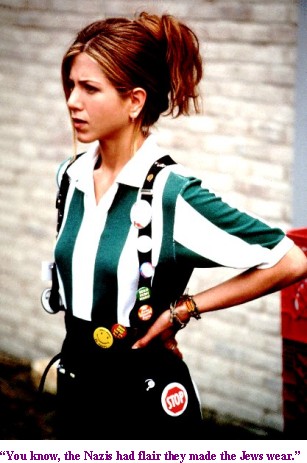
In each instance, each person is gaining something they value more, and giving up something they value less. That is the nature of free exchange – two individuals agreeing to a mutually beneficial trade. This is what happens when, for example, you agree to wait tables and wear “flair” at Shotzy’s. Doing that work and wearing that crap is worth less to you than the things you can get with the money you are paid for it, and likewise, the things they could’ve bought with the money they paid you are worth less to them than the crap-covered service you provide. In his book, The State, 19th Century German sociologist Franz Oppenheimer called this the “economic means” of exchange.
The other method of exchange he called the “political means.” This is by force, with the threat of violence as a promise, and it’s avoidance the only beneficial outcome. This type of exchange I experienced first-hand at three o’clock in the morning in the stairwell of the Clinton-Washington station of the New York Subway System in Brooklyn.
This, of course, is wrong. But since there were two muggers in that tiled purgatory, does that make it right? No. What if there had been ten? No. Five hundred? Still, no. Then what is it about five hundred congressmen that gives those meatuses (Thanks, Em) the moral authority to do the exact same thing?
Some might say that it is because they do it for valid reasons – for instance, to help the poor. I say bullshit. If I gathered a bunch of friends together and robbed you at gunpoint, would you think it was okay or your rights any less violated if we then gave that money to the poor?
Others might say that since we voted for them, their moral authority comes from our implied consent. Beside the fact that we never vote unanimously, there’s another precedent at work here. Look back to the five hundred muggers – would it have been okay if they had put it to a vote first? No.
So what is it that gives the government the moral authority to take money from any citizen that does not offer it voluntarily?
Absolutely nothing.
Until next time, make every day a good one!
- Rick
If you liked
what you read, please forward this to a friend.
If you've been forwarded this and would like to be on the list, have comments
good or bad, would like more information about Libertarianism, or have
received this in error and would like to be removed from my list of freedom
lovers, e-mail me at:
|
©2004 Rick Davis |
Freedom Files Archives • Freedom Lyrics • Freedom Links • Freedom Pictures • Freedom Forum |
