| Hip Hop will simply amaze you ; craze you; pay you; do whatever you say do--but black, it can't save you .... |
| Mos Def: "Hip Hop" |
| ACT TOO: THE MUSIC PAGE |
| Here is where I forego the BS and stick to what I know: music. Since this is my first update--spurred by the prospect of possible visitors, things will be rudimentary for the time being. I'm not exactly in dissertation mode :) but I will start off by profiling a few albums that have shaped my taste in and perception of music over the course of the most critical of my listening years .... and these aren't my favorite albums; they're my favorite landmarks |
 |
 |
 |
 |
 |
 |
 |
 |
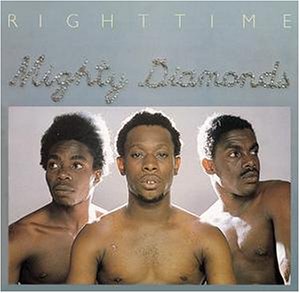
| The Mighty Diamonds "Right Time" [Virgin; 1976] |
| This album was a surprise to me, from its bizaare domestic cover art, its original release date, to its EXISTENCE. I grew up on these songs; all ten being certified classics of such immaculate perfection that I thought they were entries from a classic reggae hits album my father spun frequently during my childhood. 'Twas only when my mother arrived home from a trip to yard that I was confronted with this classic under the banner of: A) One band B) One Disc C) One session. This is a timeless classic in the cannon of modern music that willl never be misplaced to me again. |
 |
|
|
|
|
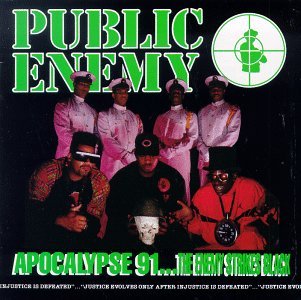
| Public Enemy "Apocalypse '91...The Enemy Strikes Black [Def Jam; 1991] |
|
|
|
|
 |
| Ah .... where my parents' nightmares all started! This was the very first Hip-Hop album I ever heard and purchased with my own money. I'd always been a casual fan of Hip-Hop by way of pop radio, an occasional drop-in to Yo! MTV Raps, and my father's efforts to cater to all of his house parties' attendees BUT; needless to say, I'd never heard anything like this in any one of those venues, except for the relatively tame lead single, "Can't Truss It." When a junior high school friend lent this cassette to me, I was ill prepared for the sonic and ideological assualt Chuck D and Co. were known for packing into portable audio format, but emerged from the battlefield a more thoughtful--and less trussing--young man. |
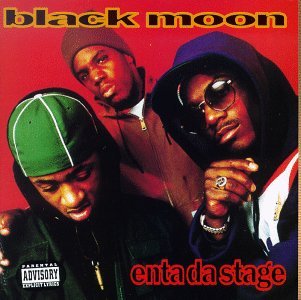
| Black Moon "Enta Da Stage" [Max Entertainment; 1993] |
|
|
|
|
|
| Largely veiwed as East Coast Hip-Hop's first stomp back towards the forefront of the scene after a near half-decade long West Coast gangsta/reality rap plutocracy, in my opinion this record also birthed the monarchy of the Hip-Hop producer. Although more notorious royal embassadors such as Marley Marl, The Large Professor, Dr. Dre and DJ Quik had all basked in the limelight as premier sound miestros, the heretofore unknown Beatminerz (brothers Mr. Walt & Evil Dee) crafted the first of a good half-dozen dark and brooding mood pieces reflecting New York life at its grimiest, with narrating MC Buckshot in the passenger's seat. After years of petulant whining about the West Coast not playing fair with its fussy musical arrangements and colorful and catchy local dialect, New York artsist and groups finally learned to follow their leader: and a new renaissance was born. |
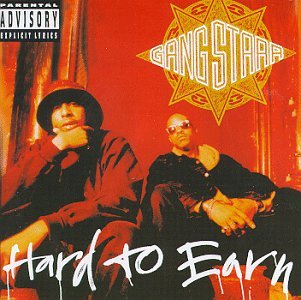
| Gang Starr "Hard to Earn" [Chrysalis/EMI; 1994] |
|
|
|
| January 1994: Enter the Colossi. The criminally underrated street poet known as Guru and his unofficially vaunted DJ/Producer Premier forestalled the release of another classic to make this statement: we just gave y'all bitches two back to back classics. RECOGNIZE!!! And finally, we did. Although this record didn't quite follow the Gang Starr tradition of breaking stylistic ground, it set the bar for what underground respect is worth and how it is obtained--by takin' that shit. |
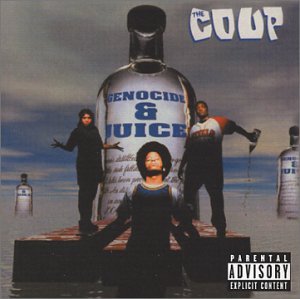
| The Coup "Genocide and Juice" [Wild Pitch/EMI; 1994] |
|
|
|
|
| After crafting a refreshing and bold, but slightly lacking, debut (and watching it be be grossly underpromoted and poorly distributed by a major label) the Oakland-based Marxists The Coup stepped up their game on every level for their critical breakthrough, "Genocide and Juice." Expanding their two pronged modus operandi of introducing the audience to new ideas and showing them how their direct application in the streets can revolutionize American life way beyond the proletariats to expose the nefarious workings of "the system" with more wit and exuberance than had ever been attempted, it was sad to see this release be even more poorly promoted and distributed ... as was their next ... and their next after that ... |
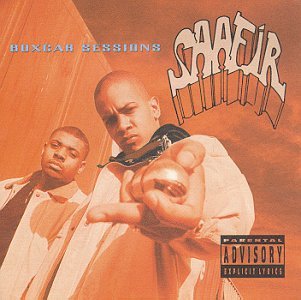
| Saafir "Boxcar Sessions" [Qwest/Reprise; 1994] |
|
|
|
|
| Another Bay Area sleeping beauty. Saafir and his collective The Hobo Junction took rap lyrics to the very limits of their traditional stylistic trappings and rap production to, what then, were the fiery depths of its fidelity range after a magnificient demonstration of this paradoxical exposition was graced upon mankind in the form of the Wu-Tang Clan's debut album. The result was a series of derailed stream-of-consciousness rhymes from the former Digital Underground alum and producer Jay-Z's (James Jackson, not Shawn Carter) answer to the northernly grunge explosion in the form of multi-layered sludge oozing from parts previously unknown to lurk within the SP-1200. A brilliant mindscrew and tragic fluke; the likes of which to never be seen again through Saafir or anyone else. |
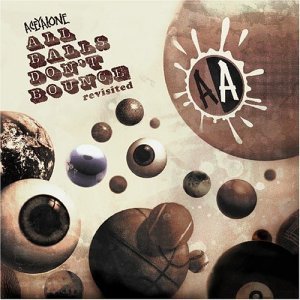
| Aceyalone "All Balls Don't Bounce" [Capitol, 1995; Project Blowed/Decon, 2004] |
|
|
|
|
|
| After the inevitable implosion of gangsta rap's viscously exploited popularity, Hip-Hoppers waited with baited breath upon the West coast's newest innovation. As it usually goes, what we received was what we failed to notice the first two or three go-rounds. Aceyalone had already released two stellar LPs with his group The Freestyle Fellowship and co-launched a virtual movement known as Project Blowed. So, like all great geniuses do, he coughed or sneezed onto a reel to reel and forensics revealed this deposit after a few months of captivity in Capitol's vaults. The beats were unheard of from the West Coast--at least to all of us who weren't in the know--haunting, grating, and enticingly tumultuous. The lyrics were lucid illustrations from the mind of a scholar, a revolutionary, a saucy batchelor and all around universal soldier with a sharp distaste for booty MCs. This all was just much too much for a 15 year old kid to take in at one time, so when Capitol/EMI pulled the plug on its black music division in 1996 and Project Blowed took it upon themselves to plug the revolution back in eight years later, the godz cried with restive delight. |
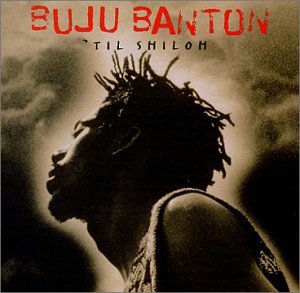
| Buju Banton "'Til Shiloh" [Penthouse/Island; 1995, 2002] |
| All this Hip-Hoppin' left me precious little time to be bothered with schoolwork, let alone reconnect with my Jamaican roots. It took the release of this potent masterpiece on a truncated vinyl format on sale locally for $5.99 in the late summer of 1995 to bring me to my senses. Known to the world outside our island in the sun as the Batty Bwoy Killah (for 1990's gay bashing anthem "Boom Bye Bye"), young Gargamel struggled indefatigably to wrestle his image from the liberal lobby that painted him red, finally winning it back by washing it Rasta. The Sufferer's anthems that fill this LP with Marley-esque humility, self-restraint and tranquil resilience signified the becoming of a living legend and the temporary fall of slackness in dancehall music. Is this what the godz were truly so happy about after all? |
|
|
|
|
|
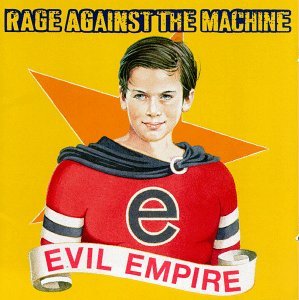
| Rage Against the Machine "Evil Empire" [Epic Associated/Sony; 1996] |
|
|
|
|
| I knew rock existed. I knew I liked it. I'd bought a hand ful of cassettes from the genre in the past and enjoyed them as much as I did my rap tapes, whether anyone else knew this or not. What I didn't know was that rap and rock could get it going like peanut butter and jelly under the right circumstances. I felt compelled to give this album a 4 stylus rating, but I had to reign in my personal association with it a bit for a reality check. Zach de la Rocha flaunted flawless cadences and rhyme schemes throughout this album, as well as bravely and sucessfully venturing into more traditional rock vocal territory as Tom Morello freaked more Technics with his guitar than known to be allotted in this realm (lending Rage's standard "All sounds made with guitar, bass, drums, and vocals" advisory a timeless necessity). Unforunately, too many of the puzzle's pieces had not yet been unearthed, and no 16 year old malcontent was paying enough attention in history class during the mid '90's to keep up with Zach's effortlessly executed political and sociological literary devices. However: EXPERIENCING Evil Empire in 1996: |
|
|
|
|
|
 |
| Edan - Ultra '88 (Tribute) |
|
|
 |
| Next ... |
 |
| ... Back |
 |