| COURSE NEWS 2008-089: starting in January 2009 |
| Learn a new word every day. |
| Get a new cartoon every day and have a good laugh. . |
| Flash back into history with the BBC. What happened in history today? |
| See the news of the day in pictures with the BBC. |
| For lessons 1 to 13, go to "Course news 2008-09A " |
| Donate rice grains to help end world hunger with "freerice " |
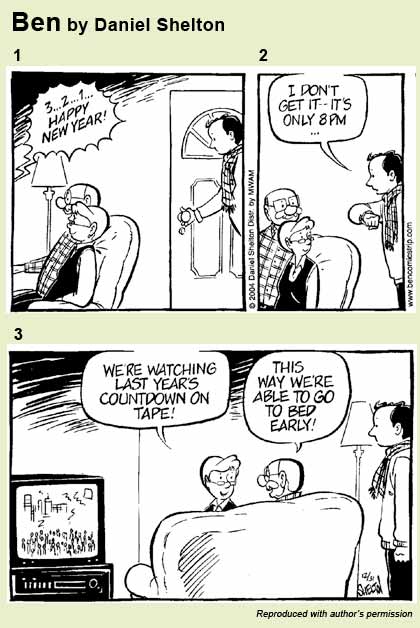
| JANUARY 7, 2009 LESSON 14 My very best wishes for a happy and healthy new year. On the right is a funny cartoon so that we can start 2009 with a good laugh. There is no new word of the week for this lesson. We're going to spend all of our time on the traditional New Year's quiz. I have once more compiled a large set of new challenging questions on a variety of subjects. I hope you will enjoy it. INTERACTIVE PRACTICE 1. The first interactive exercise for the new year is a vocabulary exercise. It's about the man who threw his shoes at President Bush when the latter was on a visit in Iraq. What's the situation for the man since the incident? What are some of the unintended results of this incident? Read it all in => 'Iraqi Shoe Thrower " 2. Here's quiz 11 from the BBC's quiznet => 'Shopping ' 3. Practise your listening, reading and vocabulary skills with 'Audio News Reports ' from the past 31 days (December) |
 |
| Click on the cartoon to enlarge |
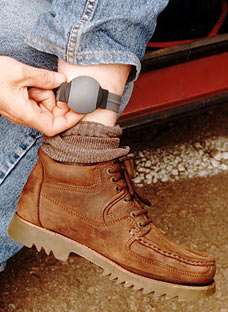
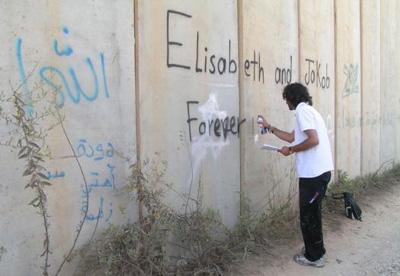
| JANUARY 14, 2009 LESSON 15 Words of the week: in the tag question "It's a cold day, isn't it?", 'isn't it' is the tag. But what is a 'tag' in the following sentence: 'Anti-Israeli tags could be seen at the bus stops in Antwerp.' (see the picture on the left) When you have found the answer, what is a price tag, a name tag and what is a luggage tag? Finally, look at the picture on the right, and you can see what an electronic tag is. In the first part of the lesson we're going to continue and finish the new year's quiz. After that we're going to read (or finish) the articles that we didn't do from lesson 13. These are 'Belgian franc not extinct yet', 'More people go missing at Christmas' and 'No alcohol for soldiers on mission'. During these freezing cold days, it seems appropriate to focus on homeless people in our country. I've found an article about 'Three-star hotel welcomes homeless'. It's about Hotel Mozart which opens its doors to homeless people in Brussels. We will read (amongst other things) why the owner of the hotel is doing this. If you want to see where some homeless people will spend a comfortable night, the hotel has a website. Go to => 'Hotel Mozart ' INTERACTIVE PRACTICE 1. The interactive exercise for this week is a 'verb tenses' exercise. It is about an incident at JFK airport, New York and involves an Arabic slogan on a T-shirt. The question asked is if people have the right to display any slogan they want even if it might make other passengers feel uncomfortable. If you want to read more, go to => "Arabic T-shirt payout ". 2. Here's quiz 12 from the BBC's quiznet => 'Police ' 3. Practise your listening, reading and vocabulary skills with 'Audio News Reports ' from the past 31 days (December) |
 |
 |
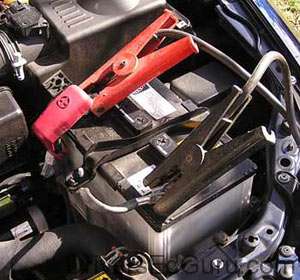
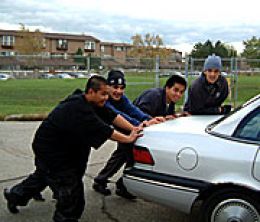
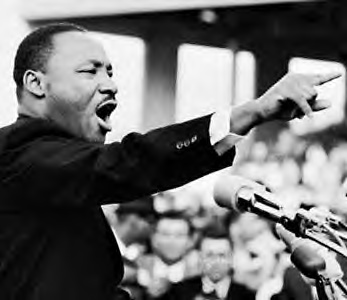
| JANUARY 21, 2009 LESSON 16 First of all many happy returns of the day to Marie-Anne who's celebrating her 60th birthday on Wednesday. Marie-Anne, I know you don't want to be reminded of this very spccial day - going sixty - but there's nothing you can do about it, except try to enjoy every day that lies ahead of you. Suz, I hope your central heating system has been fixed, so that you can enjoy a hot shower in a warm bathroom. Word of the week: in the pictures you can see two ways of jump-starting a car. Can you explain in English how a car is jump-started? Jump-start is also used in a figurative meaning. Here's an example which I found as the headline of an on-line news magazine: "Obama to jump-start economy with stimulus plan". What does it mean? I want to focus this week's lesson on one of the most important public holidays in the USA which is celebrated the third Monday in January and which commemorates a very special man: Martin Luther King. First we're going to read an article which concentrates on this public holiday and how it was established. We'll also have a look at the other 9 public holidays in the USA. In the second article we'll read about the life of Martin Luther King while at the same time practising how to ask questions. If you want to watch a two-minute film on the assassination of King, the rioting that followed, and the funeral, go to "Martin Luther King Jr.'s assassination " INTERACTIVE PRACTICE 1. The interactive exercise for this week is a matching exercise on => 'compound nouns ' (samengestelde zelfstandige naamwoorden). Use the mouse and drag the second half of the compound to the corresponding first part. 2. Here's quiz 13 from the BBC's quiznet => 'Disappearing ' 3. Practise your listening, reading and vocabulary skills with 'Audio News Reports ' from the past 31 days (December) 4. In next week's homework, you have to know the difference between 'didn't need (have) to' and ' needn't have'. If you have forgotten the difference, here's a short grammar exercise in preparation of your homework. Go to => didn't have to/ needn't have ' |
 |
 |
 |
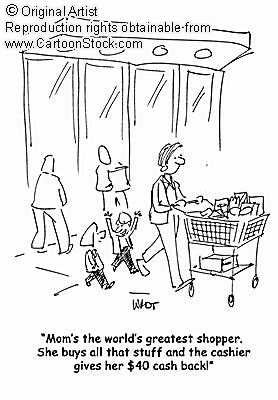
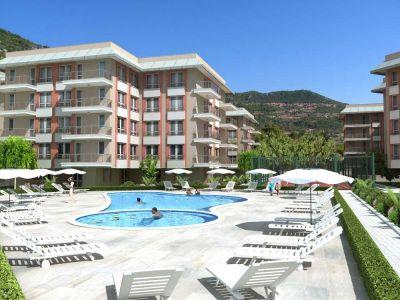
| JANUARY 28, 2009 LESSON 17 Word of the week: when you go to the supermarket and you go to the check-out do you ever ask: "Can I get �50 cashback?". What does cashback mean? What are the advantages for the customer, and what are the advantages for the supermarket? * First you're going to complete your incomplete article on the life of Martin Luther King by asking questions to your neighbour. * Look at the picture underneath, link it to the name of former tennis star Sabine Appelmans and you may have an idea about the article that we are going to read next. The title is: 'Belgians conned in Turkey'. If we have some If we have some time left we will finish some of the unfinished articles from lesson 13 and 15. INTERACTIVE PRACTICE 1. Do you know that Queen Fabiola died last week? At least, that she was dead for one day. Read all about it in this vocabulary exercise => "Queen Fabiola declared dead " 2. Here's quiz 14 from the BBC's quiznet => 'Children's toys ' 3. Practise your listening, reading and vocabulary skills with 'Audio News Reports ' from the past 31 days (December) |
 |
 |
 |
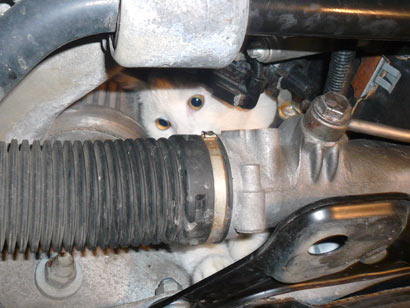
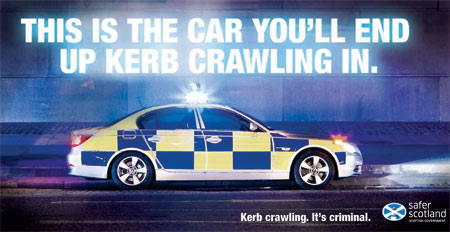
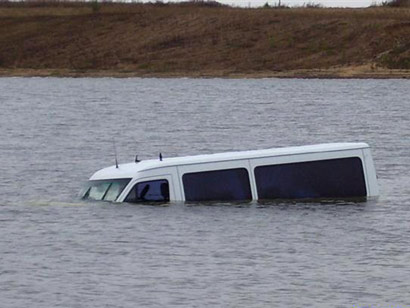
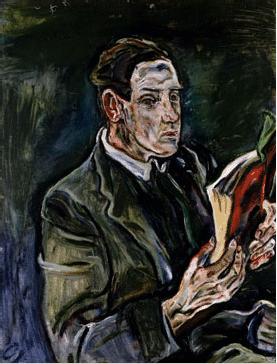
| FEBRUARY 4, 2009 LESSON 18 Suz, I hope you've got your voice back. We somewhat missed it last week. Marie-Anne has sent me a mail with the recipes of 'witlof pie' (a quiche) and goat cheese apple pie. Both recipes will be in this week's bundle. Words of the week: you know what 'crawl' means apart from being a swimming style. But what does it mean if people go on a 'pub crawl'? And who is a 'kerb-crawler'? 'Kerb-crawling is an illegal activity in the United Kingdom, punishable by law. I'm not sure if 'kerb-crawling' happens a lot in Belgium. You can tell me on Wednesday. * First, we're going to read last week's article on 'Belgians conned in Turkey'. * After that you're going to do the work instead of me. I'm sure we are waiting anxiously to hear each other's quirks (unusual strange news stories from all over the world). Above, you find two pictures which illustrate two stories. INTERACTIVE PRACTICE 1. It was in the news last week. The Museum of Fine Arts in Ghent may lose one of its top works. It's about the oil painting 'Portrait of Ludwig Adler' by Oskar Kokoschka, the well-known Austrian expressionist. How might this happen? Interested? Read about it in => "Row over Kokoschka oil painting " 2. Here's quiz 15 from the BBC's quiznet => 'Banking ' 3. Practise your listening, reading and vocabulary skills with 'Audio News Reports ' from the past 31 days (January) |
 |
 |
 |
| click on the picture to enlarge |
 |
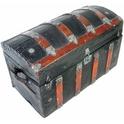
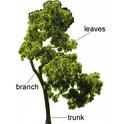
| FEBRUARY 11, 2009 LESSON 19 Word of the week: let's look at the word 'trunk'. Two of its meanings are illustrated in the pictures on the right. What other meanings does the word have? Well, first of all, it's American English for part of a car. Secondly, it is part of the body, and thirdly, it is part of an elephant. Finally, what are 'trunks' for men? * After listening to your quirks last week (again congratulations for the excellent way in which you told them) it is now time to see how good your memory is. I will ask you to read your stories, but I have left out some words (as I usually do). How many do you remember? Of course, Bea, if you are back, you will be first to tell the two remaining quirks. * If you like, we will then complete the unfinished (or not corrected) articles from lessons 13 and 15. * If there is some time left, I've got another news story ready for you. The title is 'Organ tourism under attack'. It's about the fact that although Belgium is one of the European top suppliers of donated organs, there are still long waiting lists for people whose life depends on a donor transplant. How come? We'll also be looking at the law in Belgium concerning organ donations. Would you be willing to have your organs or tissue removed after you've died so that someone else can survive? If your answer is yes, how can you make sure that this will happen? INTERACTIVE PRACTICE 1. This vocabulary exercise is about the heaviest snowfall which has hit Britain for 18 years. One of the questions asked, is why snowfall can cause such widespread disruption in this country. If you want to read more, go to => 'UK hit by heavy snow " 2. Here's quiz 16 from the BBC's quiznet => 'New words and expressions ' 3. Practise your listening, reading and vocabulary skills with 'Audio News Reports ' from the past 31 days (January) |
 |
 |
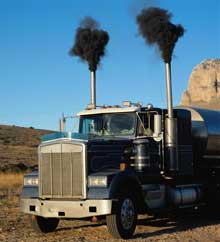
| FEBRUARY 18, 2009 LESSON 20 Word of the week: look at the picture on the left. Why are the exhaust fumes of this truck harmful to our health? Because they contain something for which you need a filter to remove it. It can also cause a chimney fire if you let it accumulate inside a chimney. Now look at the picture on the right to see the word. What's the Dutch word for it? * First we're going to read the article 'Organ tourism under attack' which is in last week's bundle. We'll also be looking at the law in Belgium concerning organ donations. Would you be willing to have your organs or tissue removed after you've died? If your answer is yes, how can you make sure that this will happen? * Then we're going to do a roleplay. You will be members of a heart transplant surgery team. Six patients desperately need a transplant because they are critically ill. The heart of a 16-year-old boy, who died in a car accident, is available for transplantation. You are faced with the difficult task of choosing which patient will get the heart. You will work together with your neighbour and will be asked to give your reasons why a particular patient should or should not receive the heart. * If we still have some time left, we can have another go at trying to correct the unfinished articles from lesson 13 & 15. INTERACTIVE PRACTICE 1. Do you sometimes buy Zwam sausages, Sun washing-up tablets or Lipton tea? You might not find them at Delhaize, not any more, that is, since they have a conflict over prices with the manufacturer Unilever. If you want to read about this conflict, go to => "Delhaize takes Unilever products off the shelf " 2. Here's quiz 17 from the BBC's quiznet => 'Films ' 3. Practise your listening, reading and vocabulary skills with 'Audio News Reports ' from the past 31 days (January) |
 |
 |
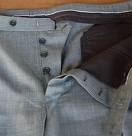
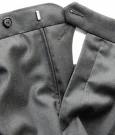
| MARCH 4, 2009 LESSON 21 Word of the week: last week I heard the Australian Prime Minsiter say that "flags will fly at half-mast every 7th February in memory of those killed in the bushfires." This gave me the idea of taking the word 'fly' as word of the week. First of all 'fly' is an activity. You all know what it means. You also fly the flag. (What is the opposite?) You also fly a kite (think of the excellent book 'The Kite Runner' by Khaled Hosseini). A fly is an insect as well as something that is in the front of trousers. Look at the pictures to see an illustration of two kinds of flies: the button fly and the zip fly. What does it mean when we say: 'she wouldn't harm a fly'? And what is a flyer? And how would you define a high-flyer? * First we're going to do a roleplay in which you are members of a heart transplant surgery team. It is explained in lesson 20. * Then I'm going to give one of you a story (taken from the news) which that person will read out to someone else in the group who will be expected to retell the story. There are four (very short) stories which all have very original titles. Here they are: 1) 'Nice try, buddy' about a drunk driver, 2) 'Keep toilets dirty for kids's health, Doc says' a provocative statement by a Flemish urologist, 3) 'Bring it on' about a man who beats up two police officers, 4) 'Try this one again, missy' about a very special woman burglar. INTERACTIVE PRACTICE 1. Why is there a general feeling amongst police officers that they will not be punished if they act against the law when performing their duty? Remember the incident in October last year when a policeman stole some porn magazines not knowing that he was being filmed by a surveillance camera and later got away with it? Read the whole article in => "Police officers above the law " 2. Here's quiz 18 from the BBC's quiznet => 'Talking vaguely ' 3. Practise your listening, reading and vocabulary skills with 'Audio News Reports ' from the past 28 days (February) |
 |
 |
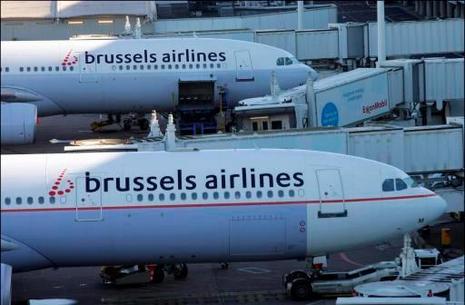
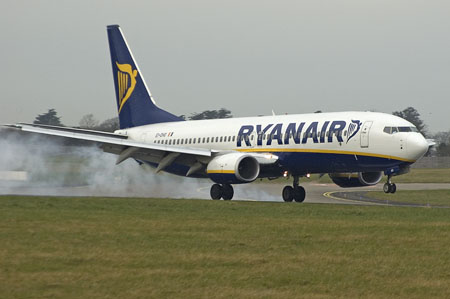
| MARCH 11, 2009 LESSON 22 Word of the week: this time you don't get the word for free. You'll have to find it yourself. It is a word that has become widely used in modern English. What do a lot of people today prefer to say instead of 'second-hand' (clothes, for instance) or 'used' (cars, for instance)? Here is the word, but I've jumbled all the letters: => 'rep-woned'. * First we're going to complete the four stories which are in last week's bundle. Remember the titles: Nice try, buddy' 2) 'Keep toilets dirty for kids's health, Doc says' 3) 'Bring it on' 4) 'Try this one again, missy'. * Next we're going to work on three articles which all deal with flying. The first one is entitled 'Airline might charge for bathroom use' and is a commentary (taken from a blog) on one of O'Leary's (the boss of one of the airlines in the pictures) brazen declarations probably made in order to win free publicity. We will read it and especially appreciate its humouristic style and its use of colloquial English. The second one is 'Business class is back'. A few years ago this airline (one of the airlines in the pictures) cancelled the business seats. But they're going to be back. How come? That's what we're going to find out. It may also lead to a discussion which facilities you think are essential, which facilities would be welcomed, and which are not necessary at all. The third article is entitled 'Fleming delivers baby in the air' It was in the news last week. Did you hear about it? If not, you'll find the whole story in your bundle. INTERACTIVE PRACTICE 1. This week's interactive exercise is about pensions and the level of pensions in Belgium compared with other countries in Europe. Yet, Flemish retirees are very affluent. Read more about it in: => "Flemish pensions ". 2. Here's quiz 19 from the BBC's quiznet => 'Journalism ' 3. Practise your listening, reading and vocabulary skills with 'Audio News Reports ' from the past 28 days (February) |
 |
 |
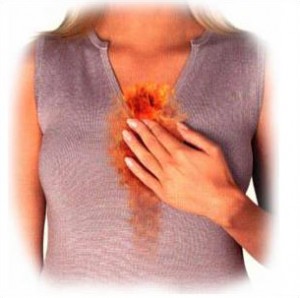
| MARCH 18, 2009 LESSON 23 Words of the week: the central word is 'burn'. First we'll meet the word in slightly different meanings. Then we'll have the word 'burn' in combination with another word: heartburn and sideburns. What do these words mean? Look at the illustrations on the right to get the meaning. * If I'm not mistaken we still have to fill in the blanks in the third article from last week, entitled 'Fleming delivers baby in the air'. * Then we'll have a vocabulary game about flying and airports. You'll get words on slips of paper and you'll have to describe the words so that the rest of the group may guess them. We'll continue with a quiz on these words. And finally, you'll get a list of events that happen from the moment when you arrive at the airport until the plane takes off. But the order of events have been jumbled. So, you can already guess what you'll have to do: restore the correct order of events. * I hope we'll have enough time left to talk about the national holiday of Ireland which is celebrated on March 17. Can you guess what it will be about? We talked about it a few years ago, but I don't think it will do any harm to deal with it again. On the right is a picture that tells about one of the legends around this person. INTERACTIVE PRACTICE 1. This week's interactive exercise is about Peter De Wolf, Ghent's police chief and the mess he's involved in. Of course, you've read or heard about it, but here are the facts in English. Go to => "Ghent police chief suspended " 2. Here's quiz 20 from the BBC's quiznet => 'Plurals ' 3. Practise your listening, reading and vocabulary skills with 'Audio News Reports ' from the past 28 days (February) |
 |
 |
 |
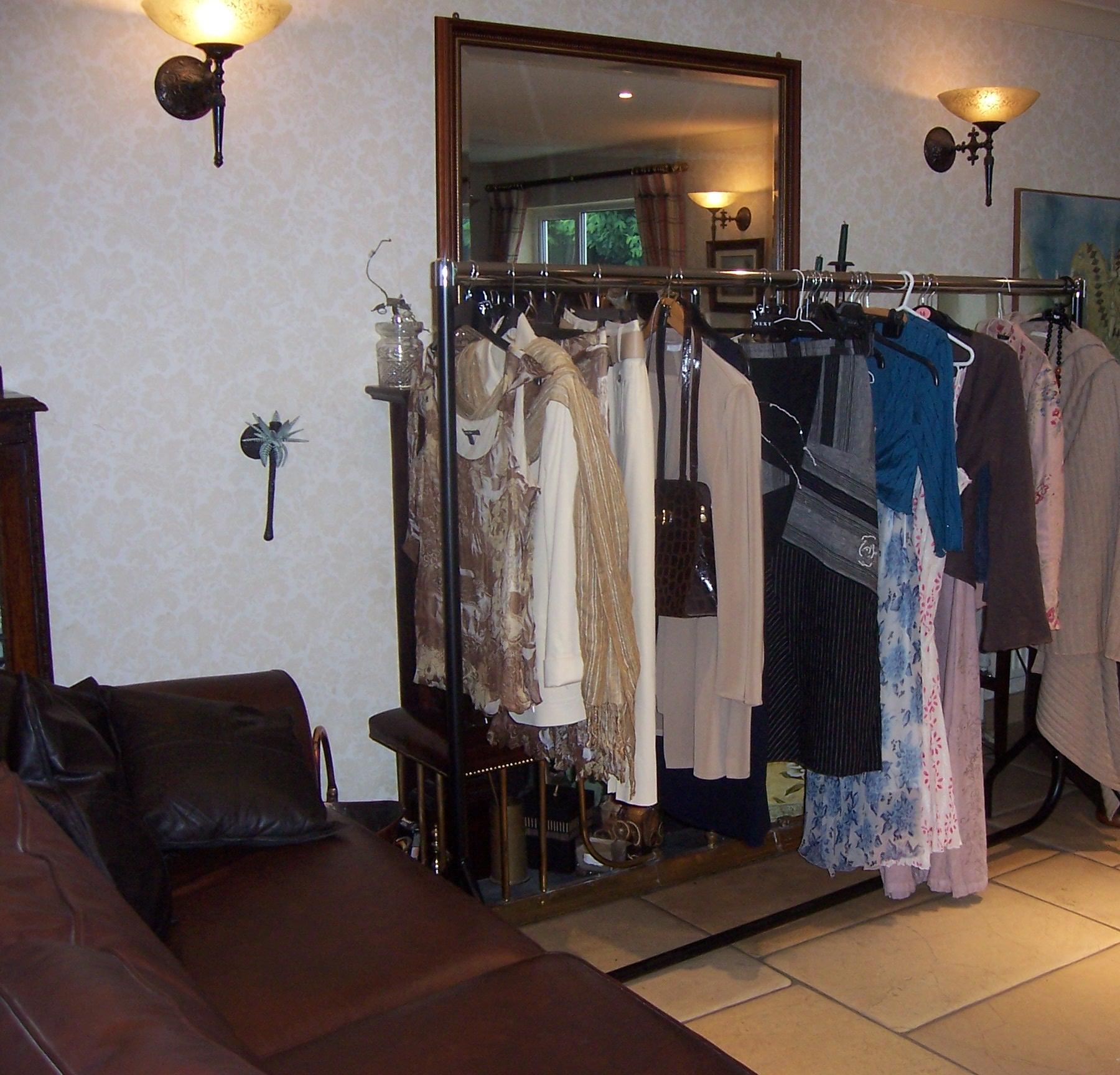
| MARCH 25, 2009 LESSON 24 Word of the week: have you ever heard of a swishing party? Probably not. It's a new trend in London and around. If you want to know what it is go to the official => 'swishing' website. When you know what it is, how do you feel about it? * In the first part of the lesson we are going to do the 'event list' at an airport: the things we do the moment when we arrive at the airport until the plane takes off and lands again . (The list is in last week's bundle. If you have already done the exercise I wonder what number you gave to 'be delayed') * Secondly; we are going to read the article on Saint Patrick's Day, which was celebrated worldwide on March 17. (The article can also be found in last week's bundle.) * The next part is about the three police officers who were stabbed and seriously injured when they were trying to take a person to hospital for a psychiatric examination. It happened in Ghent last week. The title of the article is 'Police shoot dead stabber in Ghent'. How much do you know about the circumstances and the consequences of the attack? * If we have some time left, we will talk about the police in general with the help of some specific questions. INTERACTIVE PRACTICE 1. March 24 is World Tuberculosis Day. Why is it on this particular day? What is the cause and who discovered a cure? Where is it mostly found? How is it spread? What are the symptoms? This and more can be found in the following interactive vocabulary exercise => "World Tuberculosis Day " 2. Here's quiz 21 from the BBC's quiznet => 'Modal verbs ' 3. Practise your listening, reading and vocabulary skills with 'Audio News Reports ' from the past 28 days (February) |
 |
 |
| Click on the picture to enlarge |
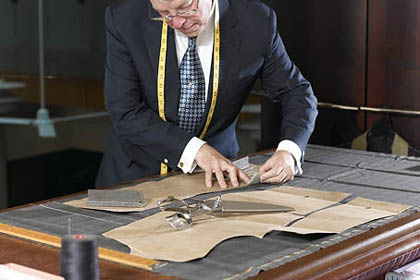
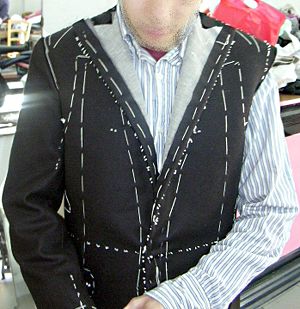
| APRIL 1, 2009 LESSON 25 Word of the week: a few weeks ago I came across the word 'bespoke' in an advertisement. In the picture on the left you can see a bespoke tailor starting from scratch to make a bespoke suit. In the second picture you can see somebody fitting a bespoke suit. The advertisement carried a website which you can visit at 'Raja fashions ' I think you now have a clear idea of what 'bespoke' means. Do you also know the difference between a bespoke suit and a made-to-measure suit? And what is the opposite of both words? In Dutch we talk about 'confectiekledij'. What is it in English? 'Bespoke' is not only used in the garment industry. Visit the 'bespoke' section of car maker 'Rolls-Royce ' to find out what a 'bespoke' Rolls-Royce is. * Have you looked at the date of lesson 25? I's a special day, isn't it? Do you know what it is called in English? Have you ever played a trick on somebody of have you ever been the butt (doelwit) of someone's joke? If you have a good story to tell, next Wednesday is your opportunity to tell it. * After reading the article 'Police shoot dead stabber in Ghent', we will have a talk about the police in general with the help of some specific questions. All of this is in last week's bundle. * Finally, we'll have a vocabulary revision. We'll see how well we have remembered some of the words we used in lessons 13-23. I'll be there with my slips of paper once again, asking you to describe the word you have in your hand. The others will have to guess the word. INTERACTIVE PRACTICE 1. Last week there was a lot of news on the Belgian budget deficit. That's what the interactive vocabulary exercise for this week is about. It is a good way to practice some specific words that are used in connection with financial matters. If you want to do it, go to => "The Budget Deficit " and keep abreast ( = stay informed) of things. 2. Here's quiz 22 from the BBC's quiznet => 'Taking a course ' 3. Practise your listening, reading and vocabulary skills with 'Audio News Reports ' from the past 28 days (February) The next lesson is on 22nd April. Let's enjoy the Easter holidays and hope for some warm weather. |
 |
 |
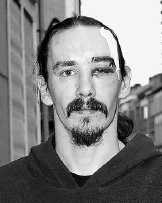
| APRIL 22, 2009 LESSON 26 Word of the week: have you ever heard of the word 'drone'? It is the word for a male bee that does no work (doesn't produce honey). The word is also used to talk about a 'continuous dull sound' (= gedreun) such as the 'steady drone of the traffic along the motorway'. But there is a third meaning. There is an illustration of a 'drone' in the picture on the right. It is a special sort of aeroplane used in countries like Afghanistan. Any idea what it is? What would it be used for? What is the advantage of using 'drones'? * Fist we'll continue the vocabulary revision which is in the previous lesson . The second exercise on the page involves working in pairs. If you like doing this type of exercise, we'll have a go at it. You will be asked to create your own story with the help of your partner, using as many words as possible from the given list. * The next part is about the man in the picture on the right. His name is Titus Clarysse and he is 'Ghent's notorious freeloader'. If you know what he's doing or has done, what do you think of his actions? INTERACTIVE PRACTICE 1. They have often been in the news in recent weeks and they are hot news today (Sunday). So if you want to read about the Somali pirates in English here's your chance. Who are they ? Why are they doing it? Why does the world seem so powerless to stop these hijackings? Interested? Then do this vocabulary exercise => "Somali pirates strike again ". 2. Here's quiz 23 from the BBC's quiznet => 'Mothers ' 3. Practise your listening, reading and vocabulary skills with 'Audio News Reports ' from the past 31 days (March) |
 |
 |
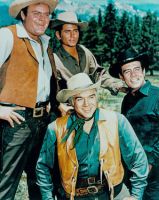
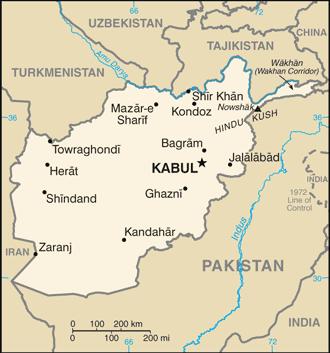
| APRIL 29, 2009 LESSON 27 Word of the week: who doesn't remember the immensely popular western TV series 'Bonanza'? Do you still know the name of the family and the names of the father and his three sons? But the word 'bonanza' is also used in general English. What does it mean then? Here are some examples: "The film 'Pillow Talk' was a real bonanza for Doris Day", "the film was a box-office bonanza." "It is doubtful whether 2009 will be a bonanza year for the computer industry." * First we'll finish off the article on 'Ghent's notorious freeloader'. * Then we are going to read an article on 'chocolate'. After we've read it, you're going to prepare some questions of which you have the answers. You will then quiz someone else in the group to see if she knows the answers to your questions without referring to the text. * Finally we're going political with an article entitled 'Row over Belgian ground troops in Afghanistan." What's the issue about? Where are the Belgian soldiers in Afghanistan? Why are we there? How many Belgian soldiers are there in which regions? Should Belgian troops be involved in the war against the Taliban? How will the general public react when the first body bags return from Afghanistan? These and other questions will be the topic of discussion. INTERACTIVE PRACTICE 1. In 1963 the greatest train robbery took place in England. Master mind was Ronnie Biggs. The man is behind bars now but wants to spend his 80th birthday at home as a free man. Read the whole story while filling in the right form of the verbs between brackets. The title is "Ronnie Biggs launches parole bid " 2. Here's quiz 24 from the BBC's quiznet => 'Love and Marriage ' 3. Practise your listening, reading and vocabulary skills with 'Audio News Reports ' from the past 31 days (March) |
 |
 |
| click on the picture to enlarge |
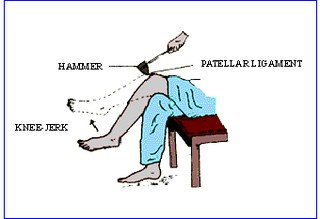
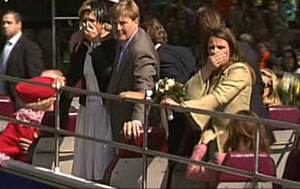
| MAY 6, 2009 LESSON 28 Word of the week: when I was reading about the outbreak of swine flu, I came across a new word for me (and for you, too, I suppose): 'knee-jerk reaction'. What do you think it means? A knee-jerk is literally the involuntary contraction of a leg when a doctor taps the knee with a little hammer.(see the picture on the right). So, what does it mean in a figurative way? The word 'jerk' also made me think of a tear-jerker. What's that? And if I may be vulgar for once, what does it means if a person (usually a male) jerks off? Finally, when do you call a person a 'jerk'? * First we're going to read and discuss the article which is in last week's bundle: 'Row over Belgian ground troops in Afghanistan." * How many people today worry about their personal financial situation? What do they want the government to do about it? What measures are very important for most people? This and a lot more is what we are going to read in the article: 'Financial concern at all levels'. What does the title suggest? * Finally, if there is any time left, we'll do a language & vocabulary game in which you will have to make grammatically correct sentences from a given list of words. INTERACTIVE PRACTICE 1. We've been shocked by the tragedy that took place on Queen's Day in Holland. Here are the facts once more, but in English this time. In this fill-in exercise hints aren't always available. This is because I think you are familiar with the facts. It is a useful vocabulary-building exercise. Interested? Then go to: "Deadly attack on Queen's Day " 2. Here's quiz 25 from the BBC's quiznet => 'Happiness ' 3. Practise your listening, reading and vocabulary skills with 'Audio News Reports ' from the past 30 days (April) |
 |
 |
| MAY 13, 2009 LESSON 29 Word of the week: with the start of the spring and summer season, I thought it was the right time to focus on an object we will use in these seasons: the flyswatter (see picture on the right). Do you often use it? Do you only use it to swat flies? The word 'swat' made me think of another word which has the same pronunciation but is spelled in a different way: swot. What is a swotter? Were you a swotter when you were a student? Finally for business-oriented people: what is a SWOT analysis? What do the letters S, W, O, T, stand for? * First, we're going to read the article: 'Financial concern at all levels' which is in last week's bundle. * Next, we're going to do the language & vocabulary game in which you have to make grammatically correct sentences from a given list of words. . * Last week a survey was published about the credibility of a number of professions and trades (doctors, teachers, bankers, top managers, postmen/women, etc) We'll give our own credibility ranking and comment on it. This will lead to the next article about politicians and the credibility of politics after the turmoil as a result of the defection antics of Dirk Vijnck. The title is: 'Bart Somers pleads mea culpa'. INTERACTIVE PRACTICE 1. This week's vocabulary exercise is about the growing frustration of many a motorist with "Road-works result in record traffic jams ". 2. Here's quiz 26 from the BBC's quiznet => 'Waiting in traffic ' 3. Practise your listening, reading and vocabulary skills with 'Audio News Reports ' from the past 30 days (April) |
 |
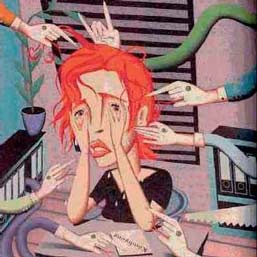
| MAY 20, 2009 LESSON 30 Word of the week: this week revises some words we have seen before and introduces a new word: mobbing. What is mobbing? It describes a recent social phenomenon occurring in the workplace which seems to affect more and more people. Why are some people mobbed? The picture on the right may help you to understand the meaning. The word mobbing made me think of mugging. Do you remember the meaning of 'being mugged'? And what is a mug, and a beer mug? One of last year's words of the week was a mug shot. Do you still remember what this word means? * We will first complete the article about: 'Bart Somers pleads mea culpa'. * As this is the last lesson that we will all be together (except for Lucia) it is the right time to do the annual final test of 2008-09. It is a combination of grammar, vocabulary and content. Many of the questions are multiple choice, but some are open questions. Just show your friends in the group how much you remember of this year's lessons. I'm looking forward to it. Are you? INTERACTIVE PRACTICE 1. This week I have a matching exercise for you. It is about our beloved city 'Ghent'. It was in the international news (for instance on BBC online) and the title was "Belgian city goes veggie ". If you still don't know what it is about, just do the exercise and next Wednesday tell the class what you think about this idea. 2. Here's quiz 27 from the BBC's quiznet => 'Expressions with food ' 3. Practise your listening, reading and vocabulary skills with 'Audio News Reports ' from the past 30 days (April) |
 |
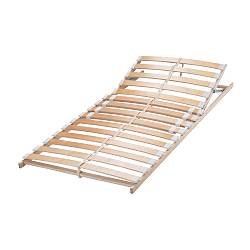
| MAY 27, 2009 LESSON 31 Word of the week: I want to start with a word you all know: 'slot'. And you probably also know what a 'slut' is (two meanings). But do you also know what a 'slat' is? On the right you find two illustrations of where you can find slats: as the base of a bed and in Venetian blinds. What is it in Dutch? Don't confuse this with the object which we call a 'ruler'. Finally, I want to introduce the word 'plank' such as in a plank floor, which so many people seem to like these days. * We will first complete the annual final test of 2008-09. * After that we will deal with an item from the international news which was also covered in Belgium. It's about the New Zealand couple who ran off with NZ$10 million which was mistakenly deposited into their account. I want to use this event as a base for a discussion on your experiences with companies that made mistakes (think of Belgacom, Telenet, Mobistar, electricity company, restaurants, shops, etc). If you can give examples of what went wrong, how did you sort them out? The title of the article is "Bank error makes customers millionaires" * With the remaining time, I would like to try a roleplay with you. In the summer of 2003, the state of New York and parts of Canada had one of the biggest blackouts in history. The electricity went out and stayed out for almost 15 hours. First of all, we will brainstorm what you think happened to people during the blackout. Then, I will give you a role card with a situation on it: the blackout has started, but you have your mobile phone with you. You will have to prepare a mobile phone call based on the situation on the card. Then you will perform your role-play. INTERACTIVE PRACTICE 1. This week's practice is a vocabulary exercise based on an article dealing with Belgian news. The title is "Belgium exports gaol-birds ". Strange title, isn't it? 'Gaol' is a bit of an old-fashioned word for 'prison'. Who might the birds be then? If you want to know what it is about, then do the exercise 2. Here's quiz 28 from the BBC's quiznet => 'Binomials ' 3. Practise your listening, reading and vocabulary skills with 'Audio News Reports ' from the past 30 days (April) |
 |
 |
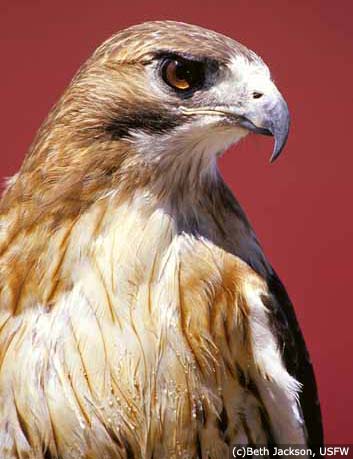
| JUNE 3, 2009 LESSON 32 Word of the week: the picture on the right shows you a hawk. But what does it mean when you say that you sometimes get annoyed when people hawk all the time. (It is something you do with your throat). * First of all, we'll read an article which concerns us all. A bill (= wetsvoorstel) has been approved which will mean 'No more money problems after death of partner' Do you think you know what it will be about? Have you heard about it? If you haven't, wait until Wednesday. * After that we will read an article based on the international news. The article has the somewhat mysterious title 'Raw seal heart'. It is about something that happened in Canada and it involves the Inuit people. It also offers an opportunity to talk about weird foods such as squirrel brains, jellyfish, roasted cockroaches etc. We will ask ourselves if we would ever want to try them. * With the remaining time, I would like to do the roleplay about the blackout. You can find the information about it in the previous lesson. INTERACTIVE PRACTICE 1. This week's practice is a vocabulary exercise which deals once more with a Belgian news event. It has a green touch to it. The title is "Bats seek belfries ". The problem is that many churches keep pigeons out of their clock towers or attics, but at the same time prevent bats from nesting. And bats are useful animals. So what is the solution? Do the exercise and find out about it. 2. Here's quiz 29 from the BBC's quiznet => 'Cleaning the house ' 3. Practise your listening, reading and vocabulary skills with 'Audio News Reports ' from the past 31 days (May) |
 |
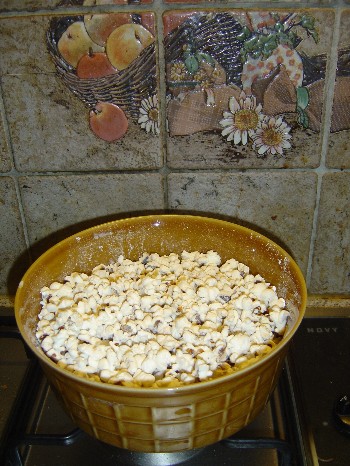
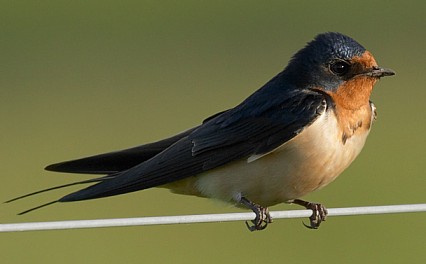
| JUNE 17, 2009 LESSON 33 Words of the week: this week I want to concentrate on some specific meanings of the word pop. First of all, look at the first picture on the right. What is it? If you know how it is made, you can probably understand when we say 'we pop a balloon'. And when do our ears sometimes pop? But what does it mean when we say that Belgium is a nation of pill poppers? How many sleeping pills are popped every day in our country? If you know the name of the bird in the second picture on the right, you also know the relation with the word for this bird and pills. English is a strange language, isn't it? * Firstly, we are going to read about and discuss something that happened in a boarding school in a neigbouring town of Ghent.It involves physically challenged (do you remember this word?) children and teenagers and has caused a lot of commotion, not in the least because it opens a discussion on 'the right to sexuality' of disabled teenagers. The title is: "Sexual abuse at boarding school". * Then we are going to read an article entitled "Flu pandemic: Belgium prepared ". I have left out most figures numbers, years, etc. ) and it will be up to you to guess and fill in these numbers in the right places. * With the remaining time, I would still like to do the roleplay about the blackout. You can find the information about it in lesson 31. INTERACTIVE PRACTICE 1. This week's practice is a vocabulary exercise which deals once more with a Belgian news event. And again it has a green touch to it. But this time it is all about money. The title is "Eco vouchers ". Click on the link and find out more. 2. Here's quiz 30 from the BBC's quiznet => 'Time ' 3. Practise your listening, reading and vocabulary skills with 'Audio News Reports ' from the past 31 days (May) |
 |
 |
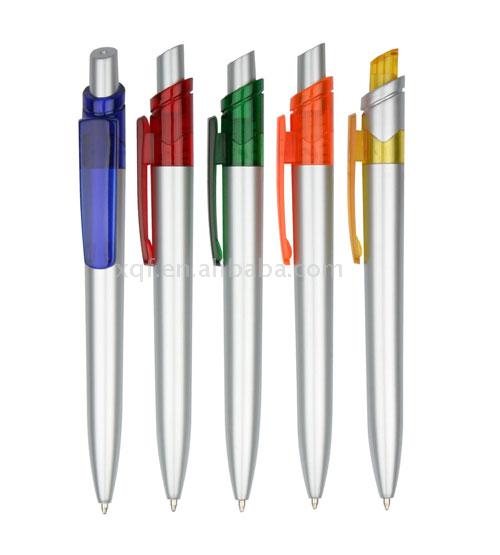
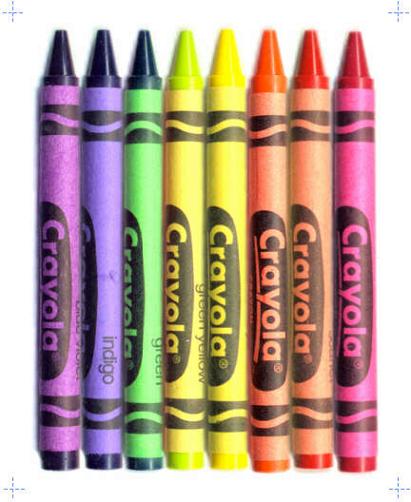
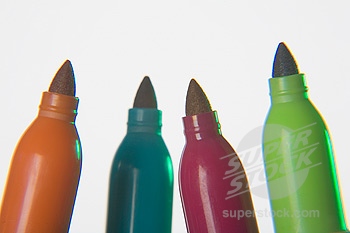
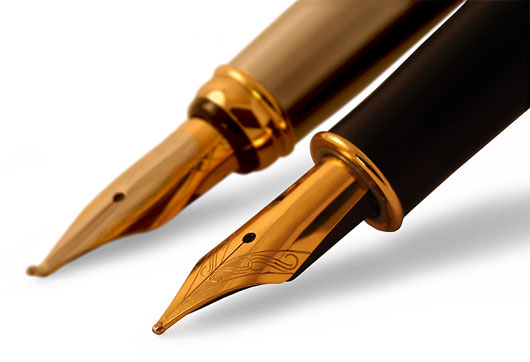
| JUNE 24, 2009 LESSON 34 Yahoo (the provider of this website) has decided to close 'geocities' later this year. Geocities offered a free website to its subscribers. This means that I will no longer be able to offer you on-line information on next year's lessons through your familiar address. I hope I can find another free website service by mid-September which is equally good. So, don't be surprised if you can't open 'www.geocities.com/freddy_vanpuyenbroeck' when lessons start again or if there is no information on the new lessons. Words of the week: this week is "what you get is what you see"; daily objects with which we write or draw. Do you know the names for these objects? * Firstly, we are going to complete and read the article "Sexual abuse at boarding school". We will also have the discussion as mentioned in the previous lesson. * Then we are going to read the article entitled "Flu pandemic: Belgium prepared " with the numbers already filled in, I suppose. The number of affected people in Belgium is no longer up to date. What is the exact number now? * Are there too many or too few children in Europe? This week there was a two-day conference of family affairs ministers of the Council of Europe who discussed this issue under the title: "European Ministers told to encourage baby boom". The deputy secretary-general, Maud de Boer-Buquicchio, held a speech which you can read if you want. Go to 'speech '. Do you agree with what the title seems to imply? There is one confusing fact: what is the Council of Europe? This organisation has nothing to do with the European Union. How many members are there in this organisation? INTERACTIVE PRACTICE 1. This week's practice has a clear link with the last topic of this lesson. There seems to be a "Baby boom in Flanders ". If you are interested in finding out more, then do this vocabulary exercise. 2. Here's quiz 30 from the BBC's quiznet => 'Work and jobs ' 3. Practise your listening, reading and vocabulary skills with 'Audio News Reports ' from the past 31 days (May) |
 |
 |
 |
 |
 |
 |