 |
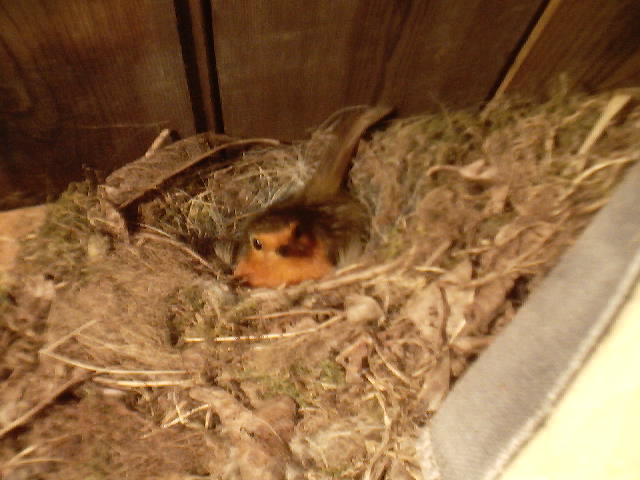 |
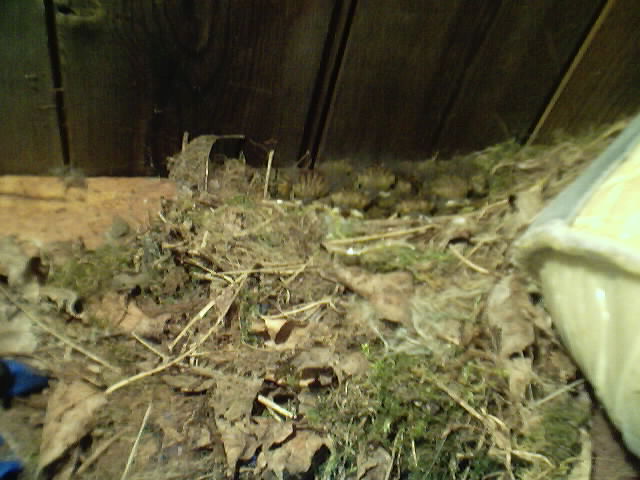
| The First Day She Sat On Her Eggs |
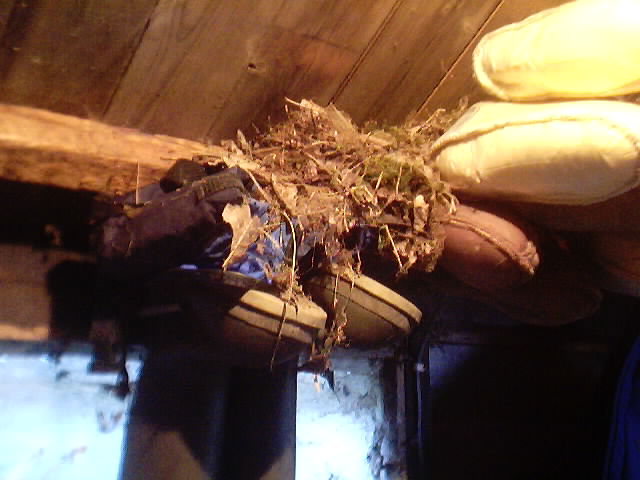 |
| Robbins Nest On Fredricks Wellies |
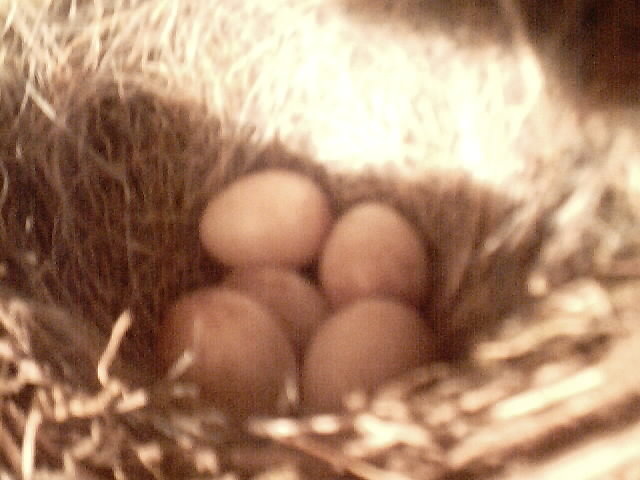 |
| 5 Robbins Eggs |
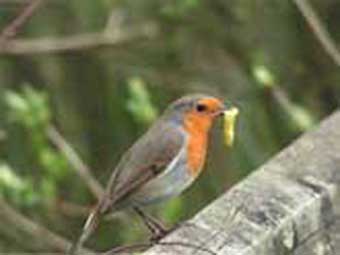 |
| Robbin Waiting To Feed Her Chicks |

|
| Counter Started On...27/02/2006 |
| I went in to my shed one Saturday morning to get some fishing tackle, on the floor there was some leafs and grass and my bait apron, it had fell off my Wellington Boots which were hanging up side down on the wall, so I didn�t think anything of it, I put the bait apron back and went fishing, when I came back later that day I was putting the tackle back in the shed, and outside the door there was a Robin with some stuff in it�s beak, I looked up at my bait apron there was the reason for the grass on the floor, the Robin was making a nest, she laid 6 eggs and hatched everyone in 13 days, I left maggots out everyday, they must have been the best fed robins in the area, after 12 days, they left there nest, I never saw them again, but the male and female was still coming back to the shed for maggots, and taking them into next doors garden to feed them, they say birds always come back to same nesting site each year I hope so, WATCH THIS SPACE. |
 |
 |
| UPDATE 07/03/2006 |
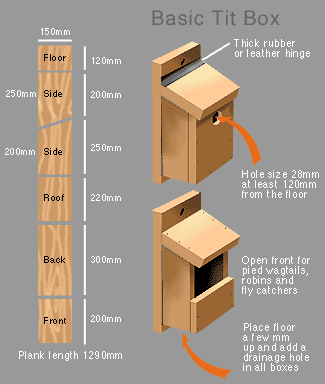
| Making your box Any sort of wood will do. Exterior grade plywood is the best but plank wood makes cutting easier. Remember to adjust the dimensions of the floor to suit the thickness of the wood you use. The dimensions shown are for 15mm thickness. Galvanised nails will last longer than ordinary nails. Seal the sides with sealant as you build, to make the box both windproof and waterproof. A small drainage hole in the base is essential to let liquid waste drain away or in open front boxes to let any rainwater drain away. Do not be tempted to add a perch as this allows predators to intimidate the nestlings and may force the adult birds to leave. The hole should be at the top of the box to keep the young out of the reach of cats or squirrels. Hole size is important as great tits will oust blue tits if they can get in the box. Blue tit and coal tit 25mm hole, great tit 28mm hole, house sparrow 32mm hole. The birds may be seen pecking at the hole. This does not mean that the hole is too small. If you increase the hole you may lose the birds. Painting the box is not necessary. Indeed some colours have been proved to put birds off. A coat of linseed oil will keep the wood from drying out, though is not essential. Some wood preservatives can be poisonous to animals so they are best avoided. Where to fix your nestbox The nestbox should be shaded from the hot sun and sheltered from prevailing winds. In the United Kingdom this means facing north-east, east or south east. If necessary place the hole in the side of the box. A little early morning sun will do no harm. Between 2m and 3m above ground level is best. Most birds like a clear flight path into the nestbox so avoid any obvious obstructions. Boxes too close together or near a bird table will invite competition, so allow birds a bit of their own territory. A little piece of dried moss placed in the bottom of your nestbox may be just enough to attract a family. Clean out the box every year. Rinse with boiling water to kill parasites or use a short lived insecticide such as pyrethrum powder. Good luck! |
 |
 |
 |
 |
 |
 |
 |
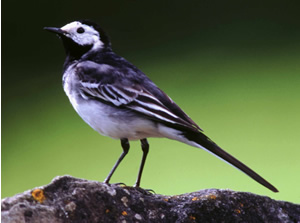
| Pied Wagtail |
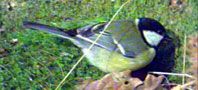
| Great Tit |
| Blue Tit |
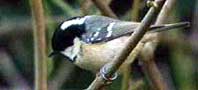
| Coal Tit |
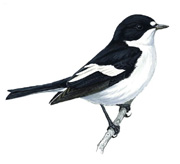
| Pied Flycatcher |
 |
| Bird Bath |
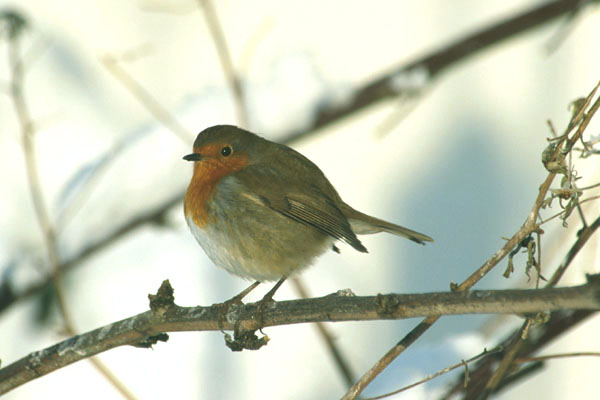
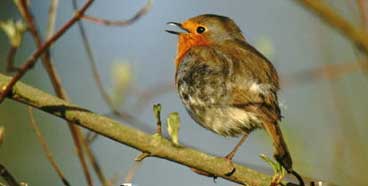
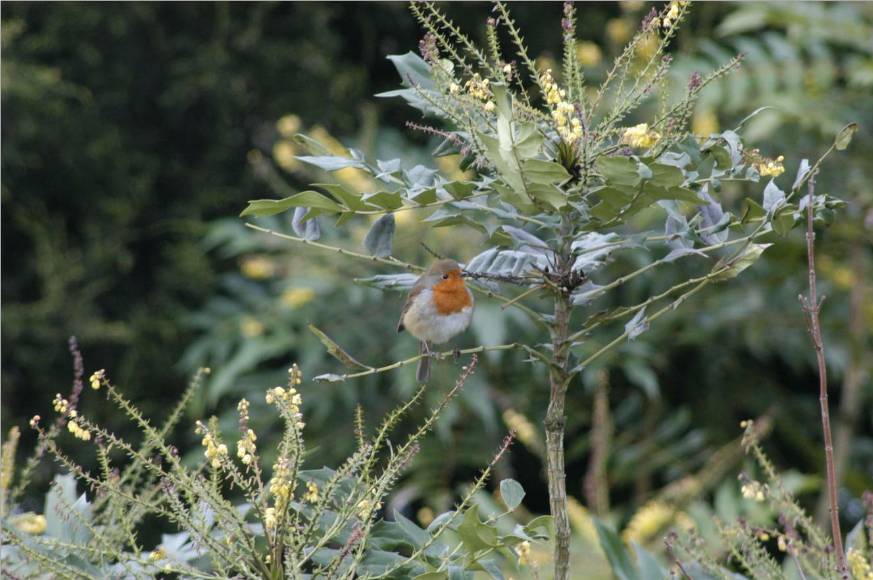
| Robin Erithacus rubecula Identification The tame nature of this bird allows you to get a good, close look at it. A small brownish bird with a distinctive red breast, it can often be seen moving around the ground in a series of rapid hops. The sexes are alike but the juvenile lacks the red breast and its whole plumage is finely spotted. This is to give them time to establish their own territories without being attacked by adult males |
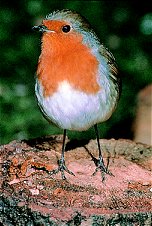 |
| Size: 12.5 - 14cm Weight: 15 - 21gms Habitat: Woodlands, gardens, parks, forest edge. Nest : holes in trees, wall recesses, dense climbers, open fronted nest boxes and unusual items such as kettles and gardening jacket pockets. They are usually a cup shape made from grass, leaves and lined with hair. Eggs: 2 broods of 5-6 eggs blue and speckled with red. Food: insects, worms, fruit, mealworms, waxworms, peanuts,seed seed mixes fat bar,grated cheese,pinhead oatmeal Voice: call is a short hard 'tick'; song is a well known pleasant warbling |
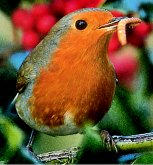 |
| Characteristics The Robin is a strong contender for the title of Britain's favourite bird due to its apparent tame nature and its willingness to follow gardeners around when digging, in search of worms. Robins defend their territories aggressively and there is rarely more than one male Robin per garden - in fact an acre of space is an average territory! They are highly adaptable and return to gardens for food throughout the year. As well as their natural diet of snails, insects and berries, they are very keen on mealworms and will also take peanut granules, seeds, grated cheese and fat bars. BTO Statistics Although Robin populations are affected by cold winters, their numbers are generally increasing and it is reported that most gardens still have a Robin for Christmas! |
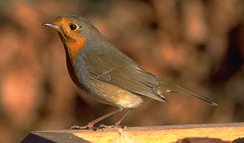 |
| robin adult female |
| 6 Baby Robbins |
 |