|
Druid (England) |
|---|
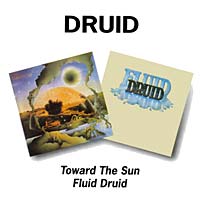
  Toward
the sun/Fluid Druid (1975/1976) Toward
the sun/Fluid Druid (1975/1976) |
 |
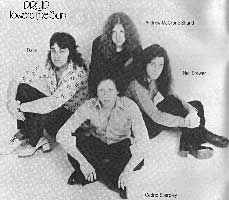 From
left to right: From
left to right:Dane Stevens Cedric Sharpley Andrew McCrorie-Shand Neil Brewer |
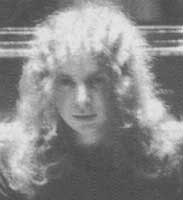 Andrew
McCrorie-Shand Andrew
McCrorie-Shand |
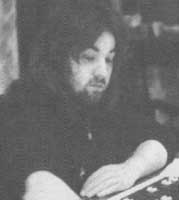 Dane
Stevens Dane
Stevens |
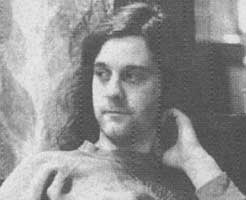 Neil
Brewer Neil
Brewer |
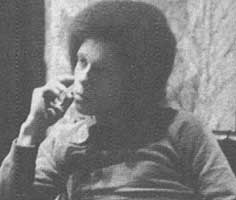 Cedric
Sharpley Cedric
Sharpley |
| Everyone
knows the feeling of dashed hopes. First comes that moment of unexpected
joy when the heart leaps as fate seems to pick you as the beneficiary of
her good fortune, then comes the sinking lurch as the realization dawns
that it wasn't you at all that was being selected, but someone coming
along behind. On Razor Truth, the opening track of Druid's second album
Fluid Druid, Dane's angst-laden, mannered near falsetto vocal evocatively
conjures up one such moment: the shadowy moonlight, the dimly glimpsed
encouraging smile, the outstretched hand beckoning . . . and then just as
he begins to dream of the pleasures that lie on the road of opportunity
ahead comes the discovery that the smile was meant for someone else. Was
he singing about just some meeting with a girl at a party, or was Lady
Luck herself putting in an appearance in the lyrics? The song - which,
with its imagery of roads to tread, shadows cast in a receding light and a
reaching out of hands, picks up a theme originally explored in the title
track of Druid's first album Toward The Sun - leaves the interpretation
open. Prophetically it could almost have been the story of the band
themselves. It all seemed to be going so well in July 1975 when EMI hired
Shepperton film studios for a launch party for the debut album. Druid had
a major label behind them, the patronage of both the Melody Maker and disc
jockey Bob Harris (who then was hosting Britain's only rock TV show The
Old Grey Whistle Test) and lots of new instruments and equipment. They
were young and enthusiastic. What more could they need? That day in
Shepperton, amid the props left over from where Ken Russell had just
finished shooting Lisztomania, they seemed to be on the brink of an
exciting and long-lasting career as they played for the assembled
party-goers. Fate had seemingly smiled on them just over a year earlier,
when with thirteen other bands and five soloists they assembled at the
Roundhouse, a disused railway turning shed on the edge of the then yet to
be fashionable north London district of Camden, for the finals of the
annual Melody Maker Rock and Folk talent contest, sponsored by the
Association of Musical Instrument Industries. At stake were £5OO worth of
prize money to be spent on instruments and stage equipment, a broadcast on
Capital Radio (then London's only commercial music station), front page
publicity in the Melody Maker and perhaps most important of all a record
deal with EMI. In front of a panel of judges comprising Bob Harris,
Clifford T. Ward, Roy Wood, Elkie Brooks, EMI producers Martin Clarke and
Wally Allen, and the editor of the Melody Maker Ray Coleman, they played
two self penned numbers Shangri-La and Toward The Sun, both of which would
subsequently appear on their debut album. A rival competitor had packed
the hall with 200 of their own fans. Chris Welch frantically tried to
conjure up the atmosphere of the occasion in his report in the next week's
Melody Maker. "Tension mounted to such an extent it seemed likely
there would be a riot," he wrote. "A chanting audience clamored
for results while the judges were locked in their chambers comparing
notes. When the verdict went in favor of Druid a spontaneous roar went up,
and even disappointed partisans accepted the results in good heart."
Backstage afterwards drummer Cedric Sharpley - who had won an additional
£5O prize for himself as the best musician in the competition - mouthed
the smug familiar sentiments expressed by contest winners the world over
by insisting that just being able to take part in the event would have
been reward enough for him whether they had won or not. Sharpley and the
band's guitarist then still known by his full name of Dane Stevens had
been friends since their schooldays in Berkhamstead. They had begun
playing local gigs in the town with bass player Neil Brewer in 1971. It
was as a trio that they won the Melody Maker contest. They had actually
entered in 1973 too, but had been knocked out in a qualifying heat. Having
won this time, the band found themselves two residencies in London rock
pubs the Brecknock and the Lord Nelson while they contemplated going pro.
They hired the contest's organizer Larry Westland as their manager and
decided to broaden their sound by adding a keyboard player. Andrew
McCrorie-Shand had just finished an external degree from the London
College of Music and was playing with a variety of bands in Leamington Spa
when he saw their advert. A distant relative of the Scottish bandleader
Jimmy Shand, he went to watch them at the Brecknock and successfully
applied to join. Westland meanwhile, remembering the enthusiasm for the
band expressed by Bob Harris while judging the contest, asked the disc
jockey if he would like produce their debut album. Harris, a former
policeman turned journalist and broadcaster, was just getting into
producing having worked alongside Rick Wakeman in putting together the
first album by the band Wally. But since this was to be his first time
behind the controls on his own he made some demos with Druid first before
EMI agreed to record the Toward The Sun album. Problems with the artwork
delayed the album's release until the summer. By the time of the
Shepperton launch party Neil Brewer was already beginning to wonder if
winning the Melody Maker contest was as much a stroke of good fortune as
they had initially believed. He told the paper's Colin Irwin that he felt
there might be a backlash from people thinking they had had it all too
easy. "We've worked hard, everybody has. None of it's been luck, it's
just hard work. A lot of people will say we've got Bob Harris behind us
and we're the darlings of EMI and it's all happened quickly because of the
Melody Maker thing. But it's not luck. Anything we've got we've worked
for." He was not mistaken. There was a downside to being the contest
winners. The rest of the music press were unwilling to take them up
because they were championed by the Melody Maker. Radio One did not get
behind the record for fear of being seen to be favoring an act associated
with one of their disc jockeys. And when they were given a promotional
spot on the Old Grey Whistle Test there was an outcry that they were only
there because Bob Harris was using his influence. The disc jockey
protested to no avail that all he'd done was pass on a copy of the record
to the show's producer Michael Appleton and that they appeared on merit
because Appleton liked the album. The band went out with Harris on what he
called his Whistlestop Tour of the colleges in the autumn of '75 and then
took the decision to be seen to be standing on their own feet. For the
second album Fluid Druid they dispensed with his services, producing it
themselves with studio engineer Paul "Rockette" Hardiman. And
when they went on tour in the spring of '76 to promote it they formed a
link up with a then rival music publication offering readers of Sounds the
chance to get in half price to their gigs. But it was all too late, time
had passed them by. In the week that adverts for the second album and the
tour started to appear, the music papers were also carrying the first
reviews for performances by a band called the Sex Pistols. Druid's career
was to be cut prematurely short as Britain went punk. Lady Luck did beckon
once more to Cedric Sharpley in the immediate post-punk aftermath when he
joined Gary Numan's synthesizer dominated teen heroes Tubeway Army.
Initially Numan had been using his uncle Jess Lydiard on drums. But with a
world tour on the horizon, Uncle Jess dropped out preferring the job
security of his position with a car rental firm at Heathrow Airport and
helped his nephew to select his replacement from a series of auditions.
Sharpley, with his afro hairstyle considerably trimmed for a less hirsute
era, spent three years with Numan before the singer helped his backing
band by then called Dramatis to have a career of their own, giving them a
flying start by appearing on their debut Top 40 hit single Love Needs No
Disguise. Cedric no doubt allowed himself to feel a moment of deja vu when
it was decided to launch Dramatis by making a video for the single and he
found himself back in Shepperton Studios once more. Fraser Massey |