

 |
|
| Plumbing: Unclogging Drains | |
|
Unclogging A Toilet
Use a "fluted"
or funnel plunger designed to seal inside a toilet bowl. Extend
the fluted flap of the plunger, fit it tightly inside bowl drain to
form a good seal. Plunge up
and down several time and quickly break the seal. Repeat this a few
times to work the clog back and forth and eventually free it. Crank the
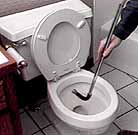
auger's handle clockwise and push it into the clog a bit more. Once
the clog is "hooked" with the spiral tip (or ball) pull the auger back
and forth. Repeat these steps until the clog is freed. Avoid flushing the toilet. It may still be clogged and backup. Instead, fill the bowl with a bucket. If the water level doesn't go down, the clog is still in the line. Unclogging Sinks
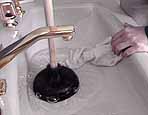
Place a plunger
over the clogged drain. Add enough water to cover the plunger lip and
form a seal. Plunge straight up and down several times and "pop" the
plunger away. Repeat this method a few times to free the clog. If the clog
remains, position a bucket underneath the sink's trap. Unscrew each
end of the trap and drain the water into the bucket. Clean out
any debris in the trap and if a kitchen sink has a disposer, disconnect
and drain its waste line and clean out any debris. If no significant
debris is found in the sink lines, the clog is located in the sink's
drain line or main waste line. A clog in the main line will also plug other drains above it, and that needs to be cleared with a sewer snake. Using A Sewer Snake
There are
two basic snakes: 1) a closet auger with bent tip made to fit
in a toilet's built in trap, 2) a drain auger which is a coiled
rod or flattened metal strip. With both
augers, when the rod meets an obstruction in the line, tighten the handle
and ram the snake into the clog -- sometimes that's all it takes to
clear the line. Otherwise, crank the rod clockwise so the hook
(or ball) snags the clog. Back the
snake off slightly, then steadily push inward again while turning the
handle clockwise until the debris is solidly hooked. Firmly push
the snake back and forth until the obstruction is freed. The
clog may have moved a bit further down the line just to get stuck again.
So, repeat
the procedure while running water and feeding out more line -- all the
way to the septic tank or city sewer line connection if possible. Once the
clog is gone, reconnect the sink's trap and flush the line with water.
Check the connections for leaks. Run more water down the drain and monitor
it a few minutes to ensure the clog is gone. If the blockage still remains (like tree roots), you may need to rent a commercial "power" auger with a rotor or blade bit that chops up whatever is in the line. |
|
 |
|
 The following section shows how to
unclog sink and toilet drains using two basic tools: a plunger and a
sewer snake.
The following section shows how to
unclog sink and toilet drains using two basic tools: a plunger and a
sewer snake.  CAUTION: It's always a good idea to use gloves and goggles
to avoid contact with bacteria and chemical drain cleaners. Cleaners
can be harsh to the skin and damage eyes. Don't use a chemical drain
cleaner before trying mechanical methods.
CAUTION: It's always a good idea to use gloves and goggles
to avoid contact with bacteria and chemical drain cleaners. Cleaners
can be harsh to the skin and damage eyes. Don't use a chemical drain
cleaner before trying mechanical methods. 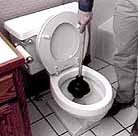 A clogged toilet can be an intimidating
situation and at times it take a hearty do-it-yourselfer to keep from
calling in a plumber. Nonetheless, unclogging a toilet can be easy,
not fun, just easy.
A clogged toilet can be an intimidating
situation and at times it take a hearty do-it-yourselfer to keep from
calling in a plumber. Nonetheless, unclogging a toilet can be easy,
not fun, just easy. 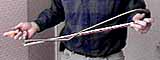
 Hair can often clog a bathroom sink
and potato peals and other food waste will plug up kitchen sinks. Regardless
of the obstruction, unclogging both sinks is done the same way.
Hair can often clog a bathroom sink
and potato peals and other food waste will plug up kitchen sinks. Regardless
of the obstruction, unclogging both sinks is done the same way. 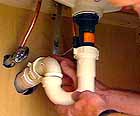
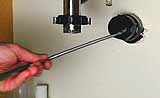
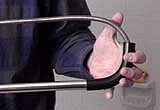 Another handy tool is a sewer
"snake" or auger. It's basically a flexible metal rod with a spiral
hook or ball on the end.
Another handy tool is a sewer
"snake" or auger. It's basically a flexible metal rod with a spiral
hook or ball on the end.