

| Plumbing: Sweating Copper Water Lines | |
 Copper is a popular material for water supply line. It's durable
pipe that handles high water pressure loads and is relatively easy to
work with. Copper is a popular material for water supply line. It's durable
pipe that handles high water pressure loads and is relatively easy to
work with. However,
copper is expensive and may cost up to three times more than plastic
CPVC (chlorinated polyvinyl chloride) pipe. Copper lines
fit together with lead-free, solid-core solder. The soldering process
involves heating the pipe and is commonly called "sweating." Prepping & Soldering Lines
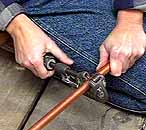
Cut the pipe
with a hacksaw or a tube cutter by gradually tightening it to score
and cut the pipe. Some cutters also have a triangular reamer that can
be used to remove burrs. Sand both
the fitting and pipe surfaces to be soldered with a wire brush or emery
cloth and wipe clean with a rag. Then apply flux on both pieces.
Flux prevents the joint from oxidizing and helps solder flow and bond
to the copper. Fit the pieces
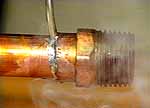
together and heat the joint with a propane torch. It should only
take up to 30 seconds to get the temperature hot enough to melt solder.
Pull the
solder across the heated joint. The solder should virtually suck
up in and around the joint. If the joint still doesn't melt solder,
there may be water in the line. Quickly wipe
away any excess solder with a rag and allow the joint to cool and set
up. Once you're
done soldering the run, brace the pipe between joists with brackets/braces
to prevent them from banging and stuff insulation in any holes in joists
that the pipes go through. Prevent fasteners
from puncturing water lines, nail up protective plates across framing
members. |
|
 |
|
 Before cutting any "live" water lines, make sure the water supply
valve is off. Open the house's highest and lowest faucets to drain the
water lines.
Before cutting any "live" water lines, make sure the water supply
valve is off. Open the house's highest and lowest faucets to drain the
water lines.  NOTE: Even a small amount of water in a copper line can
prevent the joint from heating up enough to accept solder.
NOTE: Even a small amount of water in a copper line can
prevent the joint from heating up enough to accept solder.