

 |
|
| Kitchen Plumbing | |
|
Apply plumber's
putty around the sink's drain hole and seat the strainer assembly.
Flip the sink upside down, tighten the drain nut and "tailpipe" piece.
Flip the
sink upright and install the faucet, valves, and handles. Tighten
down these items and hook up the water lines to a tee fitting. You can
also hook up the water lines coming into the valves and avoid doing
that once the sink is set. Set a "self-rimming" sink in the
hole and fasten any included mounting clamps underneath it. Run a
bead of clear-drying caulk around the rim. If the
sink isn't self-rimming, run a bead of plumber's putty on the bottom
of the lip and caulk the opening to keep water out. Seat the sink
and tighten any clamps. Remove
any rags or cap blocking the drain stub and glue on a threaded
adapter to the stub. Screw on a trap to the adapter threads and
sink drain. Screw on
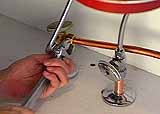
water supply lines (if you haven't already) and attach them to the
shut-offs. Use a "two-headed" shut-off if you're also going
to connect to a dishwasher. Run some water down the drain to block sewer gases, and check each line and drain joints for leaks. Hanging Garbage Disposers
A special
strainer and mounting assembly usually come with the
disposer or sink. Attach the assembly with a snap ring and secure
it with its included fasteners. Fit the drain tube into a tee that connects to the other sink drain and the trap. Tighten those connections. Then connect the sink trap to the waste pipe.
Hooking Up Dishwashers
Fit a hose
clamp over the pipe end and attach it to the dishwasher's waste discharge
outlet. Clamp an adapter fitting on the pipe's other end and attach
it to the disposer's inlet. This way,
the dishwasher's waste water and debris will run through the disposer,
then the drain system; which will prevent clogged lines. Loop
the drain hose high up under the sink so if there's a clog in the
sink drain, it won't immediately run down into the dishwasher. Some
local codes may require additional measures to prevent this. Run a copper hot water line to the dishwasher's connection (in our case, a threaded angle adapter). Run the other end to the two-headed water shut-off. Briefly run the dishwasher through its cycles and check the connections for leaks.
|
|
 |
|
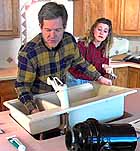 Most of the time a sink will fit
perfectly in a precut countertop opening, but test fit the sink and
check that it sets level.
Most of the time a sink will fit
perfectly in a precut countertop opening, but test fit the sink and
check that it sets level. 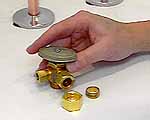
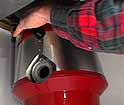 The garbage disposer is normally
installed with the sink. However, connect the supply lines to the
faucet first, so you don't have to work around the disposer once it's
in.
The garbage disposer is normally
installed with the sink. However, connect the supply lines to the
faucet first, so you don't have to work around the disposer once it's
in. 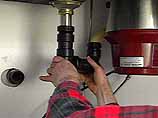 Hang the disposer on the mounting
assembly and line up its drain hole to face the other sink's drain.
Attach the discharge tube to the disposer's housing.
Hang the disposer on the mounting
assembly and line up its drain hole to face the other sink's drain.
Attach the discharge tube to the disposer's housing.  NOTE: Most disposers have an inlet that connects to the dishwasher
drain. We'll cover that connection in the dishwasher section.
NOTE: Most disposers have an inlet that connects to the dishwasher
drain. We'll cover that connection in the dishwasher section. 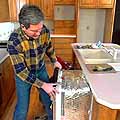 While positioning the dishwasher,
feed its flexible drain hose under the sink. Get the unit it as level
possible and securing it in place.
While positioning the dishwasher,
feed its flexible drain hose under the sink. Get the unit it as level
possible and securing it in place.