The following rules apply to a parallel circuit:
- The potential drops of each branch equals the potential rise of the source.

- The total current is equal to the sum of the currents in the branches.

- The inverse of the total resistance of the circuit (also called effective resistance) is equal to the sum of the inverses of the individual resistances.
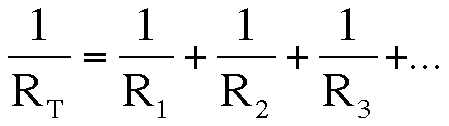
One important thing to notice from this last equation is that the more branches you add to a parallel circuit (the more things you plug in) the lower the total resistance becomes. Remember that as the total resistance decreases, the total current increases. So, the more things you plug in the more current has to flow through the wiring in the wall. That's why plugging too many things in to one electrical outlet can create a real fire hazard.
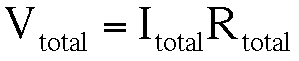
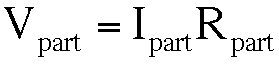
Ohm's Law may be used in a parallel circuit as long as you remember that you can use the formula with either partial values or with total values but you can not mix parts and totals.
back
|
|





|