|
|
|
|
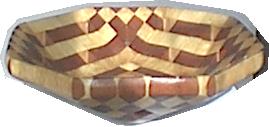
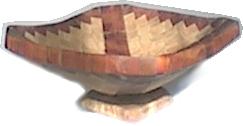
The name
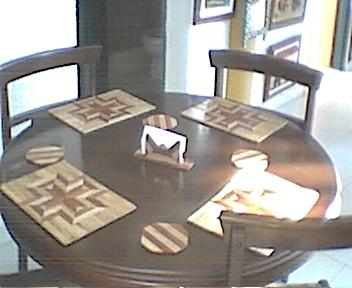
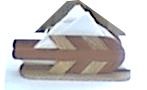
“Wooden Inlay” comes from the aspect that the finished piece gives
us, it´s like little blocks of different kinds of wood are incrusted to each
other.
To get a
beautifull effect I use wood with different colors, veins some hard some bland.
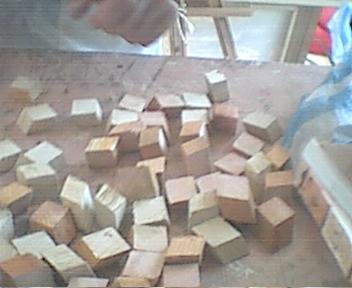
I cut
them in fragments with angular and rhomboic forms, these pieces are very small
so this work is quiet precise.
|
Now we
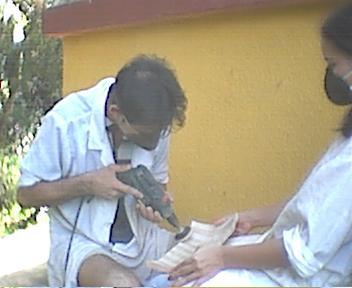
have finished the piece alltough without polishing, this is a very interesting
step because we need about eight polishing and sandpaperings to make the
fruit-dishes soft to touch. Between each polishing the get sealed.
At last
they get a treatment with bee wax covering them totally with a thin layer.
Now the
finished pieces can take there particular place.
|
|
|
Every time we look at these works we discover the artistic value with which they where designed.
 |
The
original idea was developed at the other side of the world, Japan.
Casually
watching a documentary about this exotic country, an old man was fragmentig a
arithmetic piece of wood and then putting it together again.
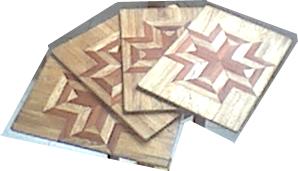
So the
idea was born to adopted this technique and extend it towards the fronteirs of design and practics forms, with a somewhat native style also using the symetric
and asymetric forms of the indians in a different way, obtaining something like
cubistic morphology.
 |
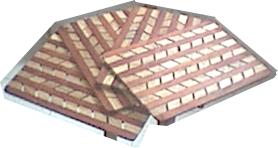 |
This
technique has a lot of possibility´s because you can mold it in every form you
would like in wood as long as you have a desing you´ld like to realize, of
course thinking in the technical parameters of cutting and glueing.
This way
where born fruit dishes, furniture in general, lamps, mirrors and light shades,
among other things.
 |