 |
|
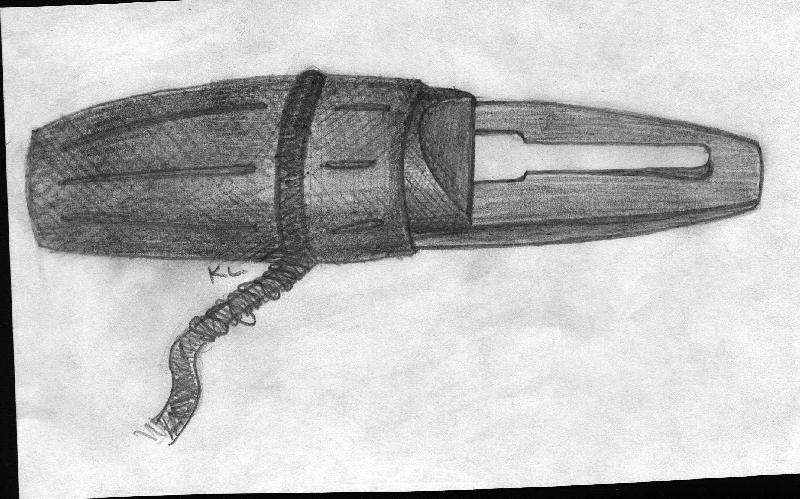
| Illustration by Kyle Lunneborg |
| Calls for Foxes: Calls for foxes fall into two main categories and then into many sub categories. First off, let me say this: THEY ALL WORK! Some, I believe, work better than others. Let's get the nitty gritty out of the way right away. I don't like electronic callers. They work fine, I just don't like them. I got blasted for this kind of hateful talk on my last web page and I lost a potential job doing seminars for a major electronic call maker because of my stance. But, a guy's gotta do what a guy's gotta do. So, here I am again, giving my opinion of electronic callers. Electronic callers work. They work quite well in fact. Basically, an electronic caller is simply a tape player or a CD player or a computer chip that plays any number of distress sounds over a speaker. The hunter sits down, chooses a tape, a CD or a sound from a chip and turns it on. From this small box on the ground in front of them comes the mournful sounds of some small prey animal in distress or the sounds of some other predator intruding on the territory of the one you intend to call. At the turn of the switch, the sound goes out and the predator comes in. Simple, right? Well, it should be. But, there's way more to it than that and the way we set up will be addressed later on this site. Electronics are just what the doctor ordered for those just starting out. They give the confidence that one needs to call in the critters before a person feels comfortable using hand calls. Some people choose to keep using them and that's fine. They will continue to work They even have some advantages over hand calls. The pros of using electronics include the fact that they produce the sounds correctly that will call a predator. With most electronic units you can set them up away from you so that when the predator approaches their attention will not be focused on your location. This will allow you to move around a bit more and get a shot when needed. And, finally, electronics don't run out of wind from blowing on a call all day long. But, with anything, electronics have their limitations too. First, they tend to be heavy. Some are REALLY heavy. Not a big deal if you are going to make a couple of stands on your way to work in the morning but try lugging one around all day long, stand after stand after stand. On top of that, shoot two big old coyotes and have to drag them both back to the truck along with your rifle and electronic caller. They get heavy! Another problem is that they are mechanical. They break down. Sure, mouth calls can malfunction or break or get lost too. But, let me tell you, for ten bucks, I can get a spare to carry in my shirt pocket. Not a chance that most guys have a spare electronic caller close by when this one breaks. Another problem is that they run on batteries. Batteries go dead. If you've ever used a flashlight you know that batteries only go dead when it's dark out. Same way with callers. I've hunted over them and had the batteries die after two stands in subzero cold. I've also had the batteries die as a fox was approaching. HAND CALLS: These handy little units come in two basic flavors. Tube calls and open-reed calls. Both work well but, generally speaking, open reed calls work better. They offer more variety in sounds out of the same call. They don't freeze up in extreme cold weather either. Tube calls are easier to blow and get the right sounds though. The main advantages are that the hand calls are smaller, lighter, cheaper and more effective than electronic calls. (That statement always fires someone up but I'll stand by that hand calls are more effective than electronic calls to the day I die.) If you go with hand calls, get yourself a couple of instructions audio or video tapes and learn how to blow them. It's not tough and you'll be a pro in no time at all. |
| Email me at: [email protected] |