 Fact or Fiction ?



History
Technology
Key Players
Controversy
Fusion is a natural process by the Sun and billions of dollars have been spent on Hot Fusion. However, the idea of Cold Fusion had not been recreated in the scienific community in a laboratory until 1989. In March of 1989 two respected scientists, Dr. Stanley Pons and Dr. Martin Fleischmann, of the University of Utah claimed to have created fusion at room temperature with a simple apparatus. Because of the way it was announced and problems with other scientist recreating the experiment, cold fusion had been tossed off into the trash bin of pseudo-science. Many were calling Pons and Fleischmann frauds. By the late Spring of 1989 it seemed that cold fusion had died a quick death.
Fusion is a nuclear reaction in which light nuclei (e.g., deuterium, tritium) combine to form more massive nuclei with the simultaneous release of energy and radiation. Pon and Fleishmann's experiment consisted of suspending a solid, one-cubic-centimeter palladium electrode from a palladium wire in a large beaker. The beaker is filled with a cocktail of heavy water and lithium. The scientist charge (electrolyzed) the water in this contraption by passing a current between the palladium electrode and a second electrode made of platinum.
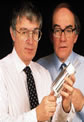
Pons was a chemist and the chairman of chemistry department of the Univ.of Utah. Fleischmann was (is) an electrochemist from the University of Southampton, England who collaborated and mentored Pons. They claimed to have been working on cold nuclear fusion for 5 years before 1989 -- in their basement laboratory, which Pons later describes as containing college freshmen-level equipment.
Science is still suffering from the 1989 "cold fusion" fiasco in which Stanley Pons of the University of Utah, US, and Martin Fleischmann of the University of Southampton, UK, held a press conference to announce that fusion had been achieved with the metal palladium. When other scientists tried to recreate the experiment, it did not work. This left physicists with a deep suspicion of table-top fusion experiments. Since many scientist could not reproduce past claims made for table-top fusion devices they are sceptical of the who cold fusion idea. However, others are still trying.
