 |
|
|
|
|
|
|
|
|
|
|
|
|
|
|
|
|
|
|
|
|
|
|
|
|
|
|
|
|
Gentle giants Part 1 |
|
|
|
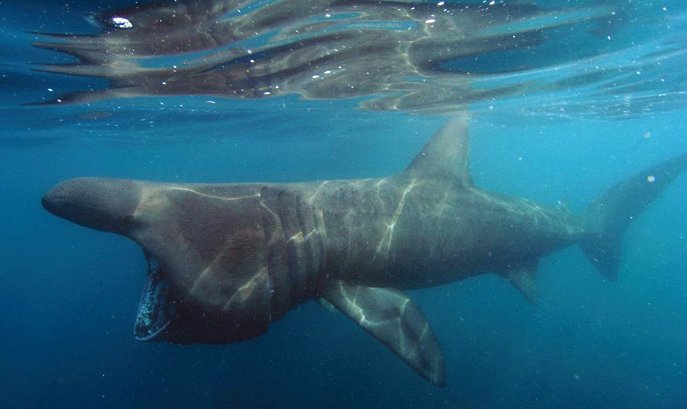
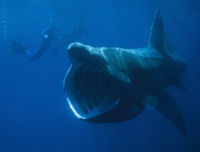
As you may guess, not all ancient sea monsters were scary ! As far as sharks are concerned the two main contenders may well be the basking shark and the whale shark. These are both living happily today and play an important role in keeping our oceans free from plankton (microscopic sea creatures) that turn the ocean into a thick green "pea soup". Both the sharks feed by filtering huge amounts of water through gill rakers and extracting the plankton and various other small animals that they may feed upon. The Basking shark is the second largest modern day shark after the Whale shark. It is also known as the bone shark, elephant shark, and sailfish. It gets its name from the fact that it mostly feeds near the surface and it looks like it is basking in the sun. It swallows 2,000 tons of water per hour and is found in all the worlds temperate oceans and is usually around 20 to 30 feet long although larger specimens have been recorded. Due to over-fishing very large Basking sharks are very rare. It is an endangered species and is usually fished for its fins and internal organs. Its liver is used to make oil. The liver of a Basking shark runs the whole length of its abdominal cavity and accounts for 25% of its bodyweight. It is used as a buoyancy regulator and for long term energy storage. |
|
|
|
 |
|
|
|
 |
|
|
|
|
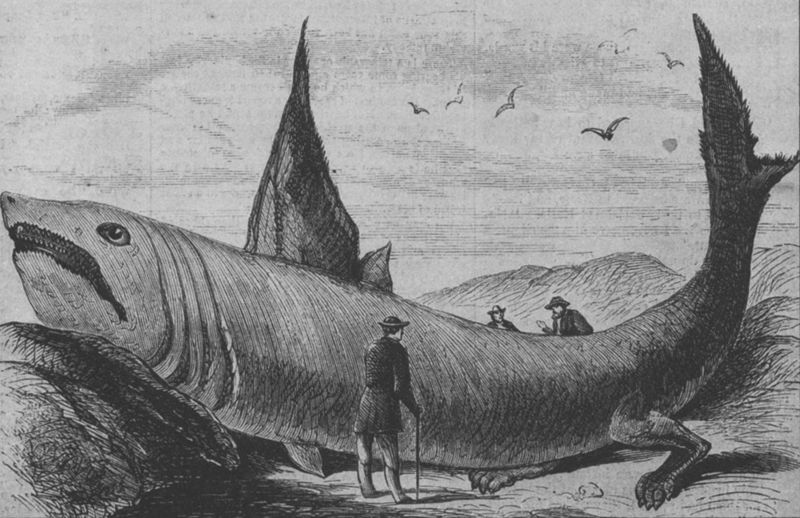
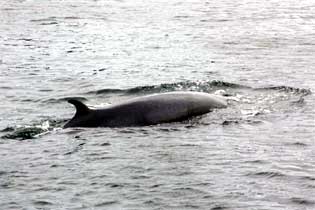
Top left a picture of a basking shark. Right a Basking shark off the Cornish coast in England. Below left: a minke whale that got stuck in Fraserburgh harbour in august 2007. Below right: the "wonderful fish" that appeared in Harper's Weekly on 24th October 1868was probably the remains of a basking shark. |
|
|
|
|
|
|
 |
|
|
|
|
 |
|
|
|
|
|
|
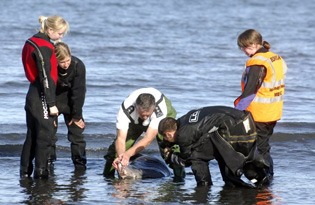
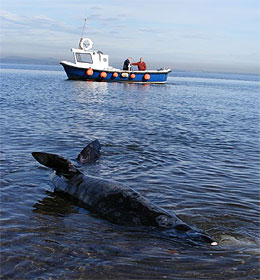
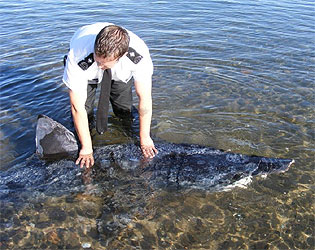
Below; animal welfare officers battled for hours in vain to save an injured basking shark which beached itself on Musselburgh beach on 5/10/07 but the young 3 metre shark was too badly injured and died while waiting for a vet to euthanise it. It was a rare visitor to the east coast as basking sharks are usually only seen on the west coast of Scotland. |
|
|
|
|
 |
|
|
|
|
|
|
 |
|
|
|
|
 |
|
|
|
|
|
|
Go to the contents |
|
|
|
Go to the homepage |
|