 |
|
|
|
|
|
|
|
|
|
|
|
|
|
|
|
|
|
|
|
|
|
|
|
|
|
|
|
|
|
|
|
|
|
|
|
|
|
|
|
|
|
|
[email protected] |
|
|
|
Geology Page |
|
|
|
 |
|
|
|
|
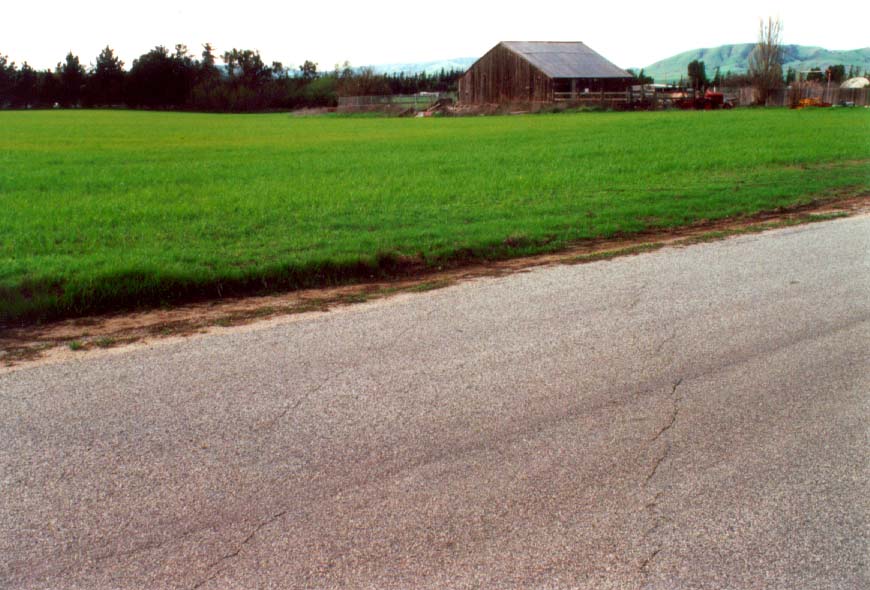
This is the surface expression of the San Andreas fault at Mission Vineyard Road in San Juan Bautista , CA. The fault is measured for creep at this location and is found to be moving at approximately 15 mm a per year. In the picture two sets of en eschelon cracks are visible separated by 1.5 meters. The fault is also seen as a slight dip in the road. The area is of interest as the San Andreas fault creeps at this location, while just several kilometers to the north, no creep occurs and the fault is "locked". |
|
|
|
|
|
|
LINK TO: SF BAY AREA FAULT CREEP PROJECT |
|
|
|
MORE ON EARTHQUAKES |
|
|
|
|
|
 |
|
|
|
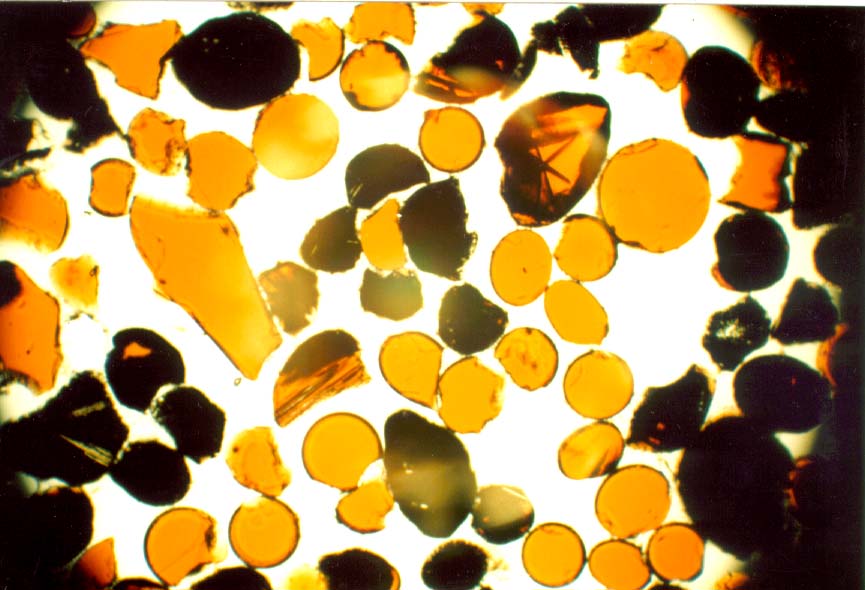
This petrographic image is of an area approximately 2.5 mm wide. The orange spheres were returned to the lab by Appolo astronauts from the surface of the moon. While most lunar soil is a dark gray volcanic basalt powdered by showers of micrometerors, this orange soil is composed of basaltic glass spheres. The spheres are thought to have originated as a fountain of spray, in the extremely low gravity of the moon the particles cooled before settling and are probably more recent than surrounding material. As there is no Oxygen on the moon, no weathering as we know it, takes place. |
|
|
|
|
Orange glass spheres: from lunar soil |
|
|
|
|
|
|
 |
|
|
|
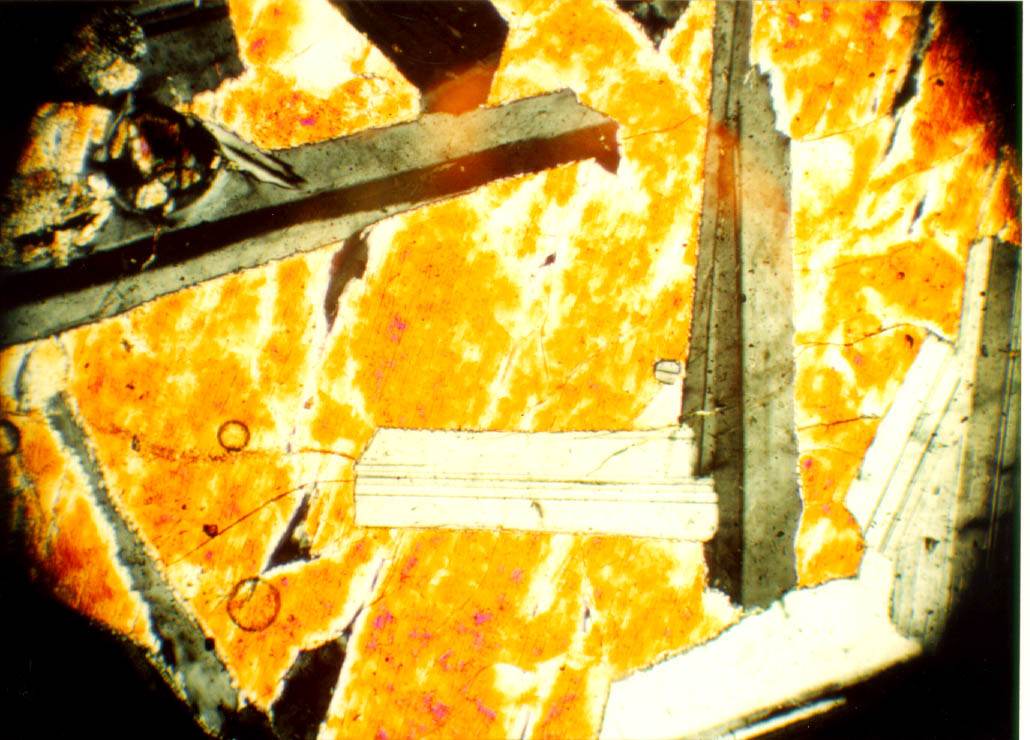
Twinned Plagioclase with pyroxene |
|
|
|
This is a thin section image of an igneous rock composed of plagioclase and pyroxene. The plagioclase is the gray and white mineral in lath shaped crystals. The lines or striations are formed as twins, or places in the crystal matrix where the atomic structure repeats. The yellow orange mineral is the pyroxene, which formed after the plagioclase, thus enclosing them. |
|
|
|
Links: |
|
|
|
 |
|
|
|
|
 |
|
|
|
|
|
|
|
|
|
|
|
|
|
earthquake information |
|
|
|
|
|
|
|
|
 |
|
|
|
|
|
|
|
|
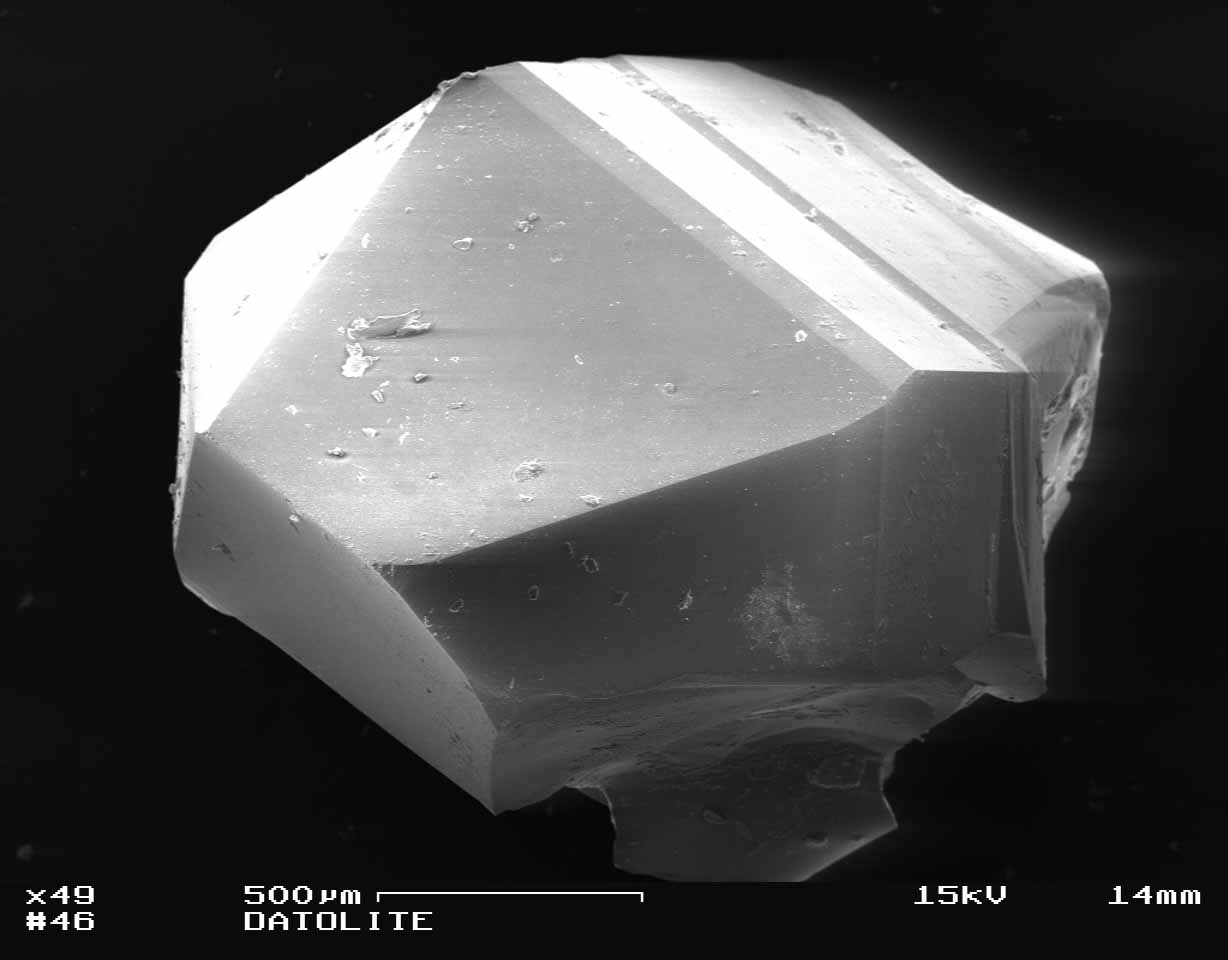
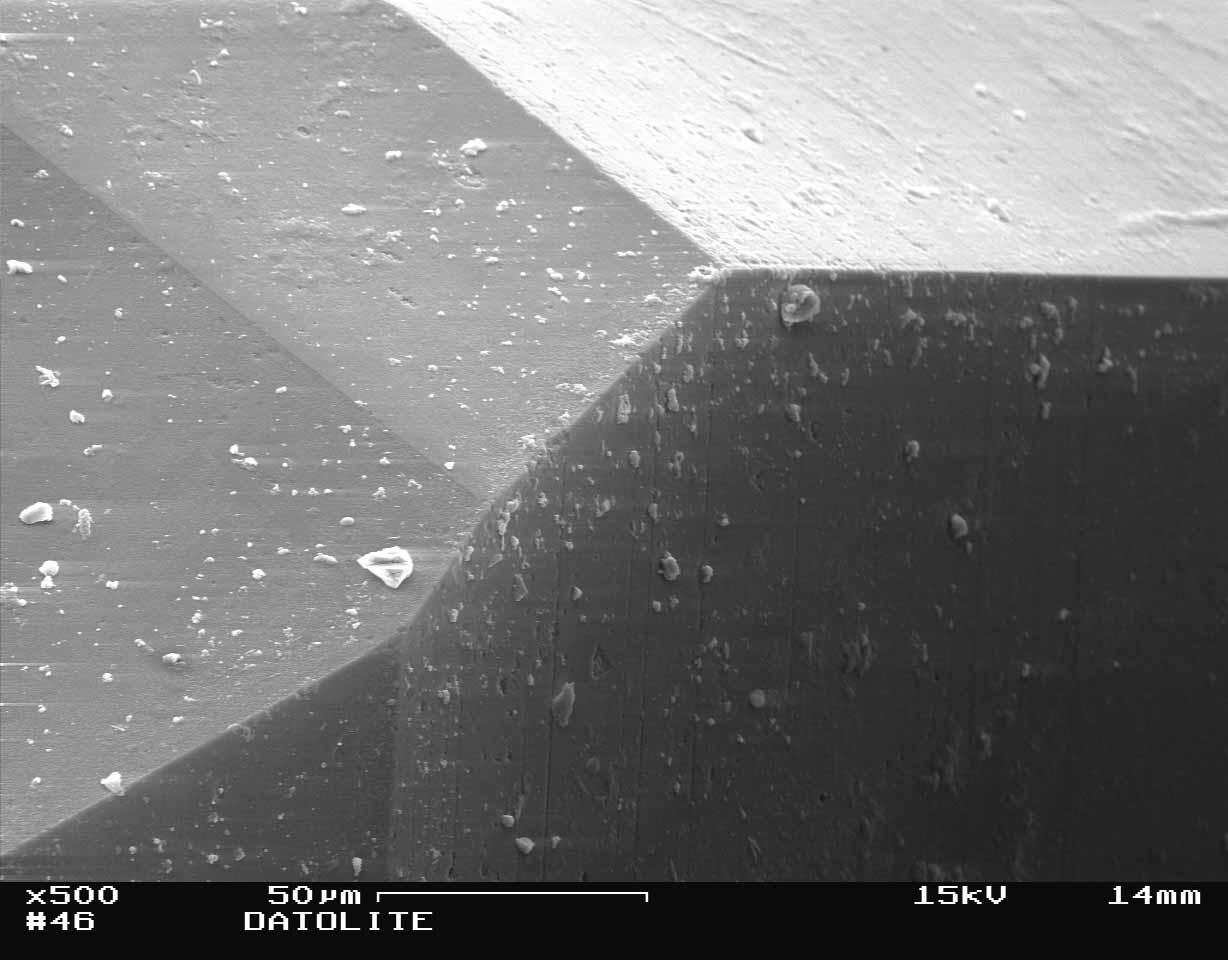
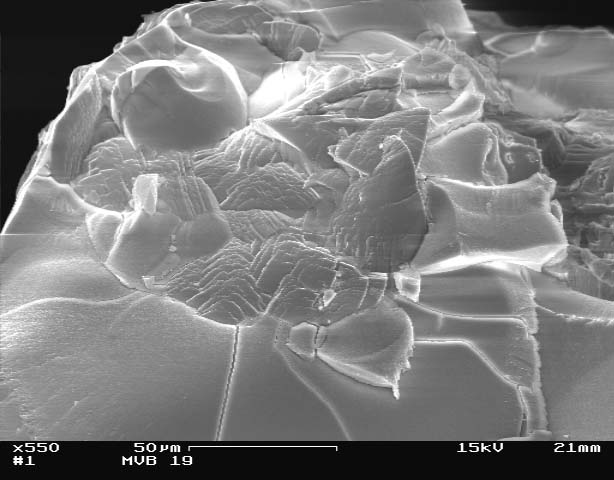
SEM photos of Squaw Rock Datolite |
|
|
|
|
|
minerals in thin section |
|
|
|
|
|
|
|
|
|
|
 |
|
|
|
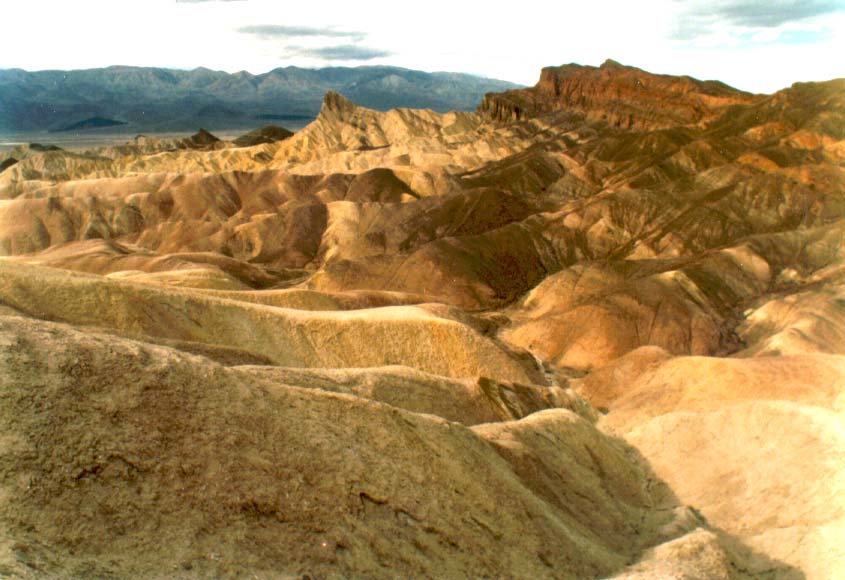
Zabriski Point Death Valley, California |
|
|
|


