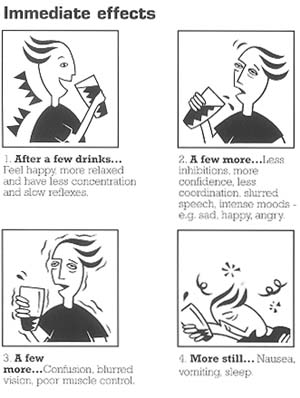
Alcohol affects the central nervous system as a depressant, resulting in a decrease of activity, anxiety, tension, and imhibitions. Even a low level of alcohol within the body slows reactions. Concentration and judgment become impaired, and in excessive amounts, intoxication or poisoning results.
Alcohol irritates the gastrointestinal tract, causing an erosion of the stomach lining, resulting in nausea and vomiting. Live disease (hepatic cirrhosis) may develop with long-term use of alcohol. The cardiovascular system is comromised and sexual dysfunction can occur. Alcohol consumption during pregnancy can cause problems for the developing fetus known as Fetal Alcohol Syndrome.
Changes in tolerance occurs as the alcohol dependence develops and memory lapses related to drinking episodes may follow.
Signs and symptoms of alcohol abuse may include as follows:
1- Tolerance to the effects of alcohol
2- Need for daily or frequent use of alcohol
3- Lack of control over drinking/intake
4- Solitary drinking
5- Making excuses to drink
6- Episodes of memory loss associated with drinking
7- Episodes of violence associated with drinking
8- Behavioral problems
9- Absenteeism
10- Shaking in the morning
11- Neglect of appearance or personal needs
12- Redness and enlarges capillaries in the face (escpecially the nose)
13- Difficulty in focusing
14- Availability and consumption of alcohol becomes focus of social activities
15- Changes in peer group associations
16- Tremors
17- Rapid heart rate
18- Unexplained mood swings
19- Hostility when confronted about drinking
20- Neglect of food intake
There are much more effects of alcohol.