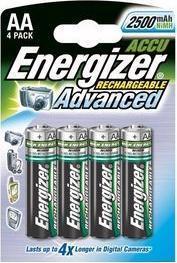
 Dry-cell battery was invented, a whole new portable system of powering devices was used. In 1954, the AAA size battery was introduced to the public. The AAA battery is a smaller size than AA but has the same amount of voltage. In 1956, both the 9-volt battery and the Oxygen-Hydrogen fuel cell were developed. The 9-volt, could power small devices that required higher voltage than the AA or AAA, and the fuel cell created energy through the chemical reaction between oxygen and hydrogen.
In 1960, the first Ni-Cad battery was invented by Waldmar Junger. This innovative product had the storage ability of the Dry-cell but it could recharge once it ran out of energy. The Ni-cad battery brought on the idea of the Li-ion battery, which is a more powerful rechargable battery capable of thousands of recharges. The Li-ion battery was developed in the early 1970's by John B. Goodenough, and was sold by Sony in 1991 after establishing a safe way to recharge.