 |
|||
| Food Knowledge ---------------------------------------------------------------------------- | |||
| Food Plus | |||
|
|
Print this Article | ||
| ........................................................................................................................................................................... | |||
|
FOOD JOURNAL |
|||
|
Cooking in Clay pots
Clay cookers are pretty much self-explanatory. They are cooking vessels made of unglazed clay, usually large oval roasters with a lid. These are not to be confused with terra cotta baking pots that have a glazed interior and unglazed exterior. It's important to use an unglazed clay cooker to avoid any potential problems of lead in the pot which can leach into the food and cause serious health problems. Normally this is not a problem in unglazed pottery such as clay cookers. Clay cookers are soaked in water first. As the pot heats in the oven, the water evaporates causing a pressure-steaming effect to cook the food. It’s easy to keep the calories down, because you never have to add fat to clay pot-cooked foods. Because flavors are easily absorbed into the unglazed clay, we recommend separate roasters for chicken and fish, or other foods with very different tastes.
Never use soap or detergent to clean your clay cooker. The soap will soak into the pores of the clay and then leach into your food the next time you use it. Use scalding hot water and a stiff brush to clean the pot. For stubborn stains, use a very coarse unsoaped stainless steel pad, or let the cooker soak overnight filled with water and 1 to 4 tablespoons of baking soda. A baking soda soak will also help remove odors and freshen the cooker after cooking pungent foods. Store your clay pot with the lid inverted, nestled inside the bottom with a paper towel in between so it can breathe. Make sure it is completely dry before you put it away. During periods of long storage, mold may form. To remove any mold, apply a paste of equal parts of baking soda and water. Leave it on at least 30 minutes, then brush, rinse well, and let it thoroughly dry, preferably in bright sunlight. Tips and Hints
|
|||
| .......................................................................................................................................................................... | |||

 Archaeologists
have traced clay pot cookery back to the Romans, who used special unglazed
earthenware pots to bake meats and crisp, chewy loaves of bread. They are a
real time-saver, with the added bonus of very flavorful and tender results
due to the cooking process. It's great for those on a fat-conscious diet,
since you can cook foods without fat, and still get all that wonderful
flavor. It's energy-efficient because you begin with a cold oven and usually
cook the whole meal in one pot.
Archaeologists
have traced clay pot cookery back to the Romans, who used special unglazed
earthenware pots to bake meats and crisp, chewy loaves of bread. They are a
real time-saver, with the added bonus of very flavorful and tender results
due to the cooking process. It's great for those on a fat-conscious diet,
since you can cook foods without fat, and still get all that wonderful
flavor. It's energy-efficient because you begin with a cold oven and usually
cook the whole meal in one pot. 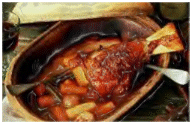 You
really don't need much preparation. The main thing to remember is to
completely submerse both the top and bottom of the clay cooker in water for
at least 15 minutes before loading the ingredients. This is easily
accomplished by filling your sink with water and soaking top and bottom
while you prepare the ingredients. Once loaded, place the covered clay pot
into the center of a cold oven; do not preheat. It is
necessary to the cooking process to gradually bring the pot up to the
desired temperature. If you put a cold clay-pot into a hot oven, you also
risk cracking the pot due to extreme temperature change. Most clay cooker
recipes call for a temperature of 400 to 480 degrees F. Larger pots will
take longer to cook, of course, but many dishes will be done within an hour.
Some recipes will require you to remove the top near the end to achieve a
browning or crisping effect.
You
really don't need much preparation. The main thing to remember is to
completely submerse both the top and bottom of the clay cooker in water for
at least 15 minutes before loading the ingredients. This is easily
accomplished by filling your sink with water and soaking top and bottom
while you prepare the ingredients. Once loaded, place the covered clay pot
into the center of a cold oven; do not preheat. It is
necessary to the cooking process to gradually bring the pot up to the
desired temperature. If you put a cold clay-pot into a hot oven, you also
risk cracking the pot due to extreme temperature change. Most clay cooker
recipes call for a temperature of 400 to 480 degrees F. Larger pots will
take longer to cook, of course, but many dishes will be done within an hour.
Some recipes will require you to remove the top near the end to achieve a
browning or crisping effect.